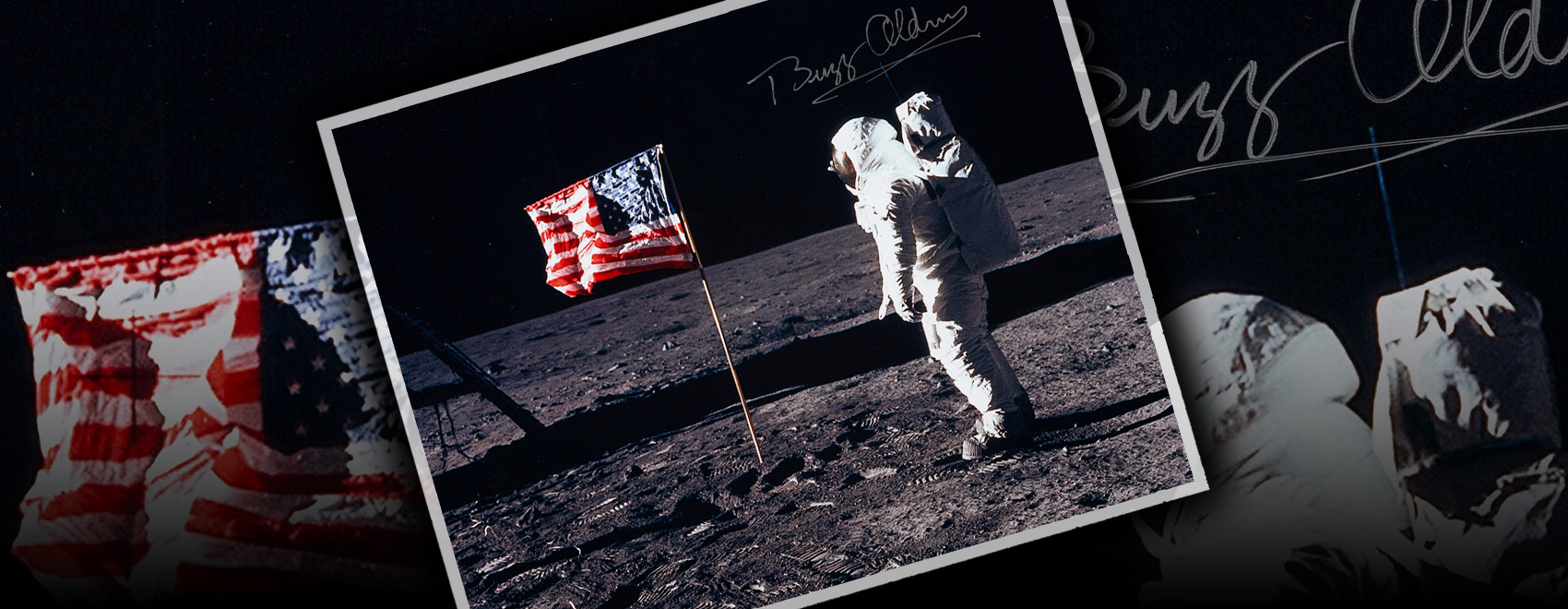
HOW TO START COLLECTING THE ARTIFACTS, AUTOGRAPHS, AND FLOWN OBJECTS THAT BRING THE HISTORY OF SPACE EXPLORATION DOWN TO EARTH
By Merritt Martin | October 6, 2026
Afascination with space can start as simply as staring up at the stars. Some kids shoot water-pressure rockets in the backyard and move on to other hobbies. Others channel that childlike wonder into a passion that can’t be contained by Earth’s atmosphere. Then there are those who have been fans of space exploration for as long as they can remember, perhaps since gathering around a television to watch their first launch, breath held until the spacecraft rocketed out of view. For them, collecting offers a different sort of thrill: the opportunity to own something that traveled beyond Earth.
A flag, a photograph, a hammer, a glove — where does one start? Brad Palmer, Director of Space Exploration at Heritage Auctions, offers new collectors a few words of wisdom: Start small. Lean toward the firsts in any program. And remember that these objects represent extraordinary human achievements set in motion as early as the 1930s.
Before blasting full throttle into bidding, however, there is plenty more for a prospective space collector to know.
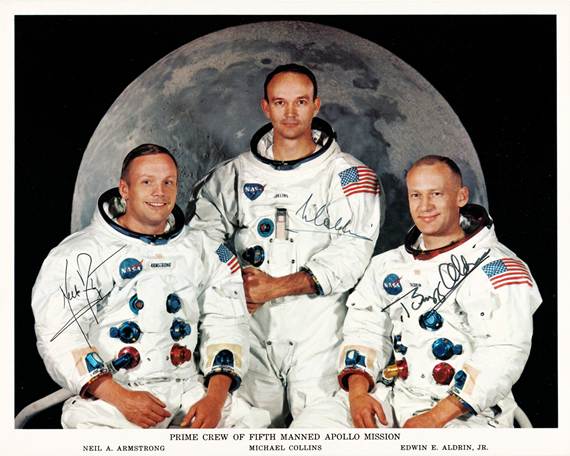
Manned by Neil Armstrong, Michael Collins, and Edwin ‘Buzz’ Aldrin, Apollo 11 was the first spaceflight to land humans on the moon. This photo signed by all three crewmembers from the historic flight realized $45,000 in a March 2026 Heritage auction.
It Might Start With a Signature Move
Autographs are among the most accessible types of space memorabilia available. From legendary moonwalker Neil Armstrong to Mae Jemison, the first Black woman in space, there is an autograph out there that can provide the perfect launching pad for a collection. “If you’re starting a new collection, a lot of people are going to start with autographs, because that’s a pretty reasonable price point,” Palmer explains. And there is considerable range within the category. “A single signed photo can sell for $300,” he says. “And we recently sold a photo signed by the three members of Apollo 11 for $45,000.” Ultimately, collecting is an adventure in finding the intersection of interest and price point, and there’s generally something for everyone.
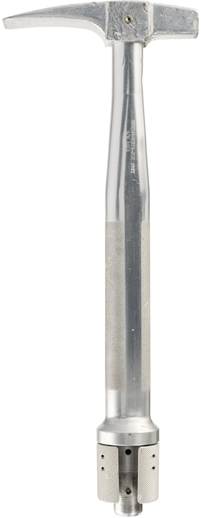
Astronaut Alan Bean’s Apollo 12 surface-used geological hammer sold for $812,500 in a July 2026
Heritage auction.
Fly With Your Favorite
Palmer says he always encourages new space memorabilia collectors to focus their collecting on what or who inspires them. “If somebody’s been interested in space for a long time, they’re probably going to have their favorite mission or astronaut,” he says. Heritage’s most recent Space Exploration Signature® Auction offered Alan Bean fans a chance to bid on several iconic pieces from the astronaut-turned-artist, including a lunar surface-used geological hammer and Bean’s risqué Apollo 12 lunar surface-flown Lunar Module Pilot wrist checklist (complete with Playboy magazine photos hidden by his fellow astronauts). “People often look at [a collection] as an investment, and there’s nothing wrong with that, but the fun of collecting is ownership,” Palmer says. “Buy what you love. Buy what you want.” His point is simple: A collectible’s monetary value may fluctuate over time, but the pleasure of owning something that brings you joy is harder to measure.
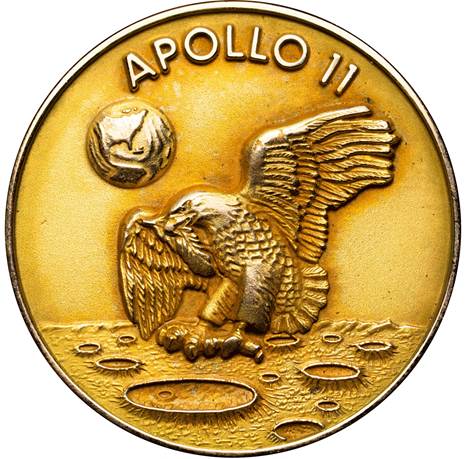
Neil Armstrong’s 14k gold Robbins Medal, flown to the moon with him on his Apollo 11 landing, realized $2,055,000 in a July 2019 Heritage auction.
Understanding Flown Artifacts
There is some key terminology to help collectors understand an item’s provenance and significance. “Flown” refers to material that has traveled beyond Earth’s atmosphere. That includes items from the Space Shuttle program, though Palmer offers a caveat: “The first three Shuttle missions have a fair amount of interest, but it falls off quite a bit after that because it wasn’t something new.” While later missions can offer more affordable entry points, their collectibles generally don’t command the same values. Then there’s Kapton foil, which was used as insulating material on various spacecraft. For collectors looking to get into flown material, small pieces go for around $500, while larger examples can reach $12,000. Depending on the mission and where the material traveled, such pieces may be classified as flown or surface-flown. Collectors also seek out surface-worn or surface-used items — like the Apollo 14 camera brush from the collection of astronaut Fred Haise that recently sold at Heritage for $50,000. “Anything that was taken out, exposed to the lunar surface, and actually used on the moon — tools, maps, charts, any type of equipment — that is definitely the highest bar,” Palmer says.
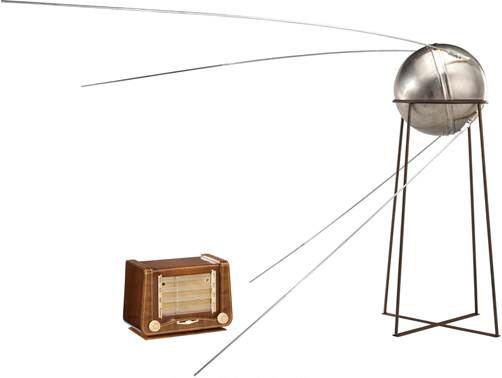
This original 1957 test model of the ‘Sputnik-1’ satellite, which effectively gave birth to the Space Race between the United States and the Soviet Union, sold for $375,000 in a December 2022 Heritage auction.
The Space Race Still Leads
Viewers of shows like Apple TV’s For All Mankind or its 2026 spinoff, Star City, understand that even when fictionalized, the Space Race remains a captivating period in exploration and history — even for those who weren’t alive to experience it. “The main focus of the majority of Heritage collectors is the Space Race, which comprises the early 1960s to the last Apollo mission in 1972,” Palmer says. Earlier material also attracts interest, particularly items related to Russian rocket scientist Konstantin Tsiolkovsky. Palmer says Heritage has experienced “a bit of an influx of younger buyers” and acknowledges that pop-culture influences like the Apple TV shows may have something to do with it. Renewed efforts to return humans to the moon could add to that enthusiasm. “It seems like we’re full steam ahead trying to get back where we left off,” Palmer says, “and the closer we get to landing again, the more the original Space Race memorabilia will be in demand.”