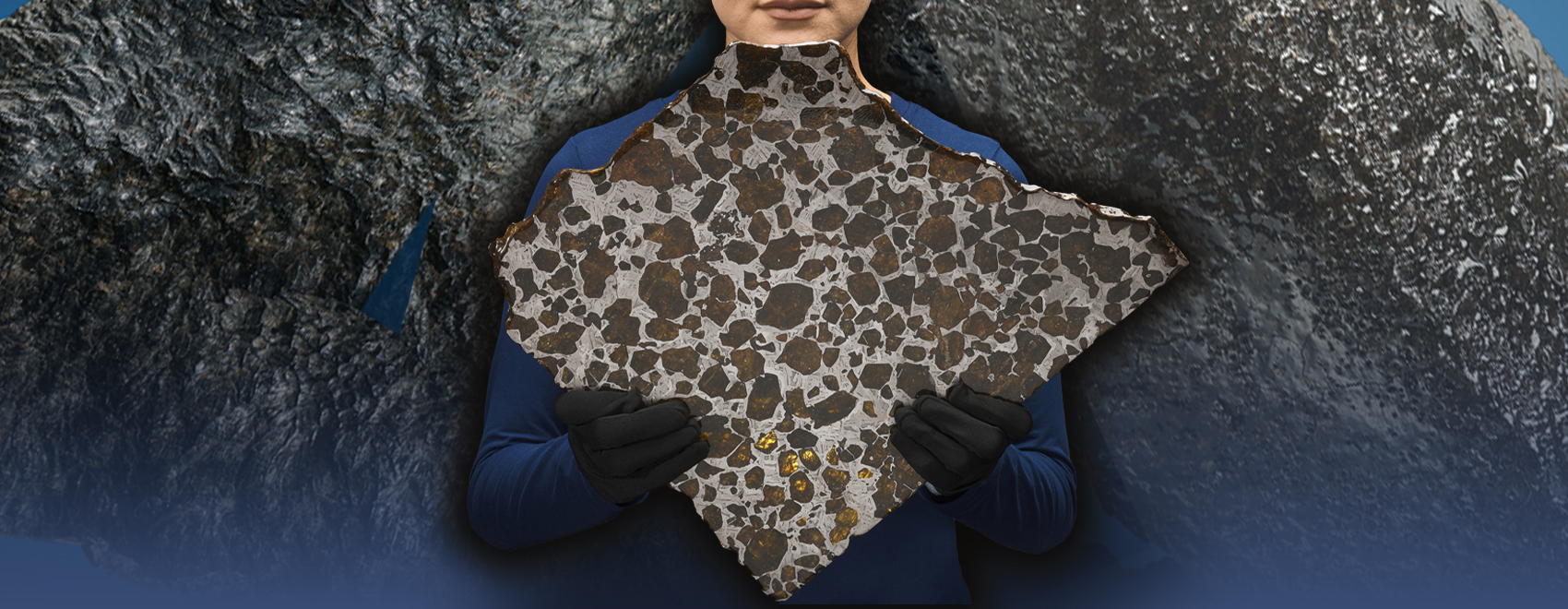
NOT ALL SPACE ROCKS ARE CREATED EQUAL. HERE’S WHY COLLECTORS PRIZE CERTAIN SPECIMENS ABOVE ALL OTHERS.
By Craig Kissick | August 18, 2026
While any extraterrestrial rock that makes it to Earth’s surface is surely rare, some meteorites are more special than others. Some preserve gemstone-quality crystals formed billions of years ago, while others are the first recovered fragments of newly witnessed falls or even originated on another planet entirely. These characteristics transform already uncommon space rocks into the crown jewels of natural history collecting. Heritage’s August 26 Natural History Signature® Auction showcases several outstanding examples that demonstrate exactly what makes an inherently rare meteorite something singularly special.
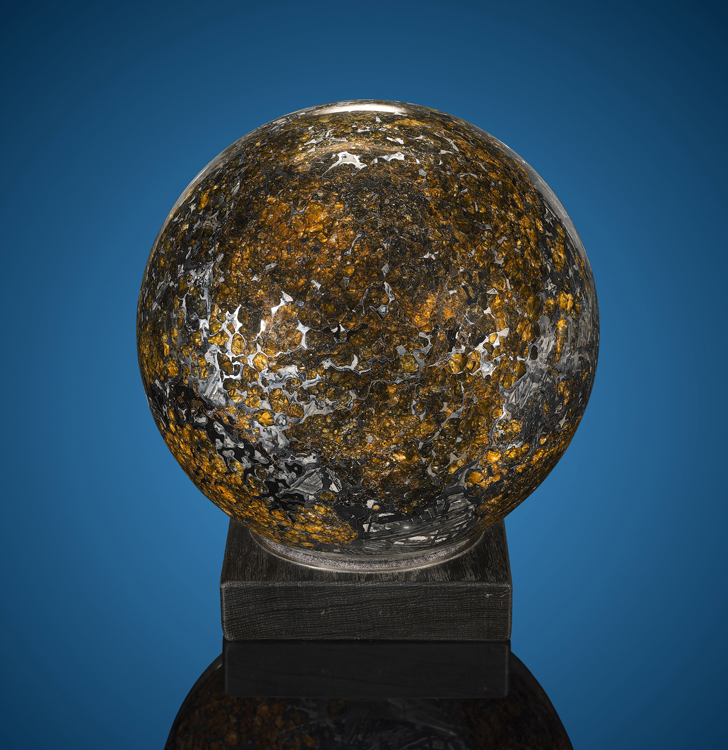
Seymchan meteorite sphere. 26.76 kilograms. Pallasite, PMG. Magadanskaya oblast, Russia. Found: June 1967. Available in Heritage’s August 26 Natural History Signature® Auction.
The Beauty Factor
Sometimes meteorite material will be fashioned into a true work of art, as is the case with the August auction’s cover lot: an incomparable Seymchan pallasite sphere weighing 59 pounds (27 kg). In addition to being the rarest category of meteorite — representing less than 200 out of some 79,000 classified varieties in the Meteoritical Bulletin database — pallasites are often considered the most beautiful due to the presence of olivine crystals from outer space. Olivine is the mineral component of the August birthstone peridot, and crystals of the colorful gem are often present in outstanding pallasite specimens. Fashioned from the celebrated Seymchan meteorite, discovered in Russia’s Magadan region, this one-of-a-kind sphere features a gorgeous coverage of vivid crystallization. The monumental specimen is also possibly the largest pallasitic meteorite sphere ever created.
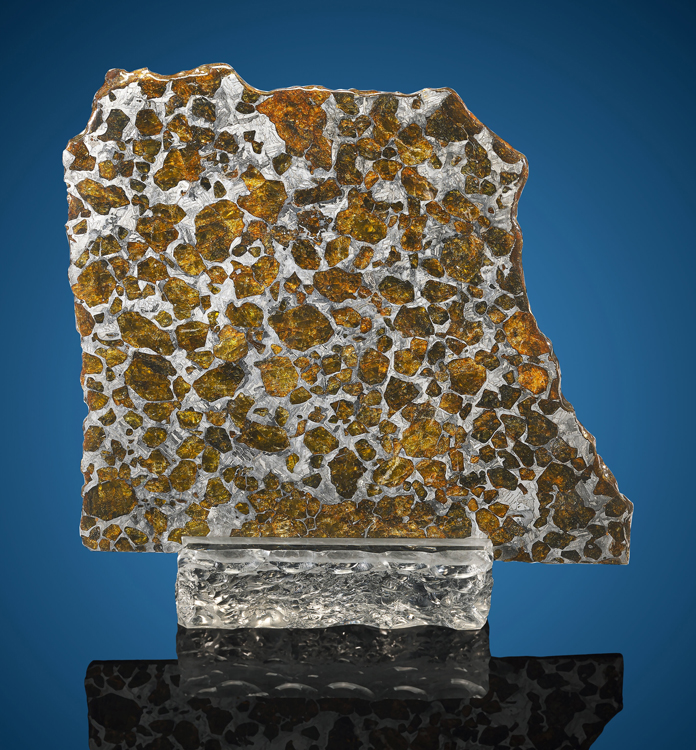
Fukang meteorite slice. 3,215.28 kilograms. Pallasite, PMG. Xinjiang, China. Found: 2000. Available in Heritage’s August 26 Natural History Signature® Auction.
Another meteorite that confirms the natural beauty of the pallasitic variety is the Fukang out of China, originating as a larger, single mass of material dating back to the origins of the solar system. Pieces have been cut and polished but are difficult to find. Slabs of any substantial size are rather uncommon and highly treasured by collectors. The example in Heritage’s August auction is an excellent and sizable representation, weighing over 7 pounds (3.2 kg). Impressive from both sides, the thick slice contains crystalline coverage over the majority of the metallic surface, with quite large, colorful, and vibrant crystals testifying to the superlative nature of Fukang.
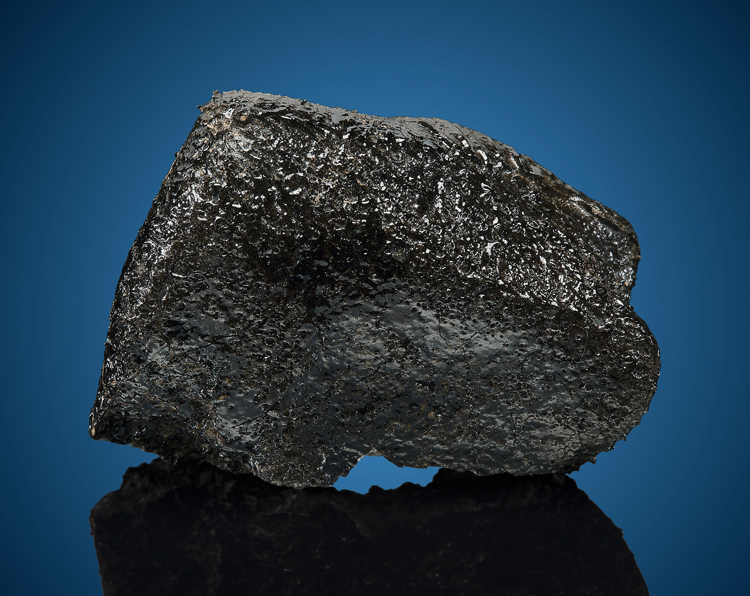
Wadsworth meteorite. 54.69 grams. Eucrite-mmict. Ohio, USA. Witnessed fall: March 17, 2026. Available in Heritage’s August 26 Natural History Signature® Auction.
The Provenance Factor
Oftentimes, certain buzzwords tell the story of a special specimen, as is the case with an exceptional fragment of the Wadsworth meteorite that fell in Ohio earlier this year on Saint Patrick’s Day. This meteorite represents a rare witnessed American fall, making it inherently more valuable to collectors given the additional layer of provenance. The piece also boasts a fresh fusion crust, the dark “skin” of the meteorite resulting from a fiery descent through Earth’s atmosphere. The burned exterior is jet black in color and seems almost like liquid, contrasting beautifully, and dramatically, against the exposed section of the rock’s stark and lightly colored internal composition. This represents the sixth-largest piece found.
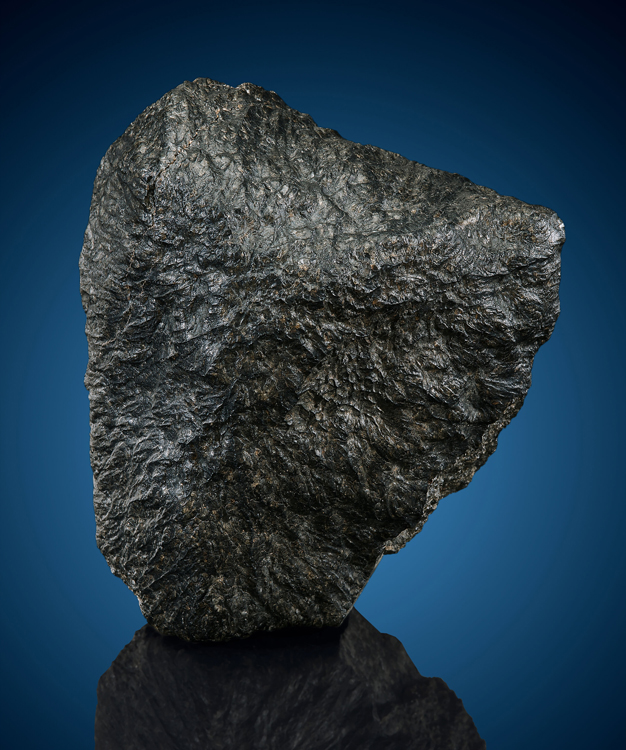
Stardust Mine Martian meteorite, main mass. 875.58 grams. Martian (shergottite). Arizona, USA. Found: 2024. Available in Heritage’s August 26 Natural History Signature® Auction.
The Origin Factor
Lastly, the origin and attributes of a rock from space can result in a true treasure from the vast reaches of our solar system. Meteorites from Mars certainly fit the bill and can represent some of the rarest extraterrestrial material. Weighing 875 grams, the Stardust Mine meteorite offered in this auction is the main mass, or largest extant piece, recovered from the 2024 fall in Arizona. Yet it is the myriad characteristics of this Mars rock that make it truly exceptional. Featuring oriented shape, dynamic flow lines, and, of course, a massive size, this offering that was recently added to the Meteoritical Bulletin is simply sublime. This shergottite is as beautiful a Martian meteorite as likely to be seen anywhere.
Any meteorite is a treasure in its own right, if for no other reason than the distance it has traveled and the unique set of circumstances that brought it to Earth. Meteorites also represent an infinite trove of information of scientific value and intellectual appeal. With so many classified meteorites, and meteors falling constantly into Earth’s atmosphere, that knowledge base is ever growing as we learn more and more about these rocky visitors from outer space. Yes, meteorites are all inherently rare, but some are more special than others — and for reasons that are out of this world.