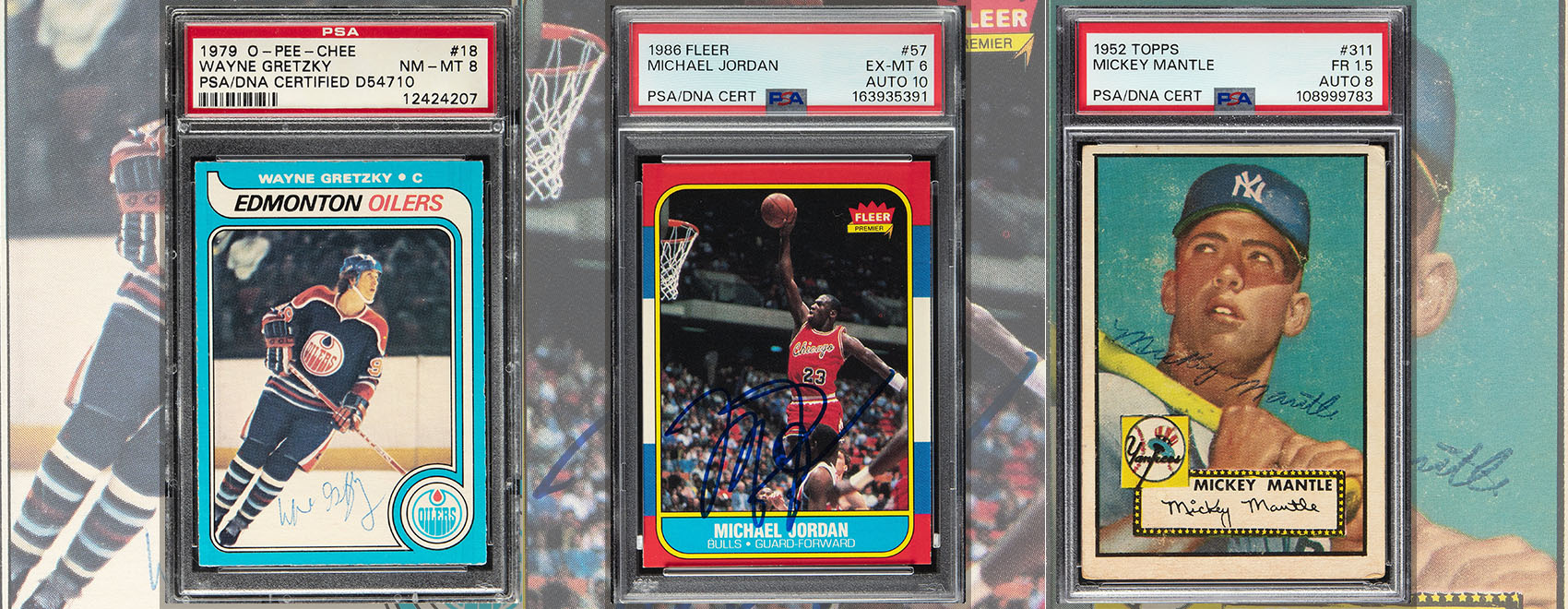
NOT ALL SIGNED ROOKIE CARDS ARE CREATED EQUAL. THOSE AUTOGRAPHED EARLY IN AN ATHLETE’S CAREER CARRY SPECIAL SIGNIFICANCE.
By Chris Ivy | October 20, 2026
Agreat rookie card captures the beginning of an athlete’s public legend. A period autograph captures the athlete at that same moment — before the championships, records, endorsements, and mythology that would define any Hall of Fame career. When the two survive together, collectors are not simply buying an autographed card. They are buying two forms of history preserved on one object, and that distinction is starting to command a significant market premium.
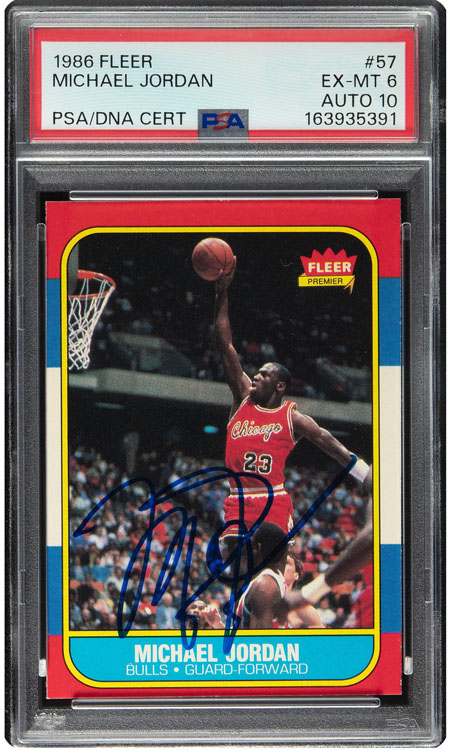
Signed 1986 Fleer Michael Jordan Rookie #57 PSA EX-MT 6, PSA/DNA Auto 10. Sold for $195,200 in an August 2026 Heritage auction.
The hobby already recognizes the separate importance of rookie cards and autographs. Rookie cards represent an athlete’s first nationally collected cardboard appearance, while signatures create a direct physical connection between player and collector. A rookie card signed during, or reasonably close to, the player’s rookie era combines those two qualities while adding another essential ingredient: scarcity. Modern superstars may sign thousands of photographs, jerseys, and newly manufactured cards over their lifetimes. Far fewer collectors thought to have important rookie cards signed when those cards were new. Some children carried cards to stadiums. Others mailed them to teams. Many signed cards were handled, taped into albums, or eventually discarded. Their survival rate — particularly in attractive condition — is naturally low.
Direct comparisons can be tough due to the dozens of factors that establish the value of these collectibles. However, recent auction results demonstrate how collectors are beginning to pay strong numbers for period-signed rookie cards.
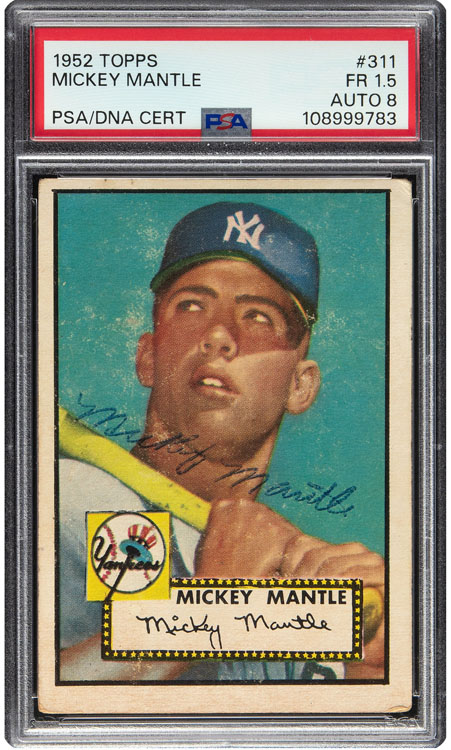
Period-Signed 1952 Topps Mickey Mantle #311 PSA Fair 1.5 Auto 8. Sold for $945,500 in a December 2025 Heritage auction.
Arguably the most celebrated postwar baseball card, the 1952 Topps Mickey Mantle is among the hobby’s most coveted collectibles. Mantle signed extensively later in life, particularly as the sports-memorabilia business expanded during the 1980s and early 1990s. Nevertheless, authentically signed 1952 Topps examples remain exceptionally scarce. The market should make an additional distinction between a rookie card signed decades later and one signed during the athlete’s rookie period. Both are desirable, but they are not historically equivalent. A modern autograph placed on an old card combines two important collectibles at a later date. A period-signed rookie is an artifact created while the story was still unfolding.
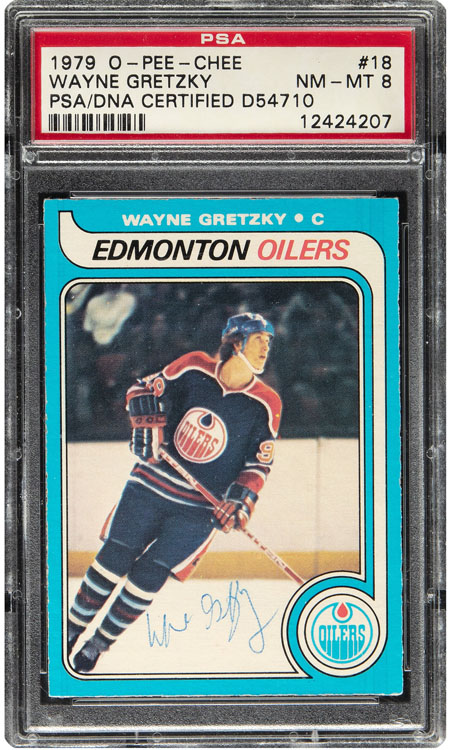
Signed 1979 O-Pee-Chee Wayne Gretzky Rookie #18 PSA NM-MT 8. Sold for $39,040 in a March 2026 Heritage auction.
That chronology can make the card far more evocative. A Michael Jordan signature obtained outside Chicago Stadium in the 1980s, a Wayne Gretzky autograph collected during his first NHL season, or a Mantle signature dating from the early 1950s transports the collector to a specific place and time. The card becomes evidence of an encounter, not merely a platform for a signature. Card condition, autograph placement, ink strength, and signature grade also affect value. A bold, unobstructed signature may justify a larger premium than a faded or poorly positioned example. The ideal specimen retains strong eye appeal in both components: the card and the autograph. The market evidence is already compelling. Signed versions of landmark cards have produced multiples of comparable later signed examples. Yet the rarest category — authentic, well-documented, period-signed rookie cards — still deserves broader recognition. These cards preserve the athlete’s image and handwriting from the dawn of a legendary career. They are rookie cards, autographs, and pieces of eyewitness history all at once.
While period-signed rookie cards do bring a premium in the current market, I believe that premium will continue to expand as collectors realize the true scarcity of period-signed examples and begin to value them accordingly.