UNSEEN PUBLICLY SINCE THE 1920S, THESE WORKS OFFER NEW INSIGHT INTO THE CELEBRATED RUSSIAN ARTIST’S TRANSATLANTIC CAREER
By Nick Nicholson | December 2, 2025
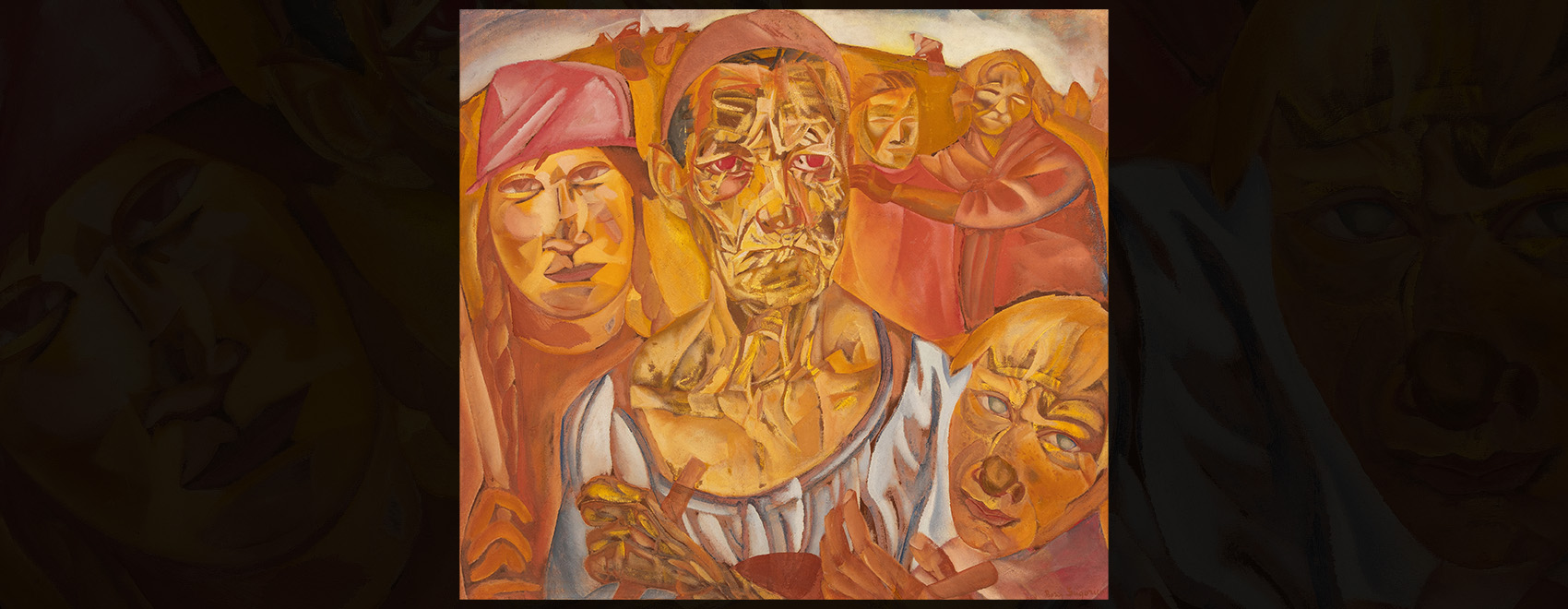
For the first time in nearly 100 years, three extraordinary paintings by Russian émigré artist Boris Grigoriev are being publicly exhibited and offered at auction. Toilers of the Fields comes from his masterwork Raseya series; his Portrait of Mrs. Fairman Dick depicts New York gallerist Gladys Roosevelt; and his striking portrait of Lydia Koreneva as Lise from Dostoevsky’s The Brothers Karamazov, long known only from a pencil sketch published in 1924, is now identified as a fully realized painting executed from life in New York in 1925.
These works, which serve as centerpiece offerings in Heritage’s December 17 Imperial Fabergé & Russian Works of Art Signature® Auction, enrich our understanding of Grigoriev’s New York period and illuminate the remarkable roles of two Roosevelt sisters – Gladys Roosevelt Dick and Jean Schermerhorn Roosevelt – whose advocacy helped shape his American career. Their patronage, curatorial work, and pioneering gallery initiatives were instrumental in broadening the reception of Russian modernism in the United States during the interwar years.
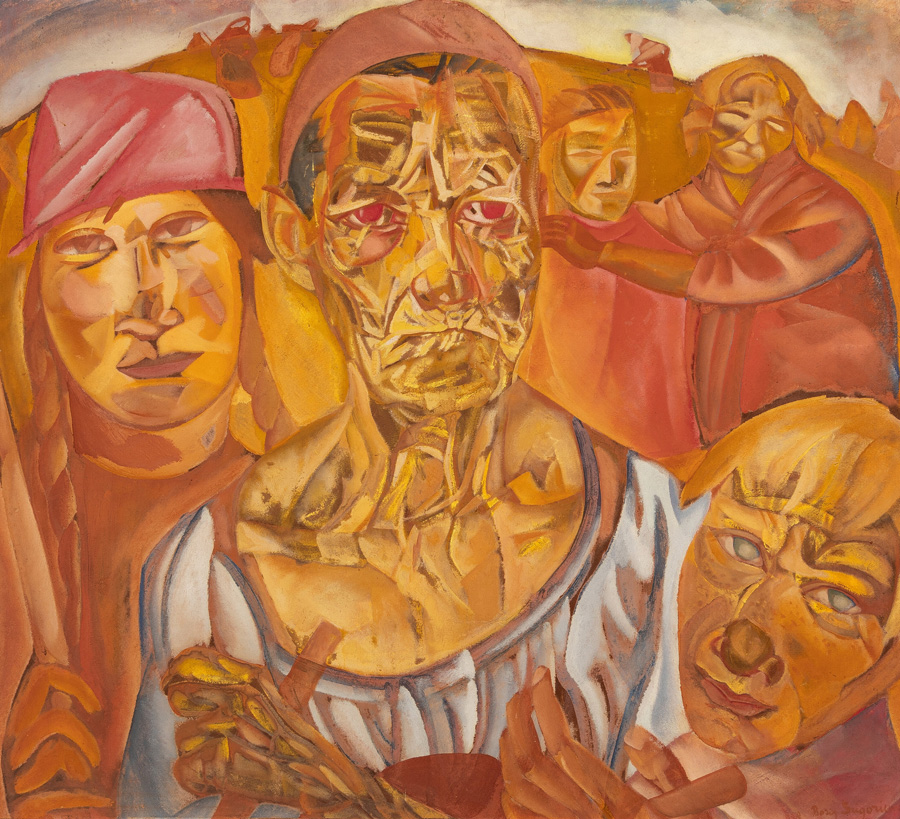
Boris Grigoriev’s ‘Toilers of the Fields,’ one of three rediscovered Grigoriev paintings available in Heritage’s December 17 Imperial Porcelain & Russian Works of Art Signature® Auction, is among the defining works of the artist’s celebrated ‘Raseya’ series – expressive, humane, and emblematic of his portrayal of the Russian peasantry in exile.
Boris Grigoriev (1886–1939): His Life and New York Period
Boris Dmitrievich Grigoriev was a Russian painter, graphic artist, and writer whose life carried him from the Volga region to St. Petersburg, Paris, Berlin, and New York. Born in Rybinsk in 1886, he studied at the Stroganov School in Moscow before advancing to St. Petersburg’s Imperial Academy of Arts, where he absorbed influences ranging from Art Nouveau to Symbolism under the guidance of Kiselyov, Kardovsky, and Arkhipov. His early exhibitions with the Union of Impressionists and later with the Mir Iskusstva (World of Art) group positioned him within the evolving currents of Russian modernism.
The Revolution of 1917 marked a decisive rupture. Leaving Russia in 1919, Grigoriev joined the artistic émigré communities of Western Europe. In Paris, he contributed vigorously to the cultural life of the diaspora, producing the seminal Raseya series – a searching portrait of rural Russia that blended ethnographic observation with expressive form and spiritual symbolism.
The Raseya volumes published in Berlin in 1921 and 1922 sealed his international reputation. By the mid-1920s, Grigoriev had relocated to New York, where he remained active until around 1930. His American years were marked by prolific exhibitions at The New Gallery, Grand Central Art Galleries, and the Scott & Fowles Gallery; by collaborations with émigré journals; and by a deepening engagement with American collectors, critics, actors, and intellectuals. His style during these years moved toward a monumental clarity, shaped by theatrical subjects, portraiture, and an ongoing concern with the human condition in all its complexity.
Though Grigoriev returned to France in the early 1930s, the New York period left a lasting imprint on his work – an imprint inseparable from the circle that supported him, including the Roosevelt sisters.
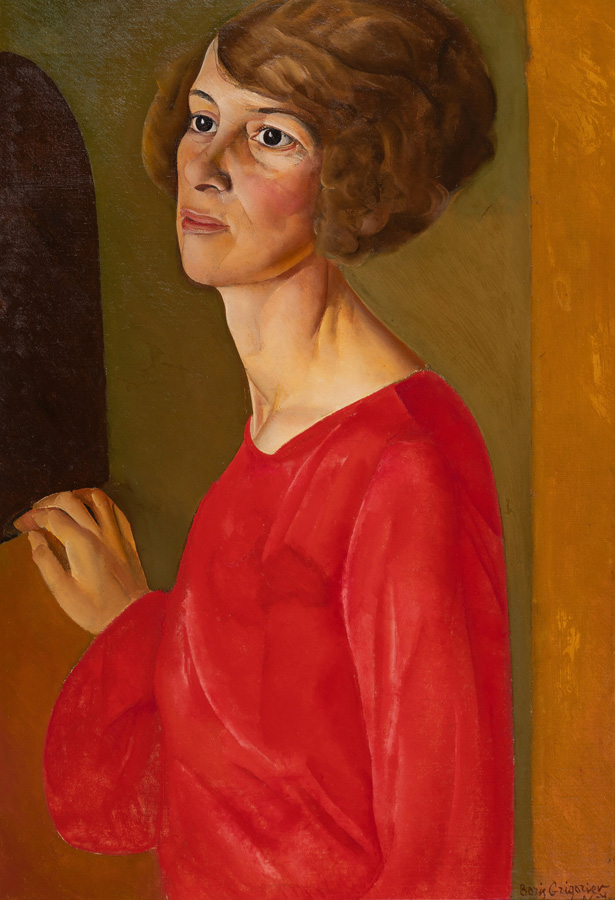
Grigoriev painted this portrait of New York gallerist Gladys Roosevelt Dick during his first visit to the United States. The circa 1922 work stands among his finest achievements in portraiture, exemplifying the distinctive synthesis of neoclassical structure and expressionist intensity that marked his painting of the early 1920s.
The Roosevelt Sisters and the Interwar New York Art World
Gladys Roosevelt (later Mrs. Fairman Dick, 1889–1926), a cousin of President Theodore Roosevelt, emerged as a significant figure in New York’s modern art scene during the 1910s and 1920s. Born into a world of social formality and tradition, she stepped beyond its confines with conviction. After her debut in 1913 and marriage to Fairman Rogers Dick, she became part of a vibrant cultural milieu centered on artistic experimentation and intellectual exchange.
Alongside attorney, artist, and collector James N. Rosenberg, Gladys founded The New Gallery, one of New York’s pioneering modernist exhibition spaces. Her curatorial vision and refined eye placed her among the key women who shepherded American modernism between the wars – alongside Katherine Dreier and Gertrude Vanderbilt Whitney. It was in this atmosphere, and through Rosenberg, that she and her sister Jean Schermerhorn Roosevelt first encountered Boris Grigoriev.
Exhibition records suggest that Gladys acquired Toilers of the Fields directly from Grigoriev around 1923 and commissioned her own portrait soon thereafter. These works were shown at the Worcester Art Museum and at The New Gallery in 1924, where Gladys hosted a reception and dance in the artist’s honor – events that played a meaningful role in advancing his American reputation.
Gladys’ untimely death in a riding accident in 1926 cut short a dynamic life, but her influence endured. Her sister Jean inherited the collection and, in Gladys’ memory, founded the GRD (Gladys Roosevelt Dick) Studio Gallery. Jean’s commitment to social progress and artistic freedom shaped the gallery’s mission to support émigré and modernist artists who often struggled for visibility in prewar America. Under her direction, the GRD Studio became an important site for avant-garde experimentation.
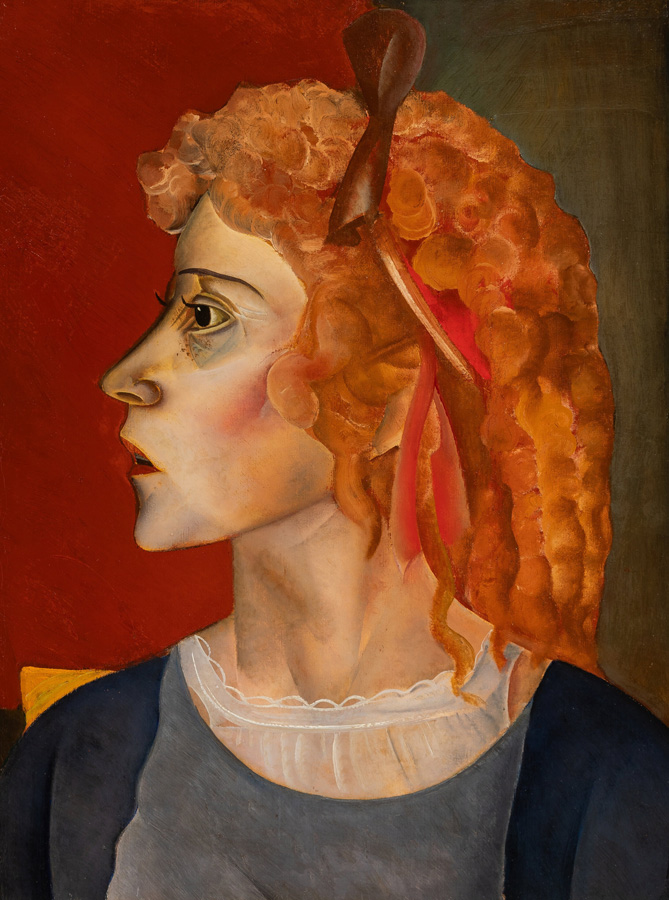
Grigoriev’s stunning circa 1924 portrait of an actress, recently identified as Lydia Koreneva in the role of Lise from Dostoevsky’s ‘The Brothers Karamazov,’ was previously only known from a pencil sketch published in 1924.
The portrait later known as Portrait of an Actress – likely acquired by Rosenberg and exhibited at The New Gallery in 1924 – was long enigmatic until its recent identification as Lydia Koreneva, a star of the Moscow Art Theatre. Born in Tambov and trained under Stanislavski, Koreneva became renowned for her roles in The Brothers Karamazov, The Cherry Orchard, and Three Sisters. Her performances on the company’s 1922–24 world tour, including sold-out performances at John Proctor’s Theater in New York, brought her to Grigoriev’s attention. A pencil drawing of her appeared in his Faces of Russia (London, 1924), but the fully realized painted portrait remained in Rosenberg’s collection.
Archival notes from the GRD Studio suggest that Rosenberg later transferred several Grigoriev works – including the actress’s portrait – to Jean Roosevelt to settle financial obligations related to the closing of The New Gallery. After Jean’s death, the paintings descended through the Roosevelt family, preserved but unseen for nearly a century.
These three rediscovered works – Toilers of the Fields, Portrait of Mrs. Fairman Dick, and the portrait of Lydia Koreneva – embody the creative and cultural exchanges that shaped Grigoriev’s American career. They testify to the pivotal roles the Roosevelt sisters played in championing his work, and they stand as vivid documents of a moment when Russian modernism, American patronage, and the émigré imagination converged to produce art of lasting resonance.