
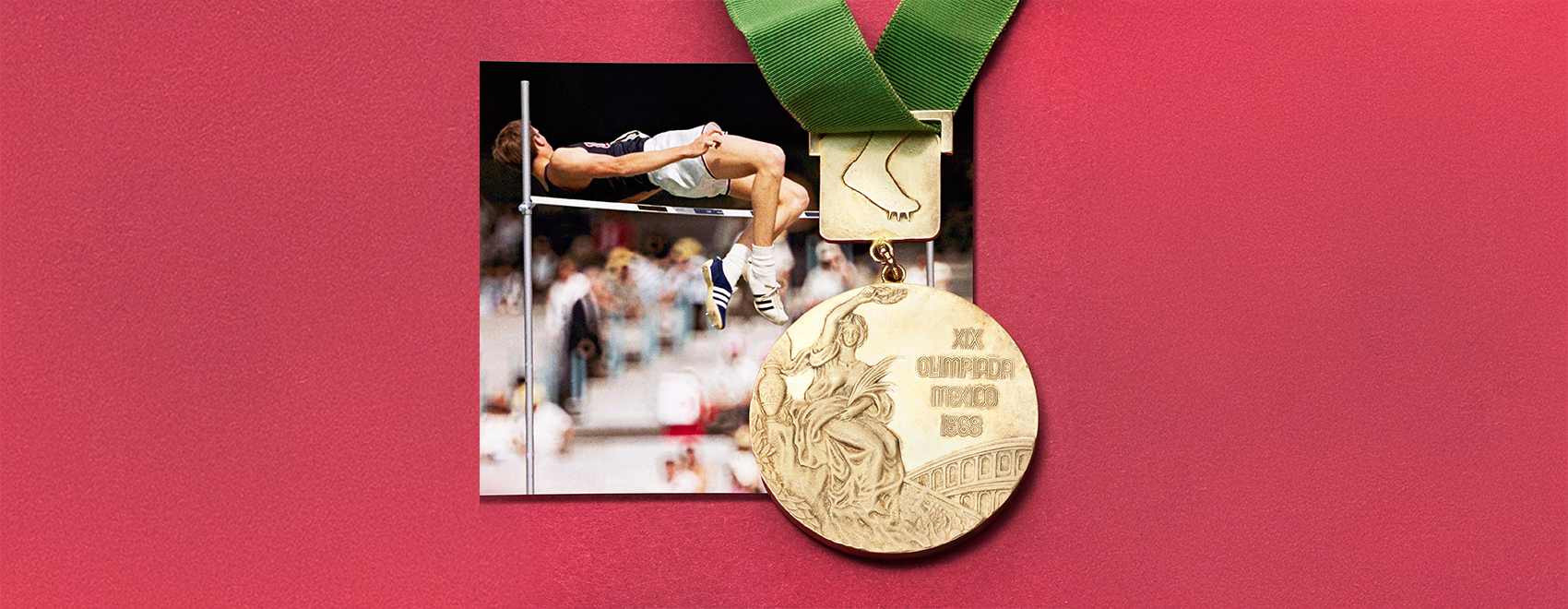
WHEN DICK FOSBURY DEBUTED HIS ‘FOSBURY FLOP’ AT THE 1968 SUMMER GAMES, HE FLIPPED THE SCRIPT ON HIGH JUMPING AND TOOK HOME GOLD IN THE PROCESS
By Steve Lansdale | August 19, 2025
As county commissioner of Idaho’s Blaine County from 2016 to 2023, Dick Fosbury took an unusual approach to his job. “He listened, he asked questions, he was never in a hurry,” says his widow, Robin Tomasi. “He thought about problems and came up with ways to solve them … and if an idea failed, he was not embarrassed about it. He would come up with another until he reached his goal. He was a creative problem solver, and he never gave up.”
That Fosbury, a civil engineering graduate of Oregon State University, embraced that outside-the-box approach is no surprise. “He prided himself on being an unconventional thinker,” Tomasi says.
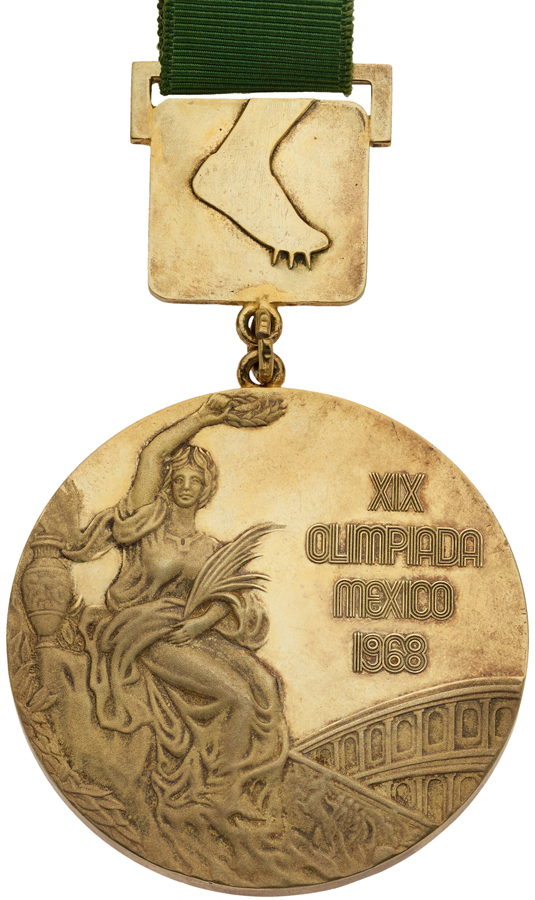
Dick Fosbury’s 1968 Mexico City Summer Olympics high jump gold medal is available in Heritage’s August 23-24 Summer Platinum Night Sports Auction.
That way of thinking helped Fosbury become the world’s best in the part of his life for which he is most famous: the high jump. Before he forever changed the event, high jumpers employed two ways of trying to clear the bar: either a forward dive or a high scissors-style kick. Realizing that a jumper’s knees bent backward, Fosbury developed a corkscrew motion in which he twisted his body during his approach to the bar, a technique that earned him a gold medal and Olympic record in the 1968 Summer Olympics in Mexico City. Now known as the “Fosbury Flop,” the technique helped him clear 7 feet, 4-1/4 inches, tops among three jumpers who passed the previous Olympic record of 7 feet, 1-3/4 inches set in 1964 by Valeriy Brumel of the Soviet Union.
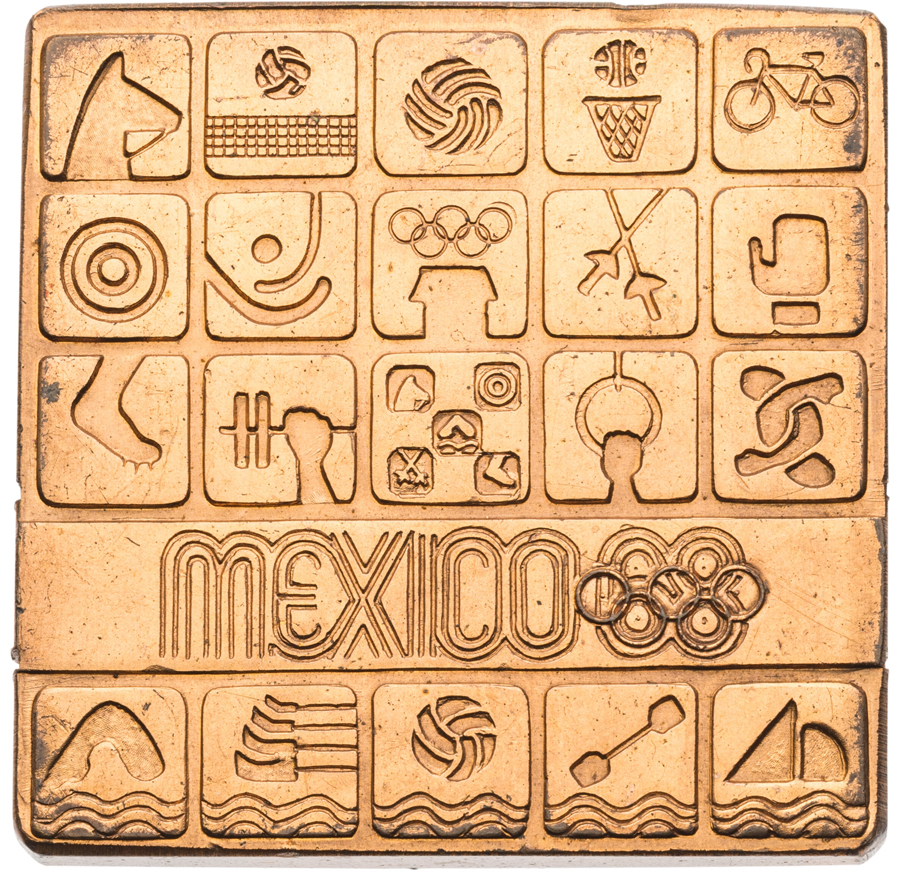
The Fosbury Flop is one of the most revolutionary technical advances in the history of track and field, and it is used by every competitive high jumper in the world. The most recognizable mementos from Fosbury’s Olympic triumph – his 1968 Mexico City Summer Olympics gold medal, which is widely considered the most important high-jump artifact in existence; his photo-matched Team USA singlet; and his 1968 Mexico City Summer Olympics participation medal – are among the trove of treasures offered in Heritage’s August 23-24 Summer Platinum Night Sports Auction.
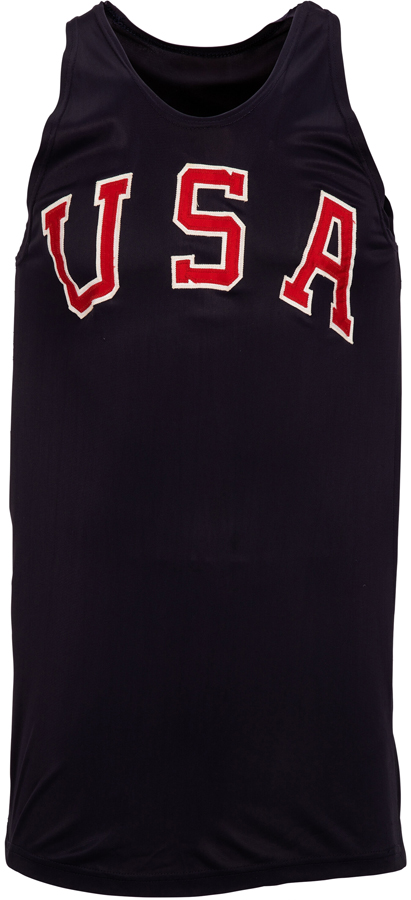
“Dick Fosbury is universally regarded as one of the most influential and groundbreaking pioneers in the history of track and field,” says Chris Ivy, Heritage’s Director of Sports Auctions. “Before him, high jumpers tried to clear the bar by straddling or hurdling over the bar, but his revolutionary idea of flopping backward over the high jump bar forever changed one of the sport’s most celebrated events.”
Fosbury began tinkering with the idea of the then-unorthodox technique “when he was maybe 12 years old,” Tomasi says. “He did it in Grants Pass [Oregon] at a high school track meet, and he had every coach there getting out a rule book – ‘That can’t be legal!’ He improved his best mark by six inches, and people took notice.
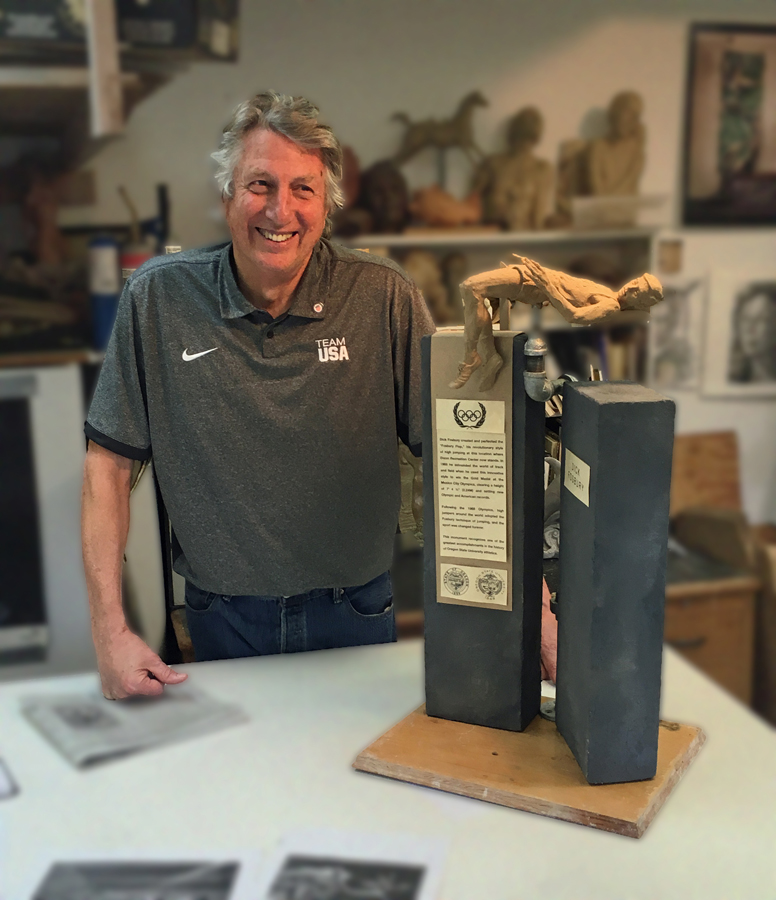
Fosbury stands next to a monument commemorating his signature high-jump technique, the ‘Fosbury Flop.’ The Oregon native and former Olympian died in 2023. Photo courtesy Robin Tomasi.
“Part of what made it work – what made so many things in his life work – was the fact that he didn’t care what others thought. He was so fortunate to be supported by his family, even when people laughed. He was an engineer, a problem solver, and he broke down the necessary components for innovation … and it worked.”
Since his career as a competitive jumper, Fosbury got involved with a number of ventures, many relating to the sport he revolutionized. He served as president of the World Olympians Association and vice president of the U.S. Olympic Association (a branch of the U.S. Olympic Committee) and was instrumental in adding Paralympians to the association. He was chairman of the Simplot Games, one of the nation’s premier high school indoor track and field events since its inception in 1979. He ran track and field camps and coached individual athletes.
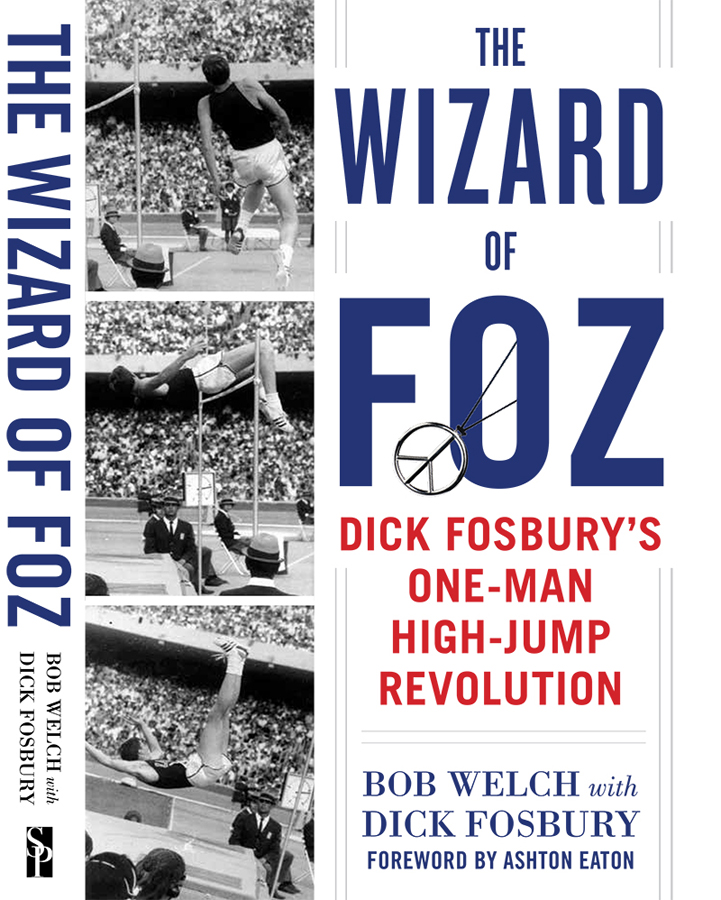
Published in 2018, ‘The Wizard of Foz’ recounts Fosbury’s path to the high-jump record books.
“What he loved most was working with kids,” Tomasi says. “When he worked track camps, he took his gold medal and let the kids hold it, as a way of seeing what is possible. With his expertise and his engineering background, he loved to break down ways to help them improve – ‘Turn your foot like this … swing your arm this way.’ He loved that – seeing them improve and get psyched about their accomplishments.”
Tomasi says her decision to offer her husband’s items in the auction is a celebration of his career, creative mind, and athletic innovation, all of which will be spotlighted in a forthcoming movie about Fosbury. “It’s about pushing his legacy in different ways,” she says, “letting people know who he was. It would be nice if these things end up somewhere that people can see them, but most importantly, I hope they end up where they can be enjoyed and appreciated and serve as an inspiration to people.”
