
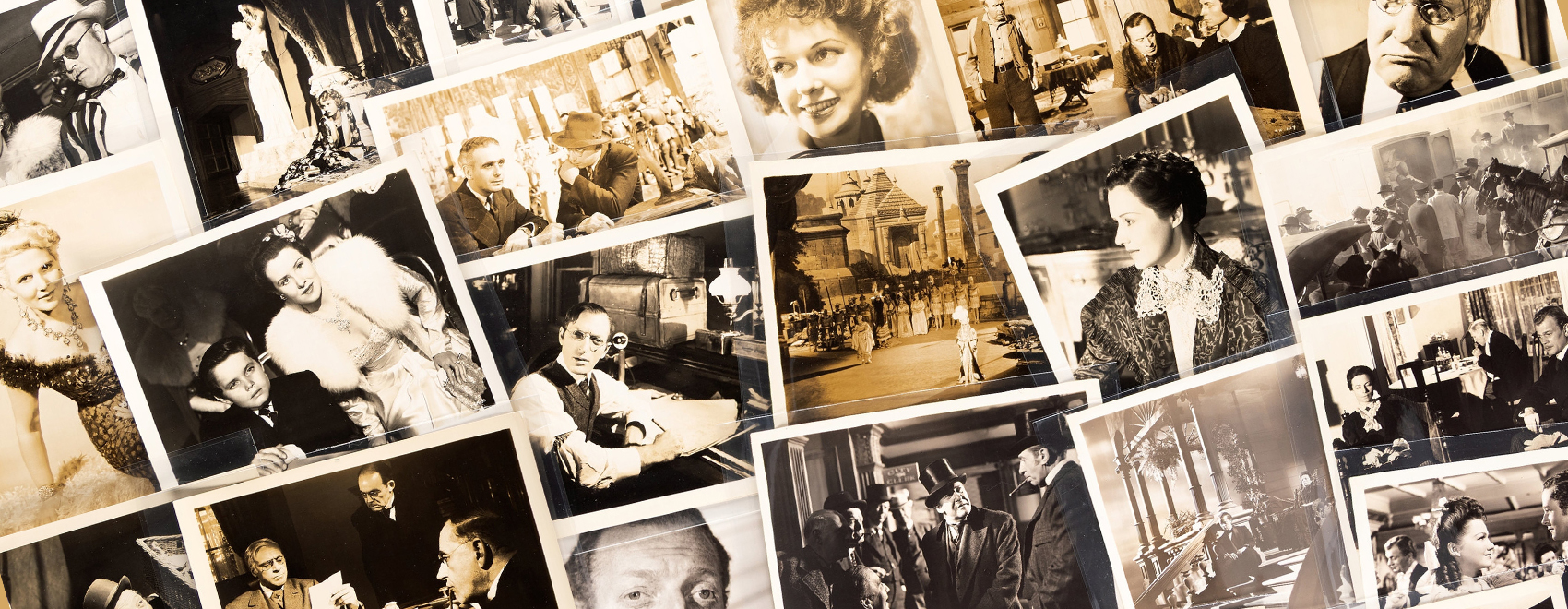
SILVER-SCREEN HISTORY COMES ALIVE IN THE YAKOB ZENTNER COLLECTION, A TROVE TEEMING WITH POSTERS, PHOTOGRAPHS, AND OTHER EPHEMERA FEATURING LANDMARK FILMS AND A-LIST FACES
By Colin Tait | February 3, 2026
The Cinema Bookshop was like something out of a movie or a novel — the kind of place you imagined should exist and yet somehow, improbably, did. Inside the London emporium were the objects that defined film history on paper: posters and lobby cards from Citizen Kane, Casablanca, Vertigo, and Jaws; studio stills capturing Greta Garbo, Marlene Dietrich, Jean Harlow, Marilyn Monroe, James Dean, and Steve McQueen at moments never meant to last beyond a publicity cycle; scripts once bearing the fingerprints of legendary directors. Press books and cinema programs traced how films were sold to the world, while contracts, production photographs, and annotated screenplays told quieter stories about how they were made. Film books lined the shelves — André Bazin’s What Is Cinema?, Hitchcock/Truffaut, Peter Bogdanovich’s insider book on Orson Welles, Leslie Halliwell’s guides — each a cornerstone of how generations of movie lovers learned to see the art of film. Every era and genre were present, from silent film and noir to horror, science fiction, romance, thrillers, epics, and B-movies. This was a place where the history of cinema lived on shelves, waiting to be found.
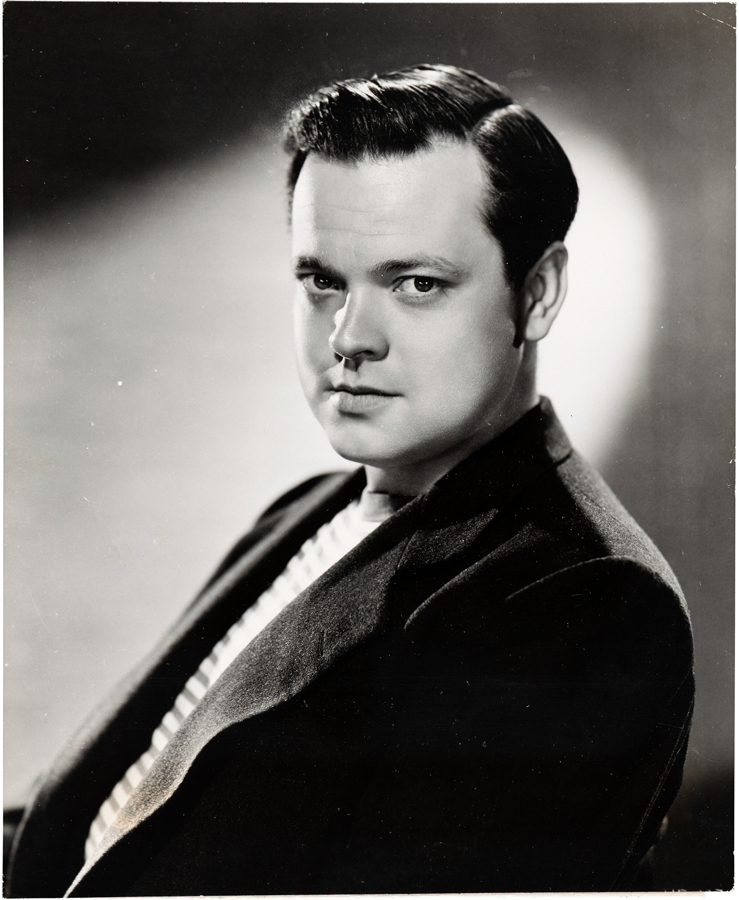
One of a hundred-plus Orson Welles photographs available in Heritage’s February 11–12 Yakob Zentner Collection Hollywood/Entertainment Signature® Auction
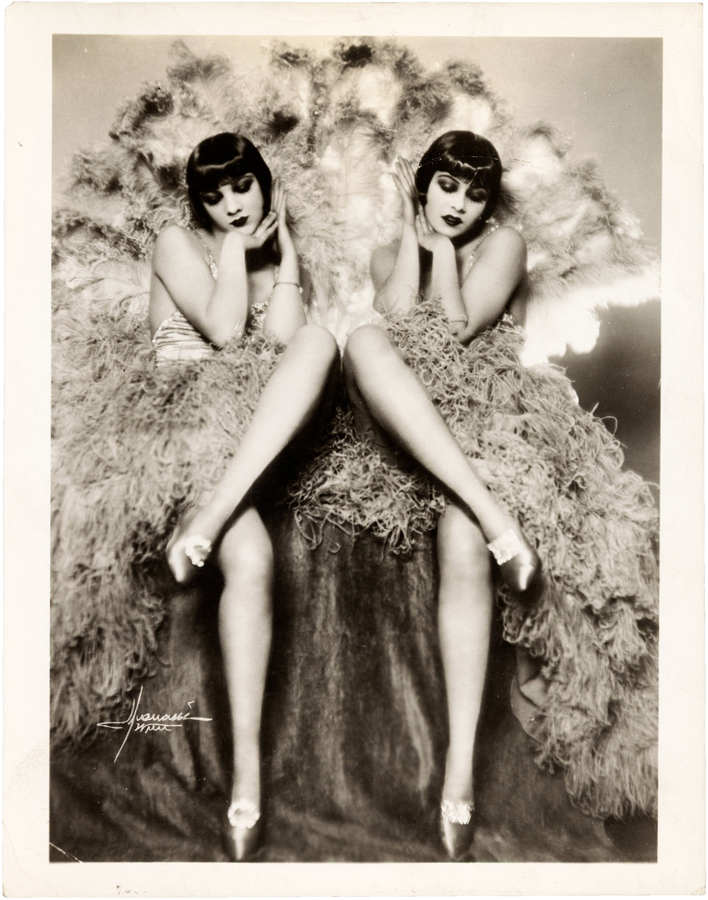
The Sisters G – Eleanor and Karla Gutöhrlein – strike a pose in this key set photograph from 1930’s ‘King of Jazz,’ available in Heritage’s February 11–12 Yakob Zentner Collection Hollywood/Entertainment Signature® Auction. One of the earliest all-Technicolor features, the lavish revue is regarded as a landmark in early sound musicals.
Once through the door, the idea became physical. Narrow aisles wound between uneven shelves, stacks leaning where decades of browsing had left them. The air carried the familiar scent of old paper, printer’s ink, and photographic stock. This was a place for wandering. You came in looking for one thing and left with another: a studio glamour still of the “It Girl” Clara Bow or Claudette Colbert, a pristine MGM publicity photograph of Judy Garland, or a forgotten writer’s contract that had somehow survived the studio purge.
The Cinema Bookshop was part archive, part working library, part time machine. Posters shared space with original scripts marked by handwritten revisions from sometimes-forgotten screenwriters and directors. Cinema programs from London premieres and press books filled with exhibitor layouts sat beside studio-issued still sets and boxes of production photographs. James Bond material surfaced here, too: first editions, posters, and production ephemera once sourced to furnish Goldeneye, the Jamaican home where Ian Fleming wrote the Bond novels. These were not display pieces. They were working objects — handled, studied, and returned to the shelf.
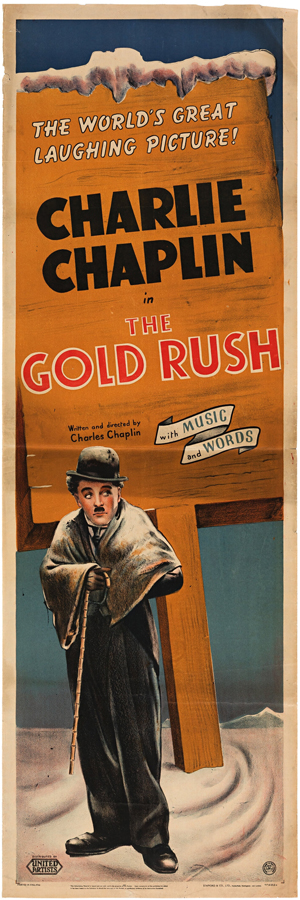
This striking British door panel, available in Heritage’s February 11–12 Yakob Zentner Collection Hollywood/Entertainment Signature® Auction, originates from the 1942 reissue of Charlie Chaplin’s ‘The Gold Rush.’
At the center of it all was Fred Zentner. A visit often followed a familiar ritual: a question, a pause, and Zentner disappearing “into the back,” returning with something extraordinary — a press book thought lost, a program from an opening night long past, a script whose survival felt almost accidental. People left with purchases, yes, but more often with stories. The Cinema Bookshop was the ideal made real — the kind of place imagined by writers and filmmakers but rarely found. And yet, for decades, it stood quietly in Bloomsbury, waiting.
That spirit did not disappear when the Cinema Bookshop finally closed. It passed on. Fred’s son, Yakob Zentner, absorbed not only the contents of the shop, but its way of thinking, its devotion to scholarship, its respect for film as both art and historical record, and its belief that paper ephemera preserves cinema’s truest memory. Under the name Blue Robin Collectables, Yakob continued his father’s work: organizing, preserving, and expanding the archive with the same care and discernment that defined the Bloomsbury shop for decades.
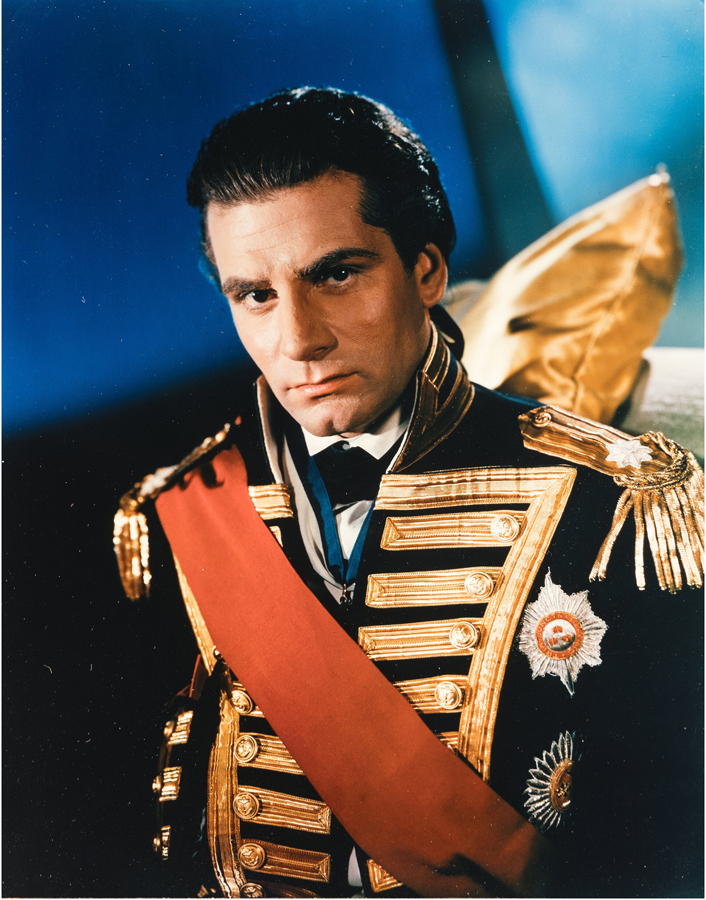
Laurence Olivier is one of the many actors from Hollywood’s Golden Age represented in Heritage’s February 11–12 Yakob Zentner Collection Hollywood/Entertainment Signature® Auction.
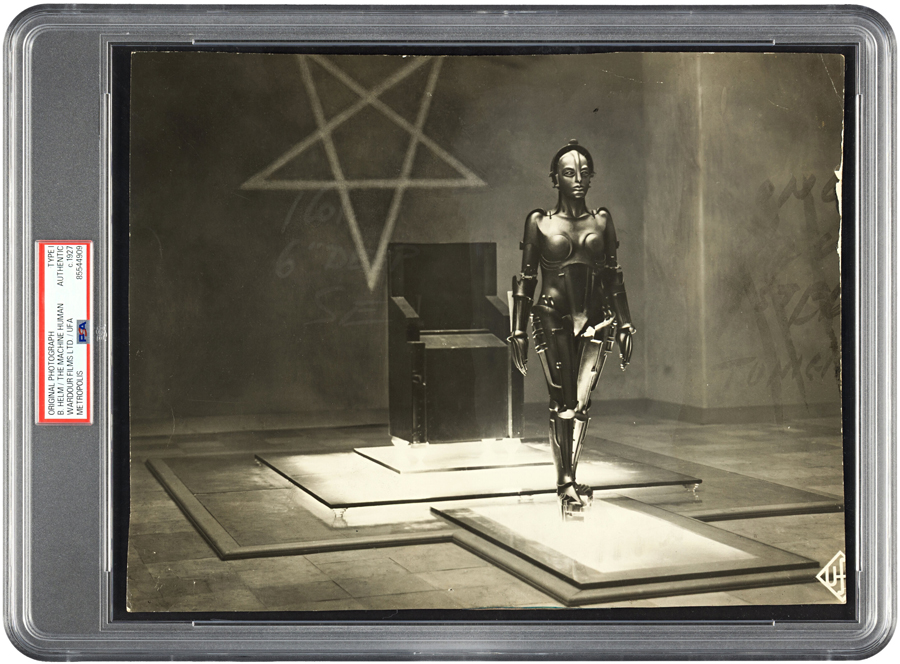
This original British photo lobby card for 1927’s ‘Metropolis’ is available in Heritage’s February 11–12 Yakob Zentner Collection Hollywood/Entertainment Signature® Auction.
Now, with its February 11–12 Yakob Zentner Collection Hollywood/Entertainment Signature® Auction, Heritage brings that experience to collectors across the globe. This offering is not just a typical auction, but the opportunity to walk through the Cinema Bookshop in its entirety — shelf by shelf and era by era. What emerges is a comprehensive repository of Hollywood and British studio material, spanning the full history of filmmaking and collecting.
Thousands of studio stills, gallery photographs, and complete original key sets trace the full arc of filmmaking, from the silent era through the height of the studio system and into modern cinema. Many survive in intact studio groupings — books and folders of production photography preserved as they were issued — offering rare insight into how films were documented internally. These include original key sets from Roger Corman’s classic horror cycle, such as The Masque of the Red Death, as well as extensive studio photography from Laurence Olivier’s Shakespeare adaptations, where cinema and classical theater converged in carefully composed, archival images.
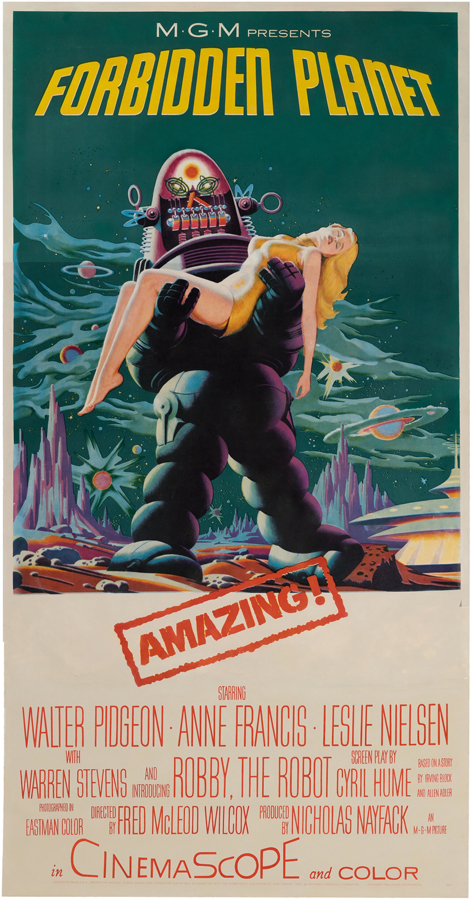
This 1956 three-sheet poster for ‘Forbidden Planet,’ MGM’s first big-budget sci-fi production, is available in Heritage’s February 11–12 Yakob Zentner Collection Hollywood/Entertainment Signature® Auction.
The poster holdings are equally expansive and international in scope. British quads, U.S. one-sheets, lobby cards, and foreign-issued variations chart how films were marketed across borders and decades. Landmark titles recur in multiple formats and territories, allowing collectors to see how imagery evolved from country to country. Science fiction and fantasy are anchored by Metropolis and Forbidden Planet, while classic animation is represented through original posters for Bambi, reflecting Disney’s global reach. Horror and genre cinema appear through rare foreign and domestic material for titles such as Blood of Dracula, capturing the bold graphic language of midcentury exploitation and drive-in culture.
Later milestones are equally well represented. Posters for The Exorcist and the James Bond films document the transition from studio-bound spectacle to international modern cinema, where marketing became as iconic as the films themselves. These works chart the rise of global franchises and the visual sophistication of late 20th-century film promotion.
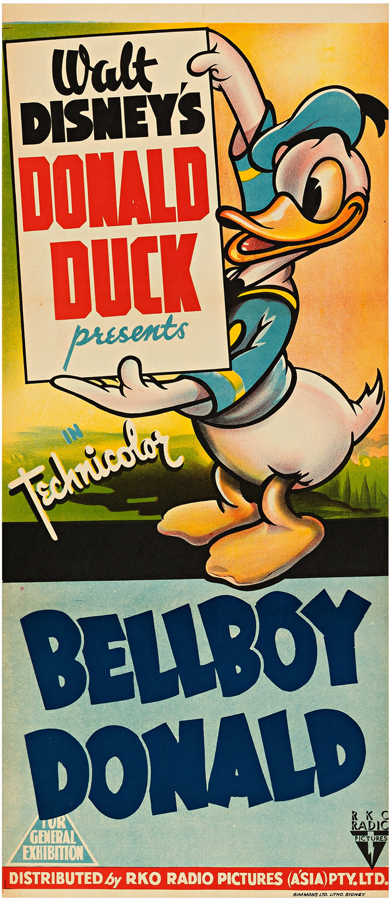
This Australian daybill for 1942’s ‘Bellboy Donald’ is one of several Disney items available in Heritage’s February 11–12 Yakob Zentner Collection Hollywood/Entertainment Signature® Auction.
Press books and promotional materials deepen the Zentners’ archive even further. Studio-issued press books for pivotal films such as Le Mans sit alongside exhibitor materials that reveal how movies were sold city by city and country by country. Packed with layouts, taglines, and suggested campaigns, these objects preserve the strategies behind cinema’s public life — how anticipation was built, stars were framed, and audiences were drawn in.
Taken together, the photographs, posters, lobby cards, and press books form a living archive of cinema’s paper history. This is not a sampling, but a complete ecosystem — one that reflects the Cinema Bookshop itself, now reassembled through the Yakob Zentner Collection Hollywood/Entertainment Signature® Auction.
From February 11–12, Heritage invites you to step inside the remarkable assemblage. To browse, to linger, and to discover the object that speaks to your own love of film — whether a photograph you recognize instantly, a poster you never thought you’d see again, or a piece of cinema’s paper history you didn’t know you were searching for until you found it. It is not simply an opportunity to acquire something rare, but to carry forward a legacy built on passion, curiosity, and reverence for the art of cinema. The shelves are open once more. What you find there is up to you.