
FROM CASASCIUS COINS TO POLYMER NOTES, PHYSICAL CRYPTOCURRENCY TRANSFORMS DIGITAL ASSETS INTO SCARCE COLLECTIBLES WITH GROWING APPEAL AMONG NUMISMATISTS
By Pia Talja | April 7, 2026
Imagine holding a real, physical Bitcoin in your hand — not just numbers on a screen, but a gleaming metal coin or crisp polymer note worth thousands (or even millions) of dollars, complete with a hidden private key that unlocks its digital fortune. Tangible Bitcoin bridges the abstract world of cryptocurrency with the timeless allure of physical collectibles, creating one of the most intriguing niches in modern numismatics.
Physical cryptocurrency consists of tangible items — metal coins, bars, or banknote-style notes — that embed real cryptocurrency value through hidden private keys. These pieces combine the hands-on appeal of traditional collectibles with blockchain technology.
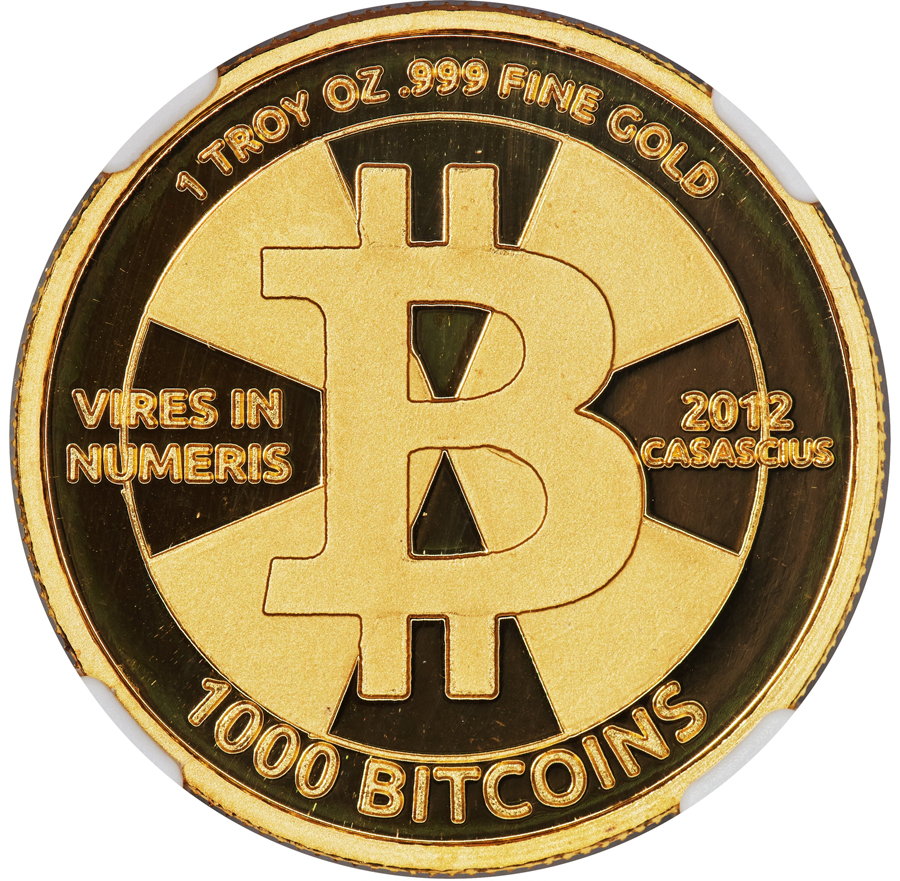
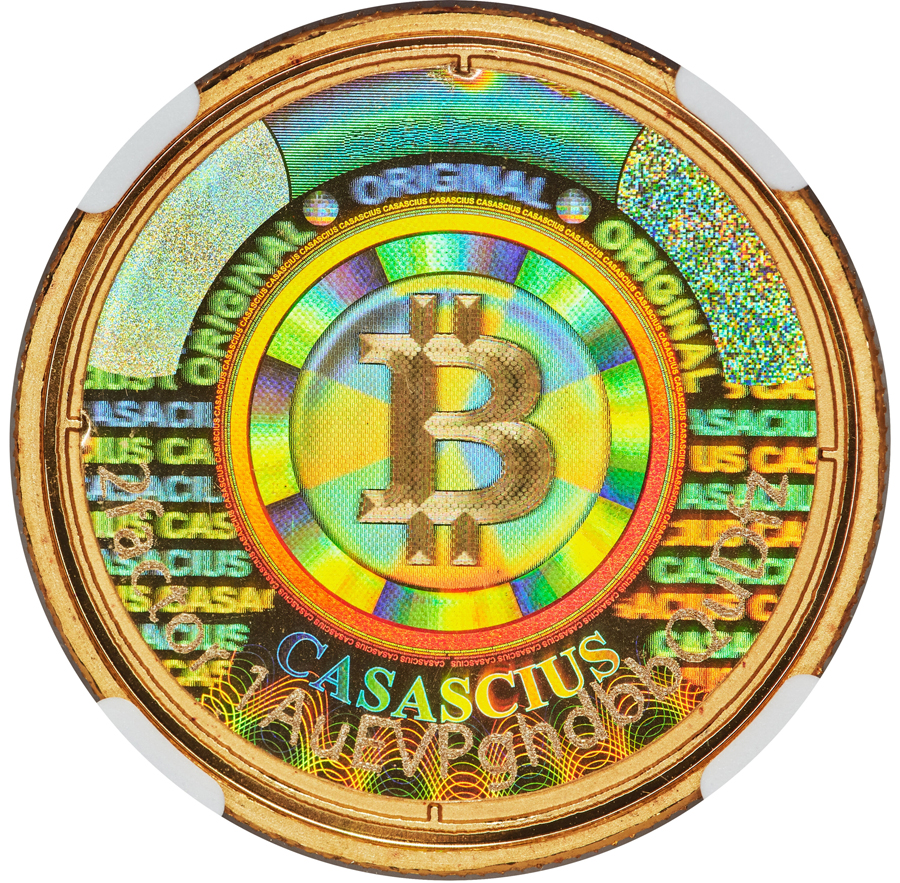
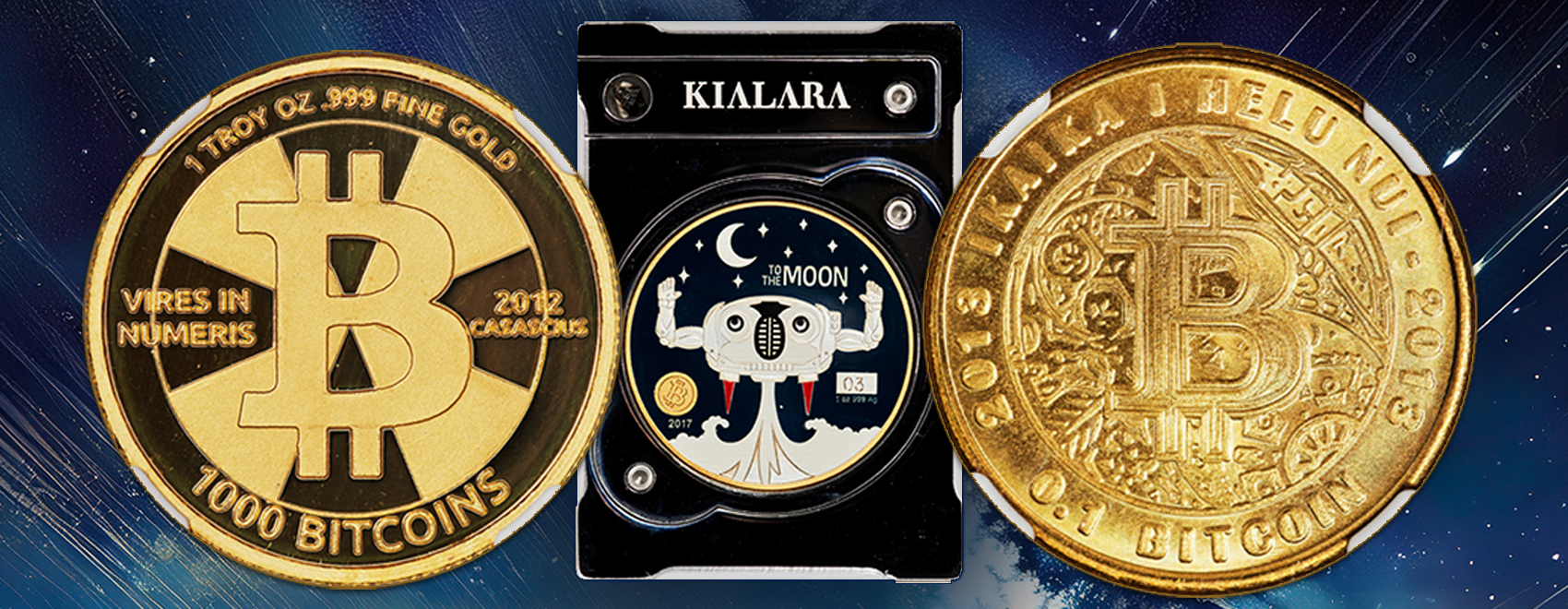
Casascius Gold Proof 1000 Bitcoin (2012, Unfunded, PR69 Ultra Cameo NGC). Sold for $97,600 in a January 2026 Heritage auction. A loaded, unpeeled example of this rare 1-ounce gold coin from Mike Caldwell’s series ranks as the world’s most valuable known coin — worth around $70 million.
The category extends beyond coins to include “currency” formats, such as polymer banknotes that serve as cold-storage wallets for Bitcoin or fractions thereof. They feature tamper-resistant seals, verification tools, and designs that echo fiat notes while championing decentralized money. Series like Casascius, Lealana, Kialara, and Polymerbit frequently trade at significant premiums over their embedded digital or material value, driven by rarity, historical significance, craftsmanship, and growing collector interest.
A key dynamic is the accelerating scarcity of unpeeled (unredeemed) early pieces. As Bitcoin’s value surges, more owners redeem them to access the underlying crypto, shrinking the pool of intact, loaded examples and making surviving unredeemed specimens increasingly rare and desirable as historical artifacts. With Bitcoin prices often in the high five to six figures in recent years, these artifacts bridge eras, appealing to both crypto enthusiasts and traditional numismatists.
Bitcoin was designed as decentralized money, capped at 21 million coins and verified by blockchain consensus. Its fixed supply recalls precious metal coinage more than fiat currency, yet its purely digital existence prompted early adopters to create tangible embodiments.
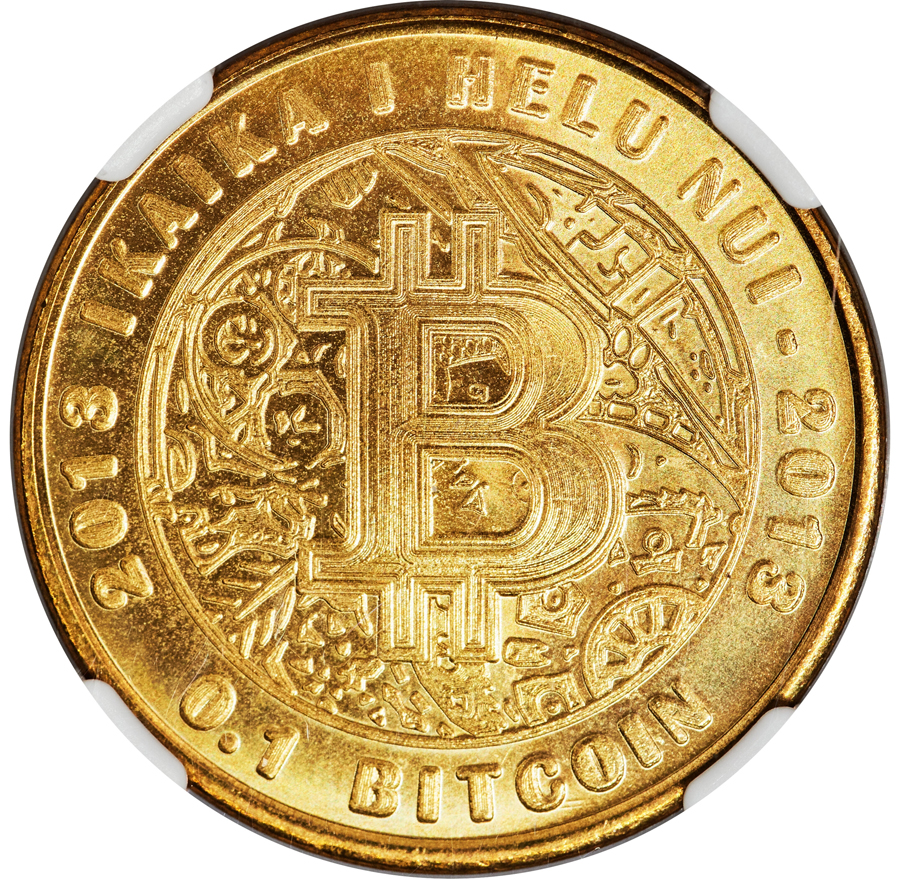
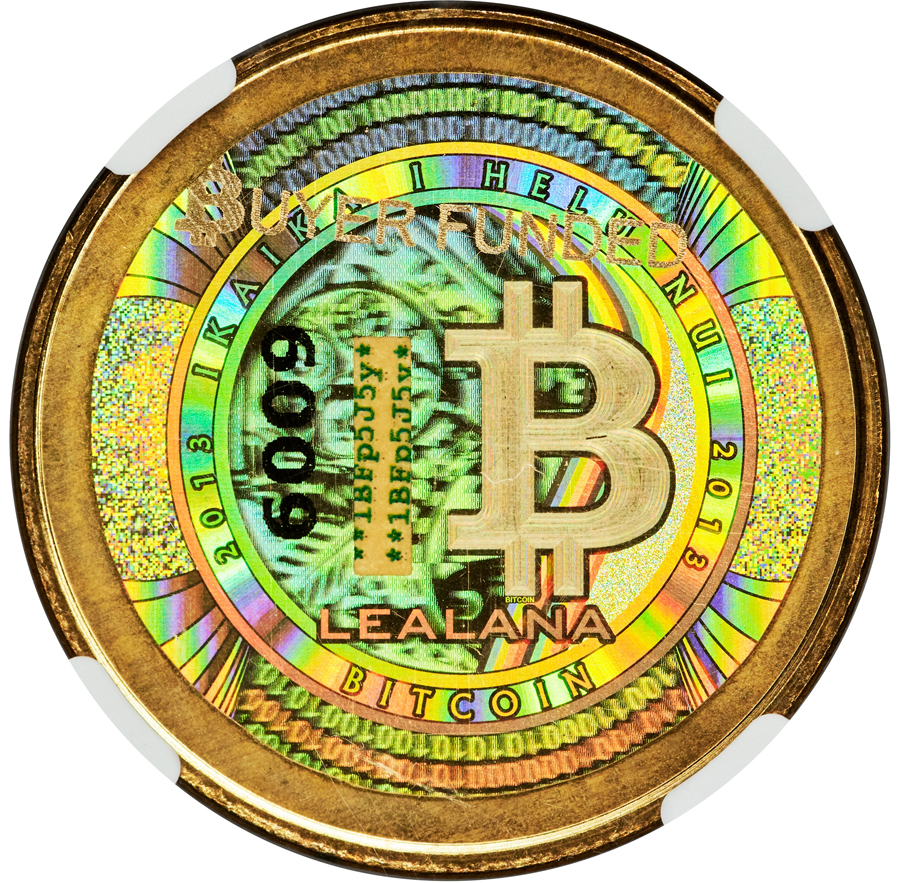
Lealana Brass 0.1 Bitcoin (2013, Loaded/Unredeemed, MS68 NGC). Sold for $19,520 in a January 2026 Heritage auction. This coin holds 0.1 BTC precisely (= peel value). The auction value consists of what that 0.1 BTC is in spot BTC converted to USD on the day of the sale ($9,320 in this case, as spot was ~$93,200), and the premium over peel was $10,200 ($9,320 + $10,200 = $19,520) — more than 100% premium over peel for the collectability of the tiny brass piece.
In 2011, Mike Caldwell introduced Casascius coins: struck metal pieces incorporating private keys beneath holographic security seals. They functioned as cold-storage wallets while giving Bitcoin material presence. Other creators followed. Lealana issued fractional pieces with limited mintages. Kialara produced sculptural bars and art notes blending contemporary design with secure storage. Polymerbit adapted high-security polymer substrates to user-loaded Bitcoin notes.
A hybrid field emerged — part monetary instrument, part collectible object.
Physical cryptocurrency typically derives value in two ways. Loaded examples retain embedded digital currency, often referred to as peel value. Unfunded or unloaded pieces trade on metal content, rarity, condition, and historical importance. As Bitcoin’s price has risen, many early loaded pieces have been redeemed, permanently reducing the supply of intact examples and increasing the scarcity of those that remain.
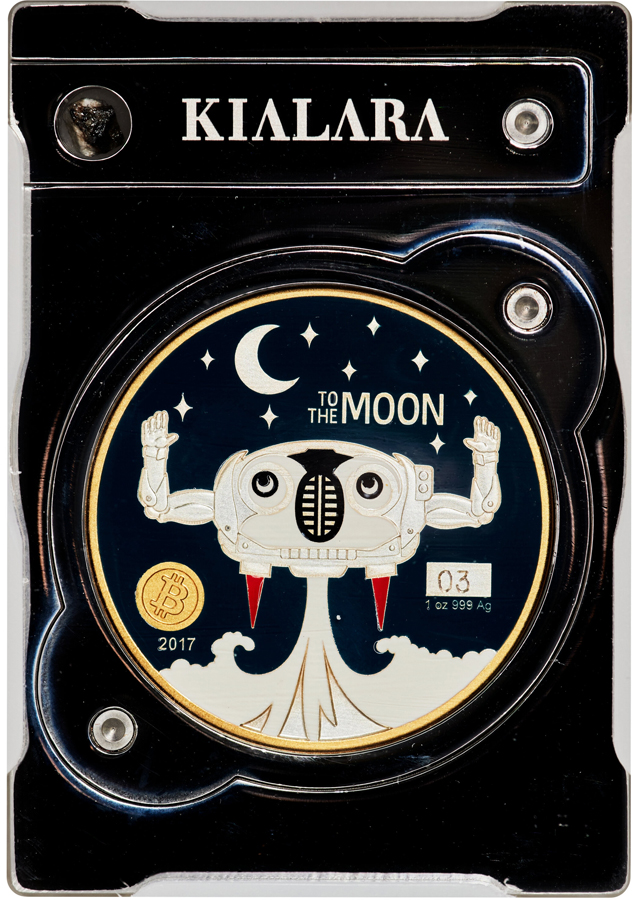
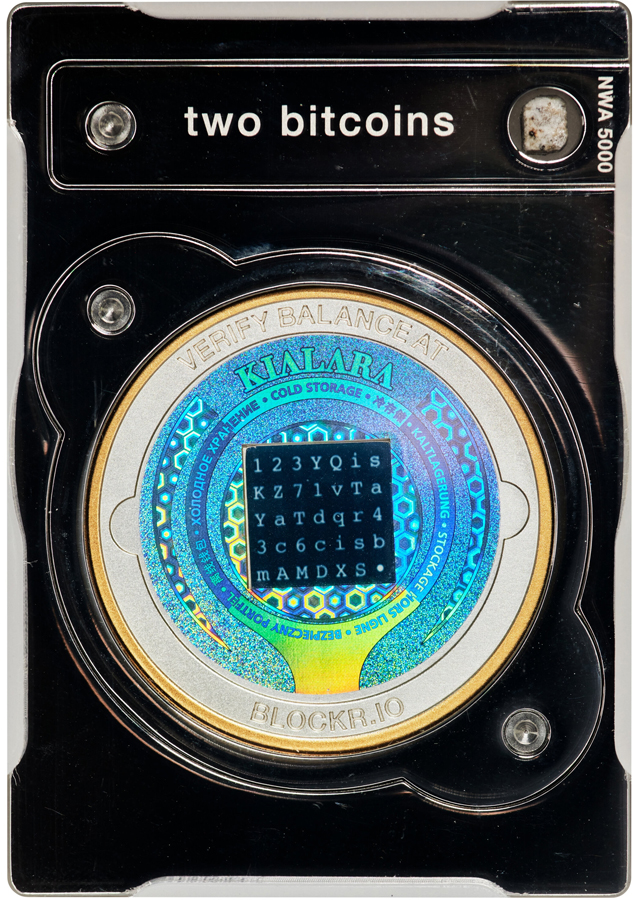
Kialara Silver ‘To the Moon’ 2 Bitcoin Cold Storage Bar (2017, Unfunded). Sold for $6,100 in a January 2026 Heritage auction. Meticulously crafted by visionary Maxfield Mellenbruch and featuring rocket and moon engravings nodding to crypto memes, this artistic bar was designed for secure storage with hidden private key.
As documentation and authentication standards developed — including Elias Ahonen’s Encyclopedia of Physical Bitcoins and Crypto-Currencies and third-party grading by PCGS and NGC — the field moved from experiment to structured collecting category.
Heritage Auctions entered the physical cryptocurrency field in October 2023 with the first installment of the OTOH Collection, presenting the category within the structure of a major numismatic auction house. Since then, offerings have broadened to include early Casascius and Lealana issues, contemporary works by Kialara and Polymerbit, and crypto-adjacent collectibles reflecting the wider decentralized movement. Participation has grown accordingly, attracting established collectors and digitally native buyers alike.
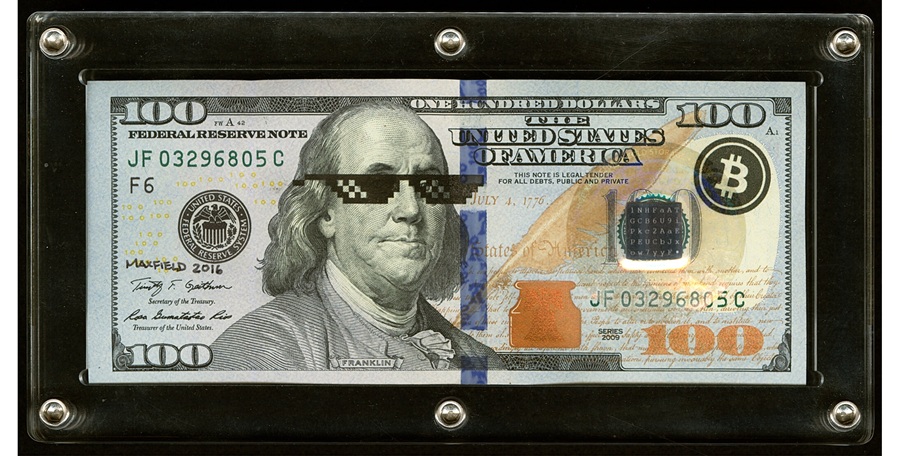
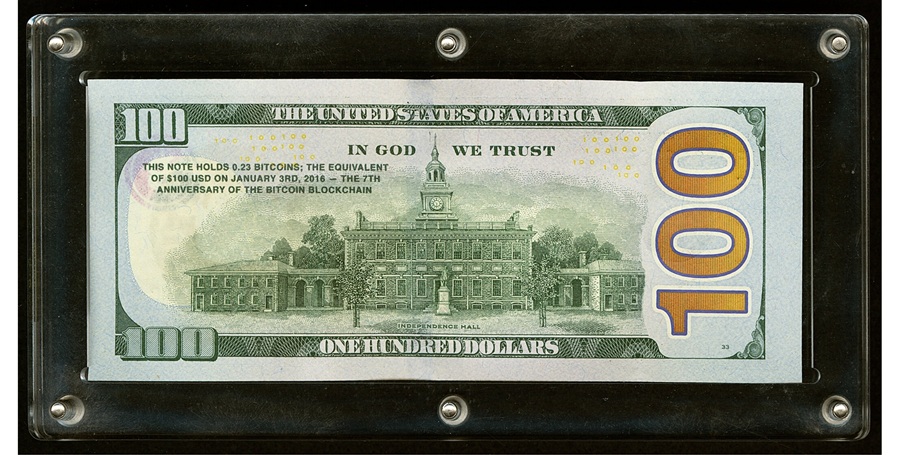
Kialara Uncertified Loaded (Unredeemed) ‘Thug Life’ Art Note 0.23 Bitcoin (BTC) 2016. Available in Heritage’s April 29-30 CSNS World & Ancient Coins Platinum Session and Signature® Auction.
Heritage’s engagement with the community continues at the Bitcoin 2026 conference in Las Vegas (April 27–29), followed by Part VII of the OTOH Collection, presented in a Signature® Auction on April 30. The highlight is the exceptionally rare Kialara Uncertified Loaded (Unredeemed) “Thug Life” Art Note 0.23 Bitcoin (BTC) 2016 — one of only 10 issued and appearing publicly at auction for the first time. Blending contemporary design with embedded digital value, it exemplifies the scarcity and artistic ambition now defining the field.
From electrum staters to engraved banknotes to polymer security notes, money has repeatedly changed form while preserving its essential attributes: scarcity, portability, and trust. If cryptocurrency represents financial innovation, physical cryptocurrency, like the iconic Thug Life note, reflects creative innovation — artists and makers giving form to a revolution still unfolding.
For all its cryptography and code, the story of physical cryptocurrency is ultimately one of human ingenuity — designers and visionaries giving weight to an idea whose possibilities are still emerging.
