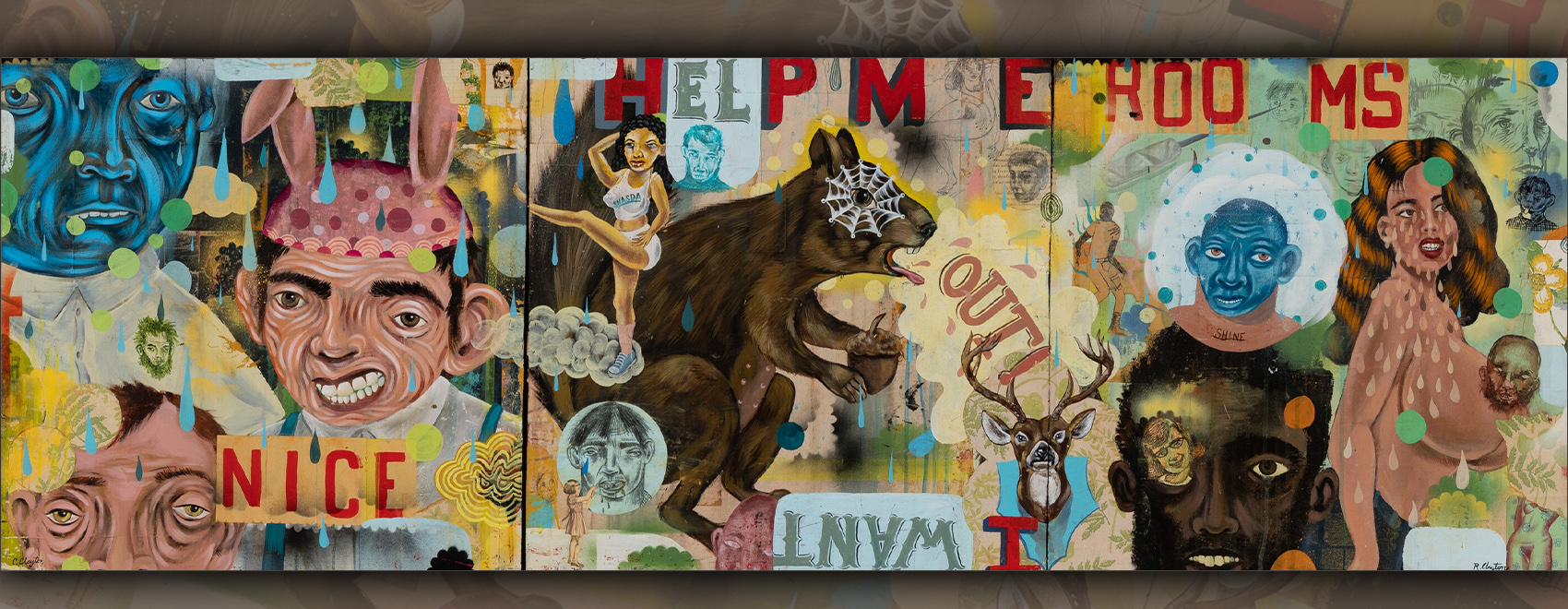
HERITAGE’S FIRST AUCTION DEDICATED TO THIS ALTERNATIVE ART SCENE BRINGS ITS ARTISTS INTO FOCUS WHILE BENEFITING MASSACHUSETTS’ FITCHBURG ART MUSEUM
By Taylor Curry | October 6, 2026
For an art movement called Lowbrow, there is a lot to take seriously. The cartoons, strange characters, and humor catch your attention first. Look closer and you begin to appreciate the draftsmanship, the handling of paint, and the stories these artists are telling.
Heritage Auctions has sold works by many of these artists before, but on October 13, the firm will present its first auction dedicated to Lowbrow and Pop Surrealism. The sale brings together paintings, works on paper, collage, and sculpture from a single collection assembled well over a decade. Many longtime followers of these artists, whether through magazines or gallery shows, are among the most devoted collectors I’ve encountered. For others, the sale offers a good introduction to an alternative art scene that spans fine art, comics, illustration, and popular culture.
Lowbrow draws on underground comics, cartoons, and counterculture, often with an irreverent sense of humor. Pop Surrealism shares many of those references but brings them into dreamlike settings and fantastical scenes. The two often overlap, and many of the artists in this sale move freely between them. Familiar imagery gives viewers a way into pictures that can be surprisingly complex.
The movement took shape in Southern California in the late 1960s and 1970s, drawing on hot-rod culture, underground comics, tattooing, and surf culture. Robert Williams helped give the movement its name and later brought it to a wider audience through Juxtapoz magazine, which launched in 1994. For many collectors, this art and culture publication was their introduction to these artists. Beginning in 2005, Hi-Fructose magazine helped expand that exposure to other communities. Readers saw their own interests in comics, animation, and music reflected in the work. For those readers, collecting art became an extension of what they already loved.
What I find particularly interesting about bringing these works together is how differently the artists use those shared influences. Some lean toward humor and exaggeration. Others draw you in with familiar imagery, then introduce a detail that makes you question what you’re looking at.
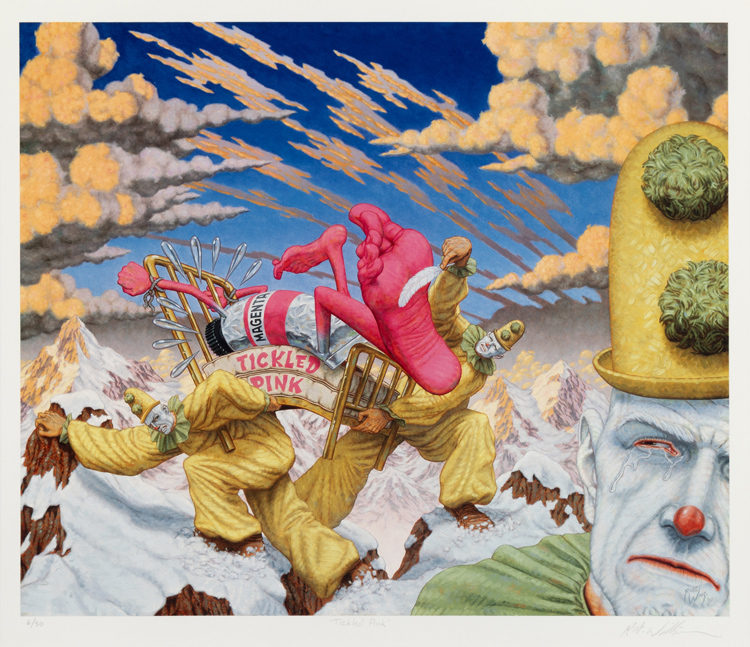
Robert Williams’ Tickled Pink (2000) captures the absurd humor of Lowbrow. Clown-like figures carry a tube of magenta paint, complete with enormous pink feet and hands, through a snowy mountain landscape, while a glum face fills the foreground. It feels like a scene from a larger story, though Williams leaves us to imagine the rest.
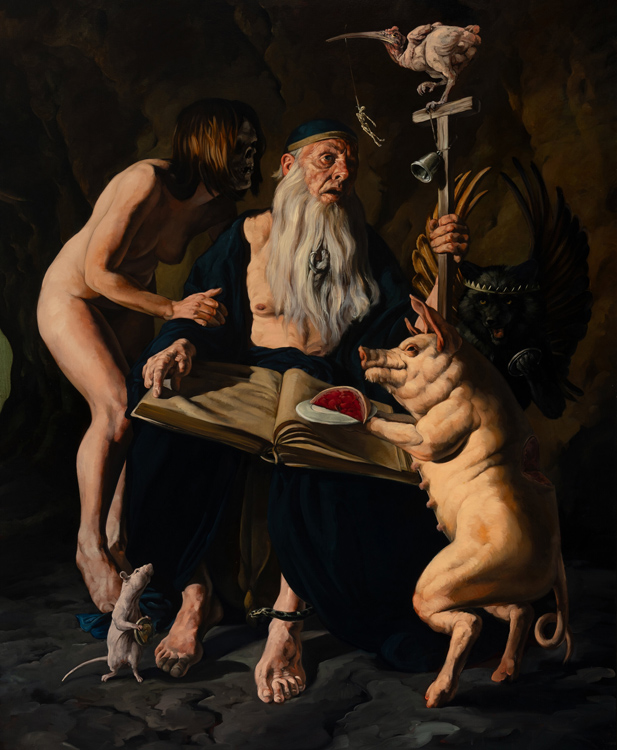
Erik Sandberg’s The Temptation of St. Anthony shows how closely Pop Surrealism can draw on traditional painting. The dramatic lighting and carefully painted figures recall an Old Master work, but the details take it somewhere stranger. A pig leans against the saint’s open book, a slice of watermelon rests on its pages, and unusual creatures gather around him. The scene is dark and unsettling, with a sense of humor that becomes more apparent the longer you look.
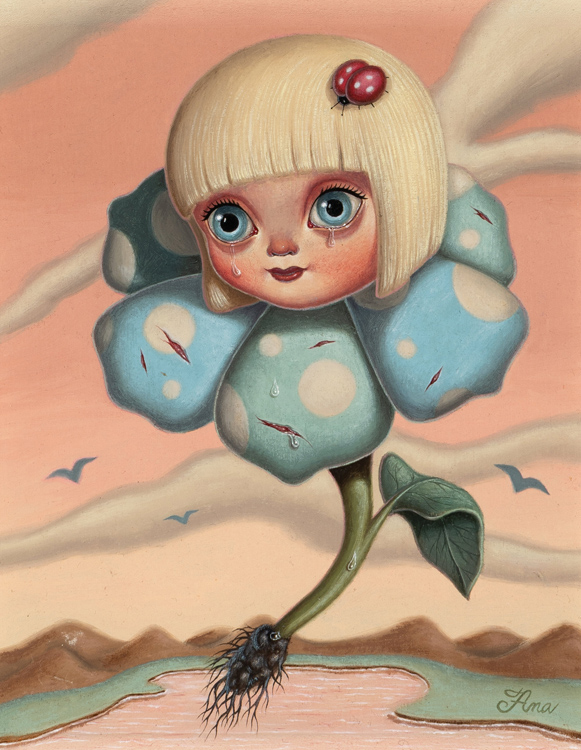
Ana Bagayan’s Flower Tears (2007) pairs storybook imagery with a layer of distressing details. A wide-eyed girl’s face sits at the center of a flower, with a ladybug in her hair and tears falling onto blue petals. The soft colors and doll-like features seem innocent at first, but cuts in the petals and exposed roots suggest something more vulnerable.
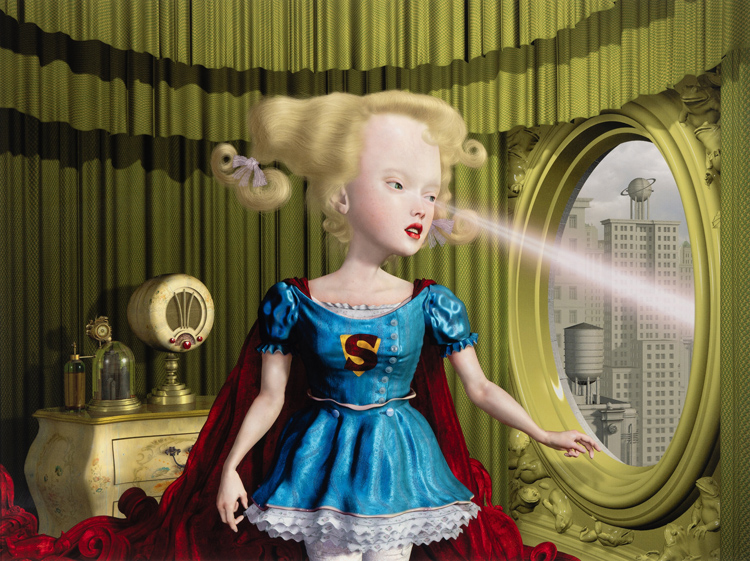
Ray Caesar’s The Healing Light (2003) brings together the imagery of fairy tales and comic books. A doll-like figure wears a blue dress with a Superman emblem and a red cape, sending a beam of light toward a city beyond an ornate oval window. Her elaborate hairstyle and richly furnished surroundings give the scene an old-fashioned formality, interrupted by the superhero costume.
Heritage’s October 13 auction is a chance to explore the work of these artists, learn more about their influences, and introduce them to a new group of collectors. With proceeds benefiting Massachusetts’ Fitchburg Art Museum, the collection also helps support another essential part of the conversation surrounding Lowbrow and Pop Surrealism: giving audiences opportunities to encounter art, spend time with the work, and decide for themselves what deserves to be taken seriously.