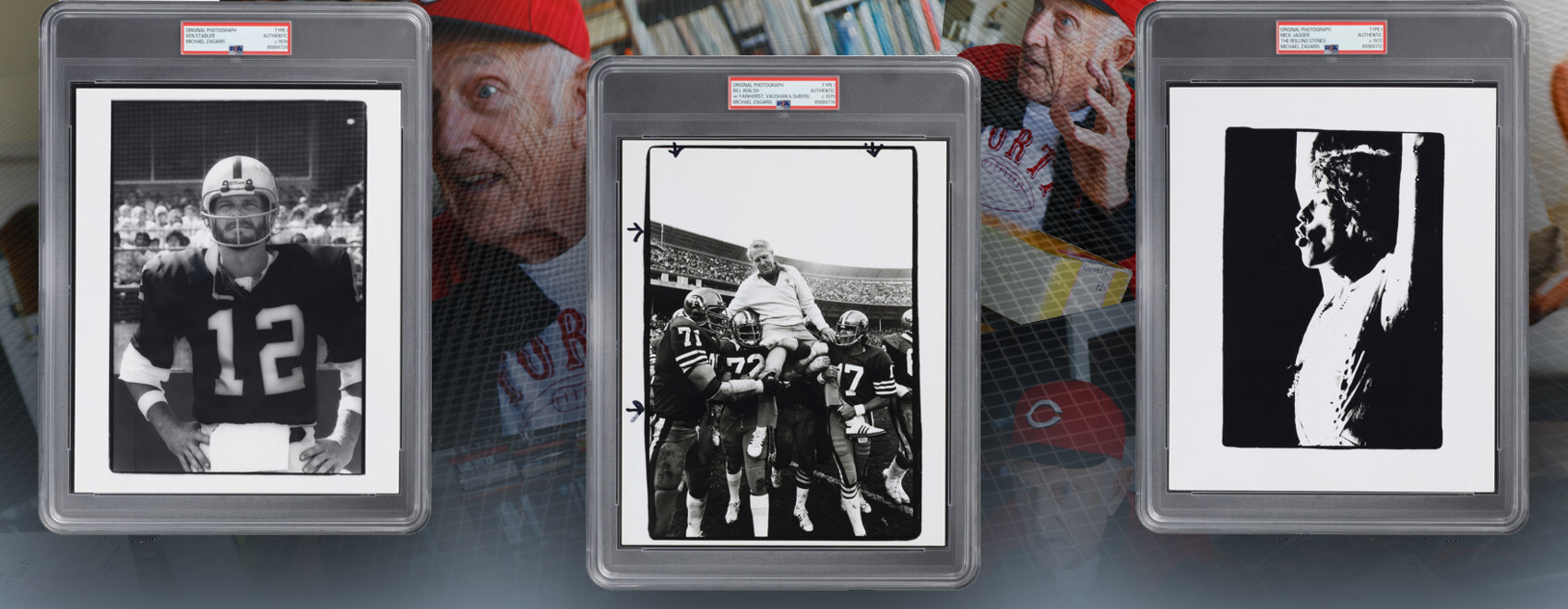
FROM SUPER BOWL LOCKER ROOMS TO BACKSTAGE WITH ROCK LEGENDS, ZAGARIS SPENT FIVE DECADES DOCUMENTING HISTORY AS IT HAPPENED
Interview by Tommy Noel | August 4, 2026
For more than five decades, Michael Zagaris stood where few photographers ever have — inside championship locker rooms, on NFL sidelines, behind the scenes with legendary rock bands, and at the center of some of the most unforgettable moments in sports and music history. Most notably, Zagaris served as team photographer for the San Francisco 49ers and the Oakland Athletics, covering 44 Super Bowls during his long career as a sports photojournalist. But he has also trained his lens on music icons including The Rolling Stones, The Who, Led Zeppelin, and a Billboard chart’s worth of other rock-and-roll luminaries.
For decades, Zagaris preserved these photographs, alongside other pieces of memorabilia, as tangible reminders of a life spent with a front-row seat to some of the greatest moments in sports and music. Now, as many of his photos prepare to find new homes through Heritage’s August 21–23 Summer Platinum Night Sports Auction, he reflects on the experiences behind the images and the memories they continue to evoke.
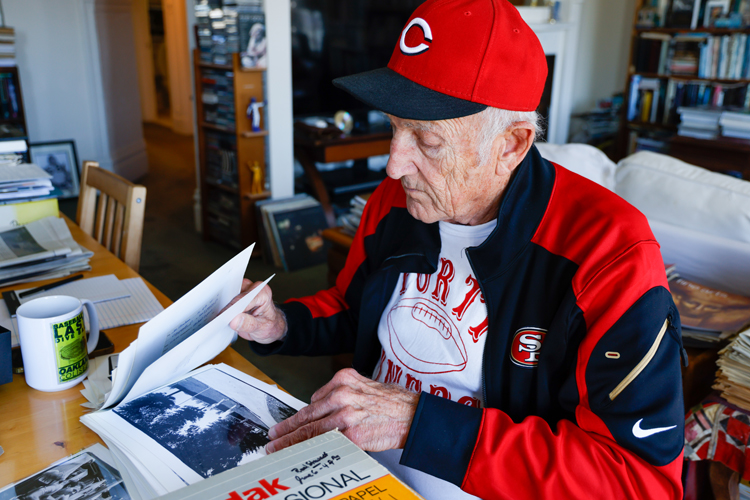
Michael Zagaris sorts through photographs in his San Francisco home. Heritage’s August 21–23 Summer Platinum Night Sports Auction features photos and other memorabilia from Zagaris’ decades-in-the-making collection. Photo by Tommy Noel.
INTELLIGENT COLLECTOR: Do you have a favorite story from your early days on the sidelines?
MICHAEL ZAGARIS: The first time I snuck onto the field I had my dad’s London Fog coat on, a fedora, and a homemade press pass. A San Francisco Police Department officer started walking toward me, so I introduced myself and told him I was working on a book for the NFL. I asked if I could photograph him and a few other officers. They posed for me … and they never bothered me again. From then on, I was on the field.
IC: You’ve photographed some of the greatest moments in sports and rock music. What were you really chasing?
MZ: It wasn’t enough to take the pictures. I wanted to live it. I wanted to be part of it. I wanted to bear witness. With rock and roll, I took it a step further. I didn’t play any instruments, but I wanted to live it. I wanted to be in the band. It was much more than just taking pictures. You were in the scene.
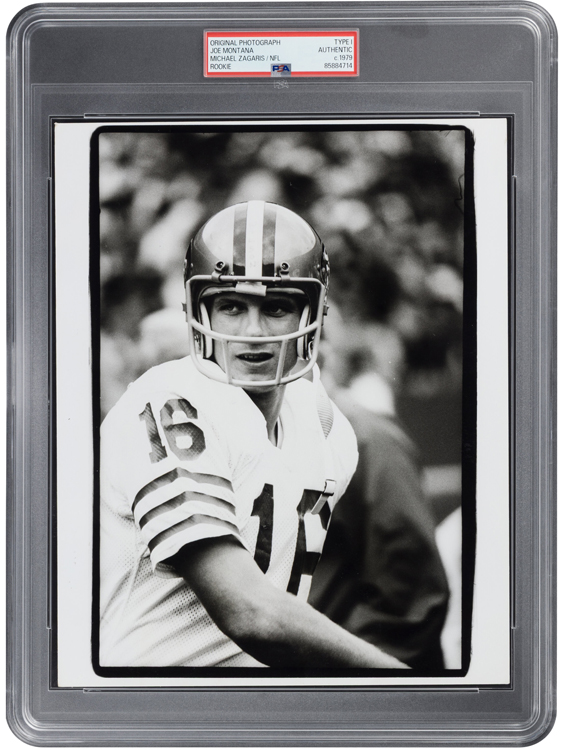
Zagaris captured this 1979 photo of Joe Montana during the legendary quarterback’s rookie season with the San Francisco 49ers.
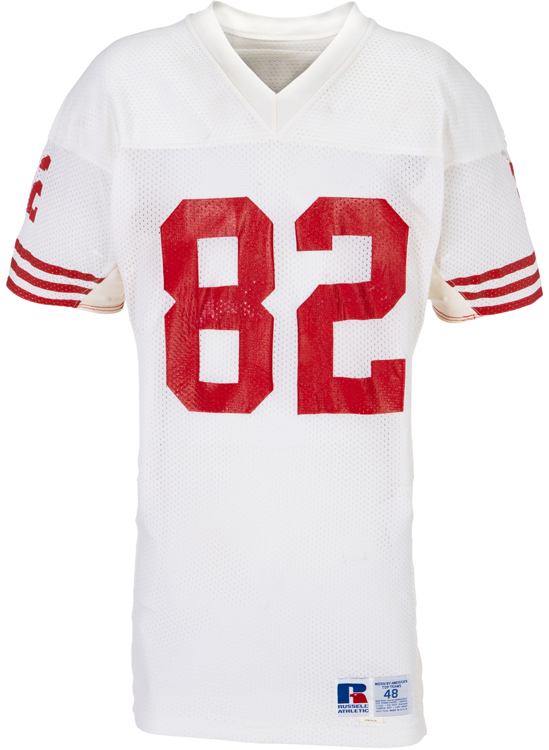
In addition to photographs, Zagaris’ collection includes game-worn memorabilia like this 1990 John Taylor San Francisco 49ers jersey photo-matched to Super Bowl XXIV.
IC: Former San Francisco 49ers head coach Bill Walsh gave you unprecedented access to the team. How did you convince him?
MZ: I told Coach Walsh I wanted to document what he was building — not just for the team or the league, but for history. I wanted to shoot it the way a presidential photographer would. I said, ‘That means I have to be everywhere — on the buses, on the plane, in the locker room, before the game, halftime, after the game.’ He looked at me and said, ‘OK … but what if you go too far?’ I said, ‘Coach, inevitably I will go too far. Just give me a look, and I’ll back off.’
IC: What made those legendary 49ers teams so special?
MZ: You knew you were part of something special, but you never fully appreciated how important it was until years later. We had great players and great coaching, but there was also something you can’t put into words. It’s chemistry. You get on a roll. Whether you’re a player or doing what I do, you’re aware of it, but you don’t realize just how historic it is until you look back.
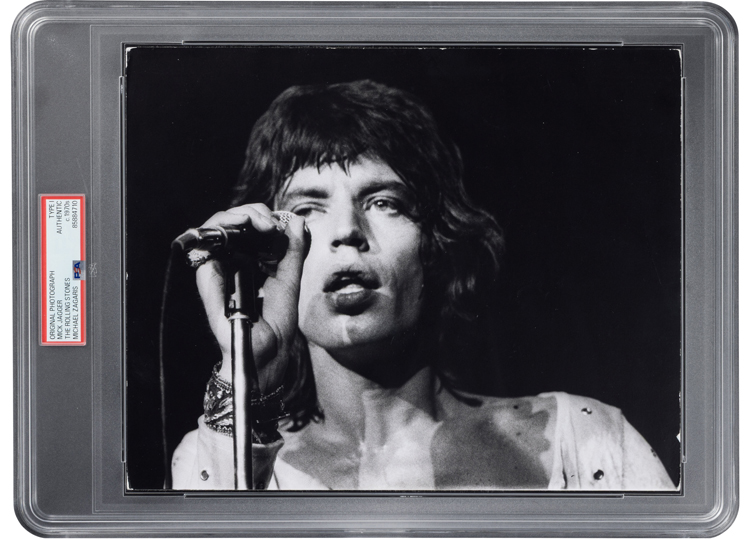
Zagaris is also known for his photographs of iconic musicians such as Mick Jagger, seen here onstage in the 1970s.
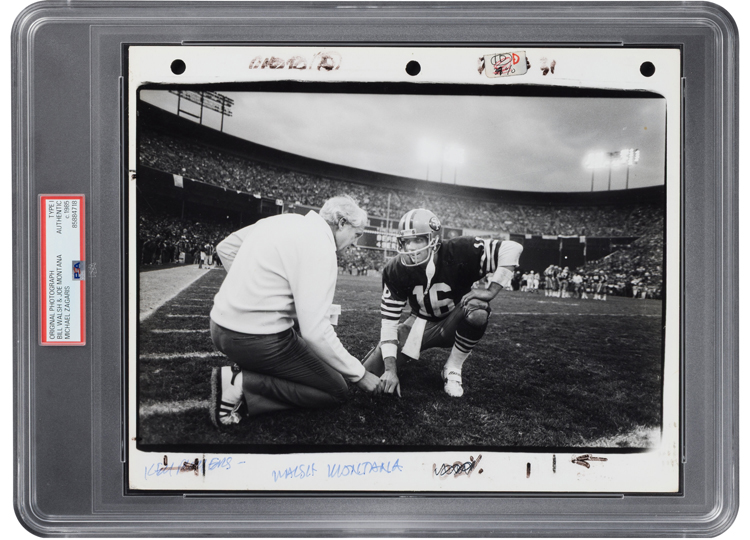
This Zagaris photograph shows Bill Walsh and Joe Montana drawing up a play in the dirt during the 1985 NFC Championship Game against the Chicago Bears.
IC: Is there one philosophy that has guided your entire career?
MZ: I always tell people I feel like I’m the luckiest guy in the world. I never felt like I worked a day in my life. When I look at my bank account, I feel like I never worked a day in my life, too. But that’s OK, because this is what I love.
IC: When you look back through your photographs today, what do you see?
MZ: All of this is about freezing moments in time. Everything you’ve ever experienced is still in your brain, but as you get older there’s so much in there it’s harder to pull it all up. That’s what these photographs do. Every time I look at one, different memories come back.
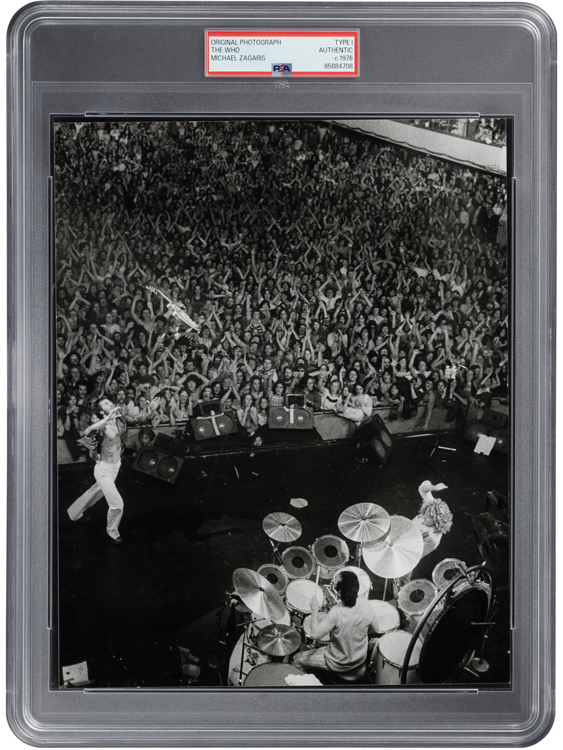
Captured at Winterland in San Francisco in 1976, this photo of The Who freezes Pete Townshend’s guitar in mid-flight, hovering above the stage with a packed crowd behind him. Zagaris has called this photograph one of his favorite images.
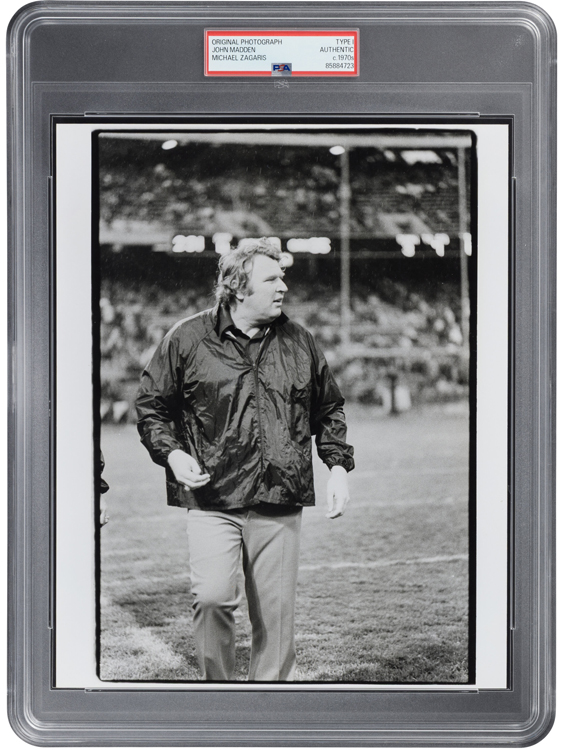
John Madden on the Oakland Raiders sideline in the 1970s
IC: You’ve said it’s difficult to let go of your collection. Why?
MZ: I’ve had a pretty cool, magical ride — not just through sports and music, but through culture. These things are daily reminders of that life. Even if I don’t look at them every day, they’re reminders of the experiences.
IC: So why is now the right time to let these photographs go?
MZ: I’ve never seen a U-Haul behind a hearse. As important as all of this is to me, I want to take care of my family. Hopefully the people who end up with these photographs won’t just see them as investments — they’ll connect them to a meaningful experience, a moment they lived through. In the end, nothing lasts forever, but we all like to have some talisman that keeps those memories alive.