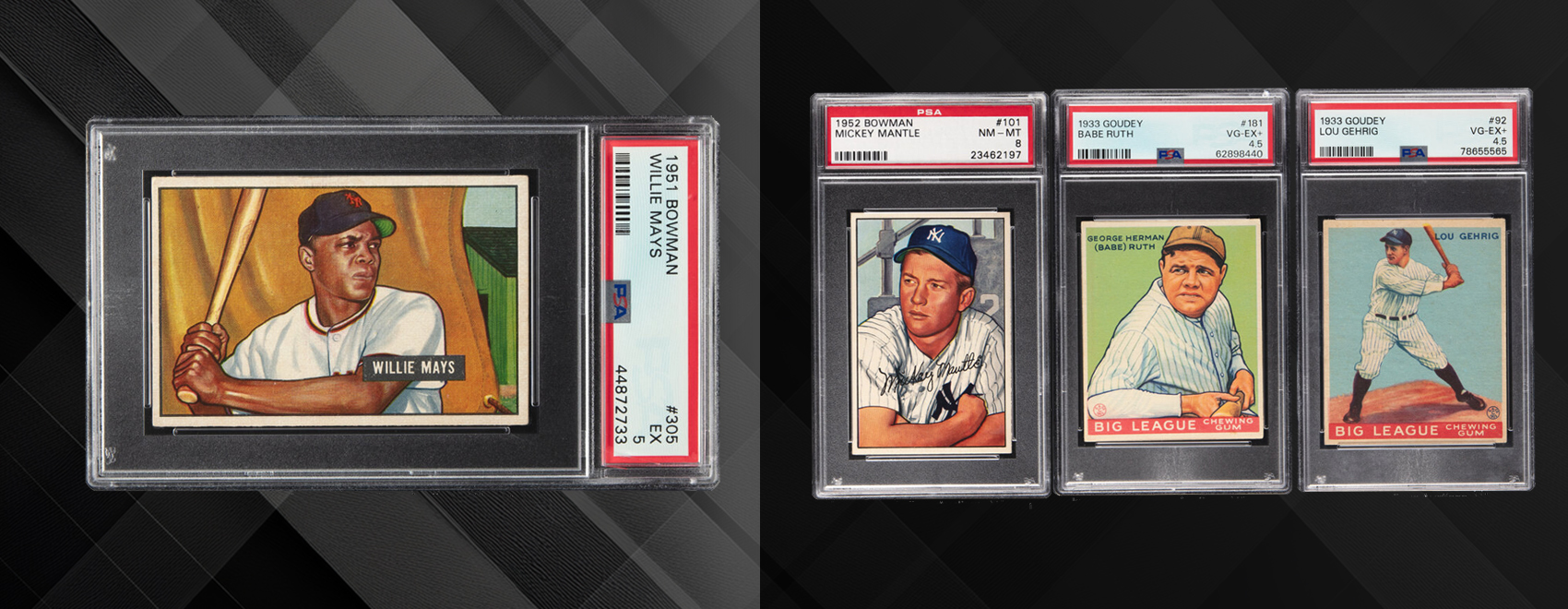
WHY TODAY’S COLLECTORS ARE PLACING GREATER VALUE ON WHAT’S INSIDE A CARD’S FOUR WALLS
By Joe Orlando | March 17, 2026
Let me start by saying that I am a huge proponent of buying the best quality you can afford when it comes to collectibles — or anything else, for that matter. I have beaten that drum for years in this hobby, and I still do today. The benefits, from both a personal-satisfaction and a financial standpoint, are evident. As time goes on, beachfront property is always beachfront property, and it’s hard not to love it. So, to be clear, my general stance on this matter has not changed.
What has changed, at least for some card collectors, is how “quality” is defined in the first place.
For the longest time, the technical, third-party grade was the driving, and often the only, force behind that word. Grade equaled quality, and that was the end of the discussion. Let me also make it clear that the numerical grade remains the foundation, and there’s no getting around it. Quite frankly, it is required for market structure. It is also what gives the market an advantage over other segments in sports collectibles, making cards easier for buyers to understand and more commodity-like than items in different categories.
The bottom line is that grading, while it has some limitations in reflecting or quantifying print quality, is a very good thing.
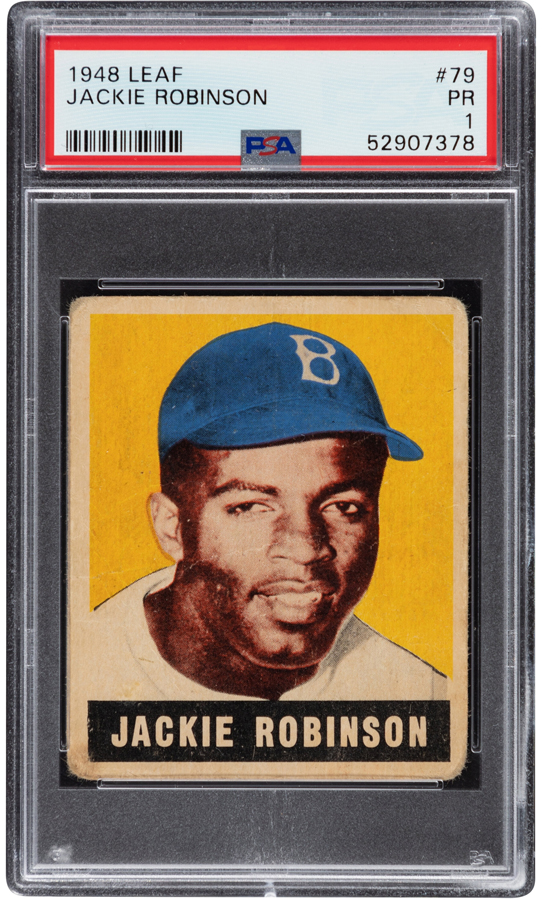
PSA PR 1 1948 Leaf Jackie Robinson
The 1948 Leaf baseball issue, especially when it comes to the iconic Jackie Robinson card, features a minefield of print obstacles. Even though this card received the lowest grade on the numerical scale, a PSA Poor 1, its print quality compares favorably to plenty of examples that achieved higher technical grades over the years.
That said, buying the best quality you can afford now comes with a new and impactful twist. Cards, and their quality, have started following the path of art more than ever before. If you have ever spent time in any gallery, from a small local dealer’s showroom to the abyss known as The Met in New York, some paintings grab your attention because of what’s inside the frame, not because of it. Your eyes are drawn to the center of the works created by Picasso, Van Gogh, Matisse, and the like.
With paintings, whether stroked by legendary names or unknown prodigies, quality and appeal are defined by what you see inside the four walls of the frame.
For many years, I was obsessed with corners as a collector, and there’s nothing wrong with that. When you are evaluating a card, you must be, because it is entirely relevant to the technical grade. Then, something changed in me as I thought more about it and how I reacted to the way a card looked. I started asking myself: How much weight should I give to factors like the color or registration of the card versus its other attributes? Isn’t print quality part of the “quality” discussion?
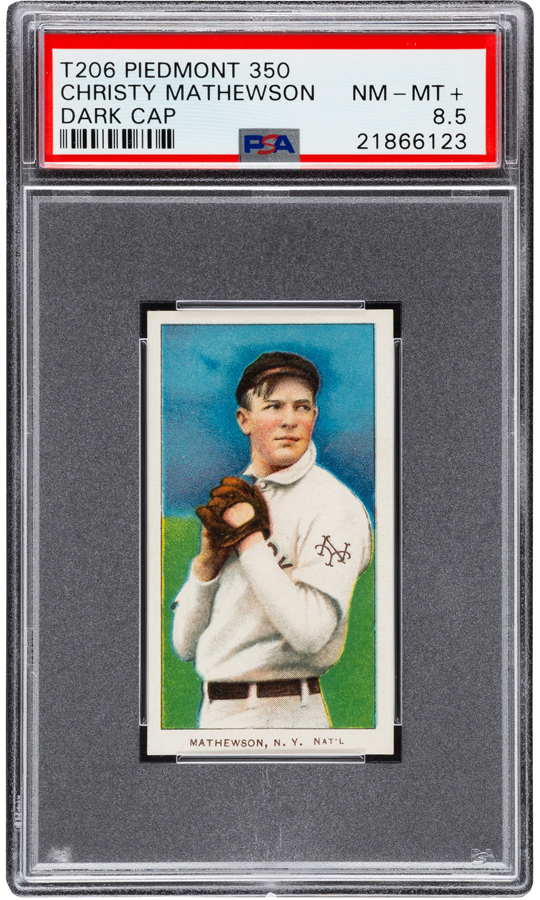
PSA 8.5 T206 Christy Mathewson Dark Cap
Sometimes, the card has it all, exhibiting a tremendous state of preservation around the edges and terrific print quality at the same time. The vibrant blue and green colors on this PSA NM-MT + 8.5, 1909-11 T206 Christy Mathewson (Dark Cap) complement the corners and edges as well as one could imagine.
The appreciation of print quality is not a new concept; it’s just showing up in the “box score,” so to speak, in a more meaningful way at the end of every auction than ever before. Print quality is often determined by how the card came off the press, and we all know that quality control can vary from one issue to another. The card was “born” with its print quality, whether good, mediocre, or bad. While not always the case, most vintage card designs feature a form of border. Don’t those borders operate like a frame does to a work of art? Are we typically too harsh about what surrounds the art, rather than rewarding the card for the quality of the art itself?
Make no mistake. If you can have the best of both worlds, meaning perimeter condition and print quality, it is obviously ideal for those seeking the best of the best. However, what you will often encounter is that many technically inferior cards from a grading standpoint actually possess superior print quality compared to examples that reflect a higher number on the label. Some cards in the lower-to-mid grade range are better-looking inside the “frame.” You can see many examples of this in the graded card market.
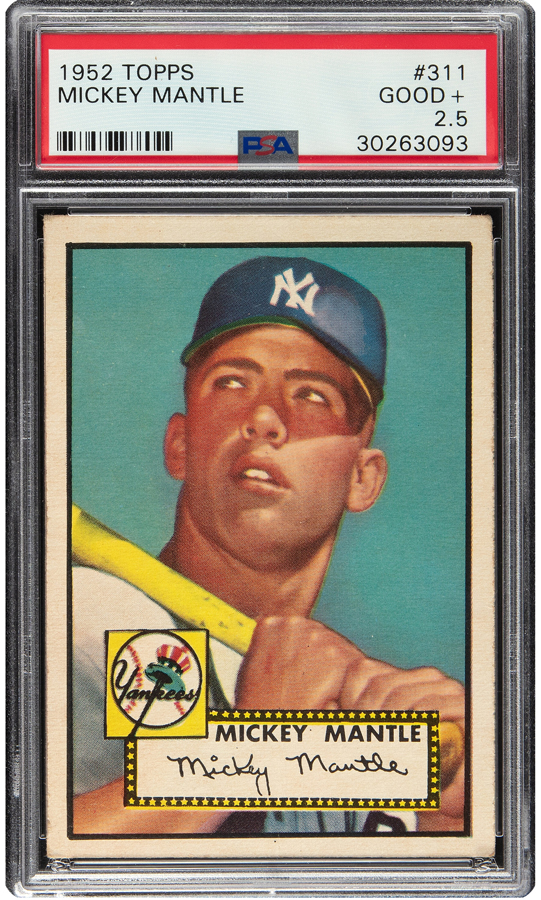
PSA 2.5 1952 Topps Mickey Mantle
As veteran collectors know, the 1952 Topps Mickey Mantle can be found with vastly different levels of print quality, like many other vintage cards. In this case, outside of the expected corner wear for the grade and a crease on the reverse, the center of the card matches up well against countless specimens that landed much higher on the third-party scale.
It’s up to each collector how much weight to give print quality, and it is yet to be determined just how this trend will evolve, but more hobbyists have voted with their wallets in recent years. Print quality has become a bigger factor in card valuation because it’s the feature that first captivates you.
Today, what lies around the edges may no longer be as limiting a price factor within each grade as it once was, and the traditional correlation between grade and value continues to be challenged.