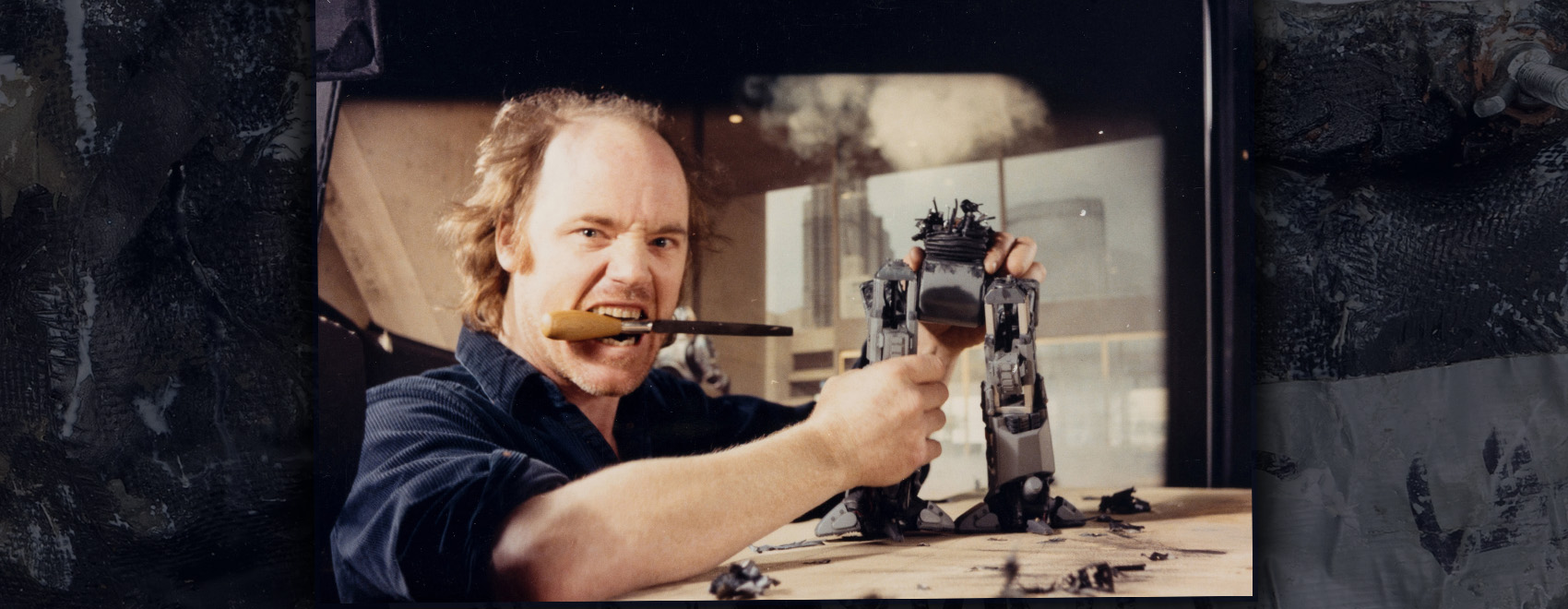
THE LEGENDARY ANIMATOR’S CAREER ARCHIVE TRACES THE ARTISTRY AND INNOVATIONS BEHIND UNFORGETTABLE CREATIONS FOR STAR WARS, ROBOCOP, JURASSIC PARK, AND MORE
By Colin Tait | November 3, 2026
Whether you know his name or not, you’ve almost certainly seen Phil Tippett’s work. The holographic chess creatures aboard the Millennium Falcon in Star Wars. The lumbering AT-AT walkers in The Empire Strikes Back. The armed robots of RoboCop and RoboCop 2. The terrifying dinosaurs of Jurassic Park. These are among the most memorable creations in modern cinema, and Tippett helped bring them to life.
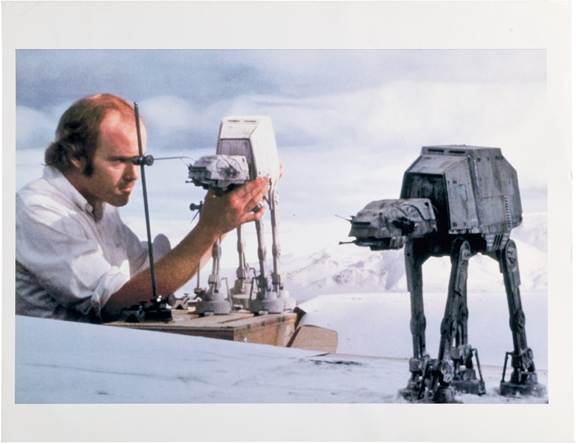
After making his mark on the original ‘Star Wars’ in 1977, animator Phil Tippett helped bring to life the Imperial AT-AT walkers of ‘The Empire Strikes Back.’ Tippett’s personal collection, which includes thousands of behind-the-scenes photos, will be featured in Heritage’s November 30 – December 3 Hollywood/Entertainment Signature® Auction.
For more than half a century, the legendary animator has played a pivotal role in the development of modern special effects, from the painstaking manipulation of physical puppets to the sophisticated digital creatures that dominate contemporary filmmaking. Along the way, he worked with an extraordinary generation of artists whose collective ingenuity transformed Hollywood.
Now, nearly 200 lots from Tippett’s personal collection are headed to Heritage Auctions as part of its November 30 – December 3 Hollywood/Entertainment Signature® Auction. The event brings together original stop-motion armatures, molds, maquettes, production puppets, concept artwork, mechanical devices, and thousands of behind-the-scenes photographs documenting the evolution of cinematic innovation.
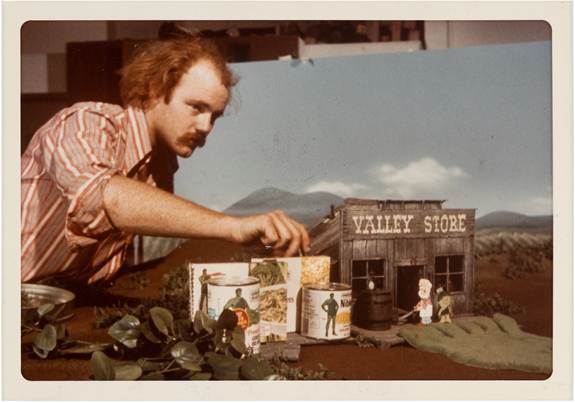
Early in his career, Tippett worked for Cascade Pictures in Hollywood, lending his talents to commercials featuring the likes of the Jolly Green Giant. This image from one of the auction’s many groupings of Tippett’s photographs and original concept art hails from his Cascade days.
The Boy Who Made Monsters
“I got into stop motion and visual effects when I was 5 years old or 6 years old in 1955,” Tippett recalls. The film was the original King Kong, whose prehistoric creatures had been brought to life by pioneering animator Willis O’Brien. “That inspired me as a little kid to get interested in dinosaurs, which kind of pursued me the rest of my life,” he adds. Then came Ray Harryhausen’s The 7th Voyage of Sinbad in 1958, another revelation for the young artist. “That hit me like a bolt of lightning. I had no idea what that was. Back then there was no information regarding how any of this stuff was done. So it took a while to figure it out.”
The secret, of course, was stop-motion animation, a technique in which an articulated three-dimensional puppet is photographed, moved ever so slightly, and photographed again. When the individual images are projected in sequence, the puppet appears to move. As Tippett describes it, “You’re able to position it as you want to create performance one frame at a time.” The process requires extraordinary patience, a sophisticated understanding of movement, and the ability to imagine a performance that does not yet exist.
Tippett began experimenting with the technique, eventually finding work at Cascade Pictures, a Hollywood commercial production house where he worked alongside future visual effects pioneers Dennis Muren, Ken Ralston, Jon Berg, and Tom St. Amand. “That was kind of our graduate program,” he remembers. “It was the only place, really, that was doing stop-motion animation.”
Cascade produced commercials featuring characters such as the Pillsbury Doughboy and Jolly Green Giant, offering the young artists opportunities to experiment with puppets, miniature sets, and animation techniques. But the studio also housed something extraordinary: puppets and armatures associated with Willis O’Brien, including artifacts from the films that had inspired Tippett as a child. “Phil Kellison [visual effects supervisor at Cascade] had an armature of King Kong,” Tippett recalls. “It was like a museum that we were allowed to work in.”
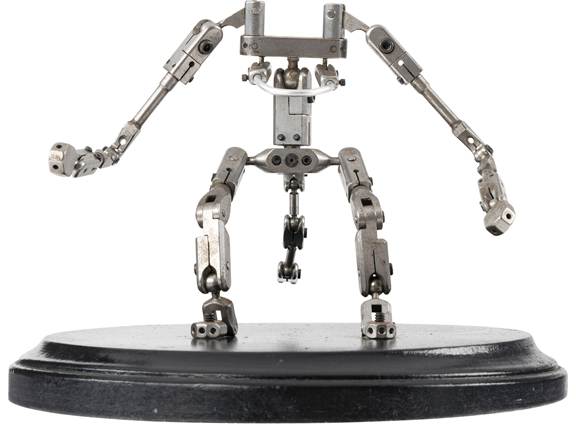
The original articulating stop-motion armature used for the Dejarik player Kintan Strider in the iconic holochess scene in ‘Star Wars’
Let the Wookiee Win
“George Lucas was not happy with the cantina scene that he had shot in England and wanted to flesh it out with more alien creatures,” Tippett recalls of working on the first Star Wars movie in 1977. Lucas turned to makeup artist Rick Baker, who assembled a small group of young artists to create additional creatures under an extraordinarily tight deadline. “George’s direction was make me as many space aliens as you can in six weeks,” Tippett says. Working from designs by effects pioneer Ron Cobb and whatever materials were available, the team constructed an assortment of bizarre characters.
During one of Lucas’ visits to the creature shop, something unexpected happened. “He saw some stop-motion puppets that I had made when I was younger,” Tippett remembers. Lucas had been considering using creatures derived from the cantina costumes for a holographic chess sequence aboard the Millennium Falcon, but Tippett’s miniature puppets suggested another possibility. With approximately two weeks to create 10 creatures, Tippett and Jon Berg animated the sequence, with Dennis Muren helping establish the shots.
The resulting Dejarik chess sequence became one of the most beloved moments in the original Star Wars, as Chewbacca and R2-D2 battle across a holographic chessboard while C-3PO offers his immortal advice: “Let the Wookiee win.” Remarkably, one of its original armatures survives. The original Kintan Strider stop-motion armature is the metal skeleton of the unfortunate creature slammed onto the chessboard by the larger Mantellian Savrip. Standing just over 4 inches tall, the armature has lost its original foam-latex exterior, but its distinctive proportions remain recognizable.
The collection also includes original designs and extensive photographic records of Tippett’s early Star Wars work, preserving the contributions of artists including Baker, Rob Bottin, Muren, Berg, and the many others who helped establish the film’s visual identity.
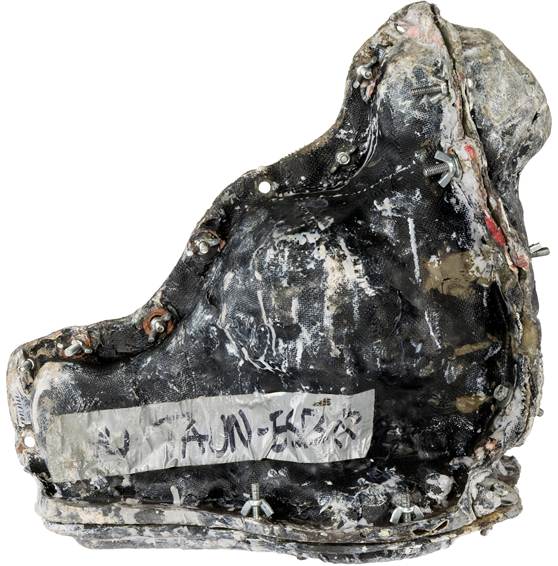
The original mother mold built by Tippett to create the beloved Tauntaun from ‘The Empire Strikes Back’
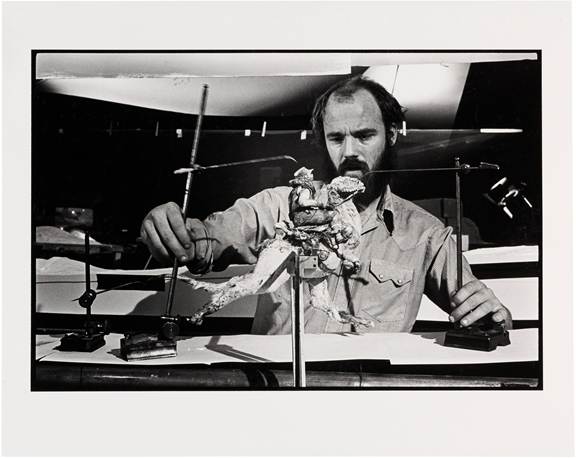
Tippett’s personal production archive from ‘The Empire Strikes Back’ includes more than 260 photo references from the making of the 1980 film, many of them focused on the design, molding, casting, fabrication, and stop-motion animation of the Tauntaun.
Making the Impossible Move
For The Empire Strikes Back in 1980, Lucas asked Tippett to create a creature identified in the script simply as a “snow lizard.” He produced approximately a dozen designs before Lucas selected one and requested a small maquette. “I made a very tiny clay maquette of a Tauntaun with a rider on it and shipped that off to him,” Tippett explains. “And he liked that. He said, ‘OK, well, that’s the Tauntaun.’”
Among the collection’s highlights is the historic Tauntaun mother mold built by Tippett at Industrial Light & Magic. Retaining its original handwritten identification and accompanied by sketches, photographs, and a later casting, the mold documents the development of one of the most recognizable creatures in the Star Wars universe.
The Imperial AT-AT walkers presented a different challenge. “Something that weighs 50 tons and is like 100 feet tall — how does that move?” Tippett remembers asking. The animators studied elephants at an animal preserve, but their movements proved too quick and light to convey the machines’ enormous scale. “After a bunch of experimenting, we realized that the walkers were so huge that the only way that we could give them scale was to make sure that they had three feet planted at all times.”
In the 2022 documentary series Light & Magic, footage of Tippett animating the walkers reveals the patience required to bring them to life. “I would say that it’s a kind of meditative state once you get into it,” he says. Tippett’s production archive from The Empire Strikes Back preserves photographs and materials documenting this painstaking work, offering collectors and historians a rare glimpse behind one of cinema’s most memorable visual effects.
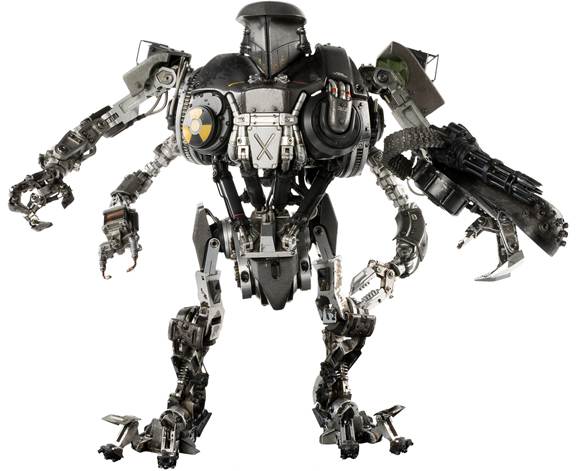
The original screen-used articulating stop-motion puppet for the cyborg RoboCain in ‘RoboCop 2’
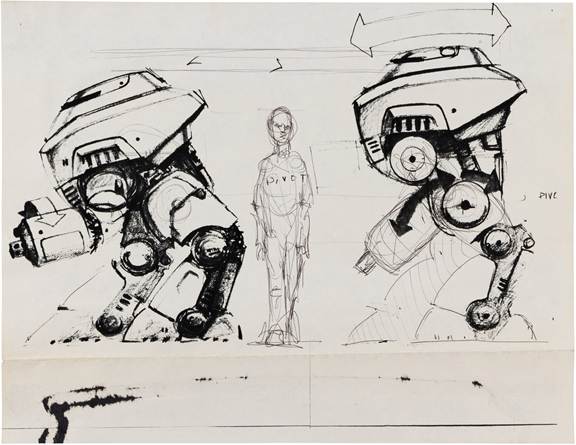
Tippett’s extensive ‘RoboCop’ production archive includes mechanical designs for the robot ED-209.
Mechanical Monsters
“I am adequate at designing creatures or organic things,” Tippett says. “But when it comes to hard-surface kinds of things and cars and motorcycles, helicopters, whatnot, that’s not my kind of thing.” Fortunately, he knew someone who was exceptionally good at it.
Tippett encountered Craig Hayes through mutual friends in the special effects community and was impressed by the young designer’s mechanical models. When Paul Verhoeven’s RoboCop called for a heavily armed enforcement robot, Tippett recruited Hayes. “I asked Craig if he could give it a shot,” he recalls. “And it was like, holy smokes, this kid is really, really, really good.”
The resulting ED-209 became one of cinema’s most recognizable robots, a hulking mechanical monster whose intimidating appearance was matched by its unfortunate inability to negotiate stairs. Tippett’s personal production archive from the 1987 sci-fi classic includes more than 300 photographs alongside mechanical sketches, storyboards, and production materials documenting the character’s creation.
For RoboCop 2 in 1990, Hayes took his designs even further. Irritated by the accuracy of model kits produced after the first film, he resolved to create something nearly impossible to reproduce. “He decided he was going to try and get even and create the most complicated stop motion that anybody had ever made,” Tippett explains.
The result was RoboCain, an extraordinarily intricate mechanical creature. The screen-used Cain/RoboCop 2 articulating stop-motion puppet offered in the auction measures approximately 15 inches tall and more than 16 inches wide. Its elaborate network of limbs, gears, pistons, and cables represents the remarkable sophistication practical animation had achieved by the end of the 1980s, just before digital technology transformed the industry.
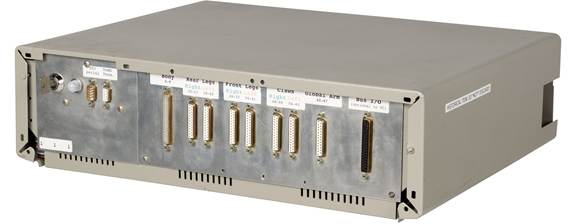
The Dinosaur Input Device controller box built to animate the dinosaurs in ‘Jurassic Park’
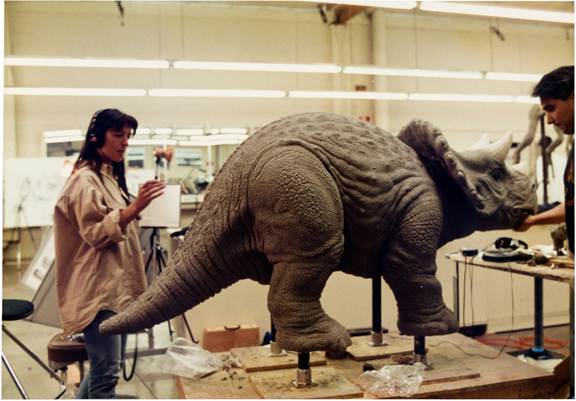
Behind the scenes of ‘Jurassic Park.’ This photo is one of the hundreds of images featured in Tippett’s production photo archive from the 1993 film.
When Dinosaurs Changed Everything
By the early 1990s, Tippett had become one of the world’s foremost stop-motion animators, but the techniques he had spent decades perfecting were about to encounter an entirely new technology. For 1993’s Jurassic Park, Tippett was initially hired to create the dinosaurs using Go Motion, a technique he had helped develop to produce more realistic movement. Previously employed on Dragonslayer in 1981, the process represented a significant advance over traditional stop-motion animation.
But Industrial Light & Magic was making rapid progress with computer-generated imagery. Artists including Steve “Spaz” Williams and Mark Dippé produced a test featuring a digitally animated Tyrannosaurus. “Steven [Spielberg] saw it and said, ‘That’s it. That’s how we’re going to do the movie,’” Tippett recalls.
Although the decision marked a turning point in visual effects history, Tippett’s expertise remained essential. The solution was the Dinosaur Input Device, or DID, which allowed traditional animators to manipulate physical dinosaur armatures and translate their movements into digital animation.
One of the original controllers survives and is featured in Heritage’s auction. Resembling an unremarkable piece of vintage computer equipment, the historic Jurassic Park Dinosaur Input Device controller box represents a pivotal moment when decades of practical animation knowledge were adapted to an entirely new medium.
The collection also includes hundreds of photographs documenting the development of the film’s dinosaurs. Tippett continued embracing digital animation with Verhoeven’s Starship Troopers in 1997, creating an army of alien insects designed to resemble military weaponry. Craig Hayes again played a central role, helping establish Tippett Studio as a major force in digital creature animation.
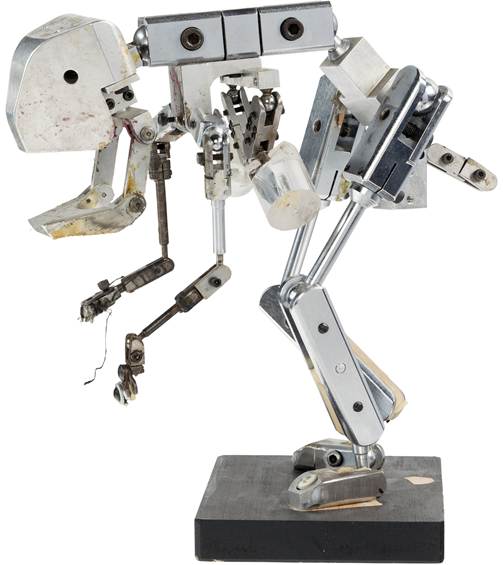
This original Blurrg stop-motion practical effects armature used for ‘Ewoks: The Battle for Endor’ was later repurposed for ‘Mad God.’
The Mad God
For all the extraordinary films associated with Tippett’s career, perhaps none represents his imagination more completely than the maniacally brilliant Mad God, a nightmarish stop-motion odyssey that occupied his thoughts for more than three decades. Unlike the cinematic universes of George Lucas, Steven Spielberg, and Paul Verhoeven, 2021’s Mad God belongs entirely to Tippett. Its grotesque creatures and decaying industrial landscapes form a world both horrifying and strangely beautiful.
The project began shortly after RoboCop 2, when Tippett started developing an imaginary world through drawings, puppets, and miniature environments. Eventually, its ambitions exceeded his resources, and he set it aside. “I somehow could not drop this thing,” he remembers.
Years later, younger artists at Tippett Studio expressed interest in working with traditional models, puppets, and practical effects. Using equipment Tippett had preserved, they began experimenting with new footage. Over the next 12 years, the group worked evenings, weekends, and lunch breaks to complete the film. Despite its intensely personal nature, Tippett credits the artists who joined him: “If you’re lucky enough to get the people that know what they’re doing, just stay out of their way and help them get their jobs done.”
Among the collection’s surviving objects is the original Blurrg stop-motion armature from 1985’s Ewoks: The Battle for Endor, later repurposed for Mad God. The articulated metal skeleton connects Tippett’s early Star Wars work with his most personal creation. After a lifetime bringing other filmmakers’ imaginary worlds to life, he had finally created one entirely his own.
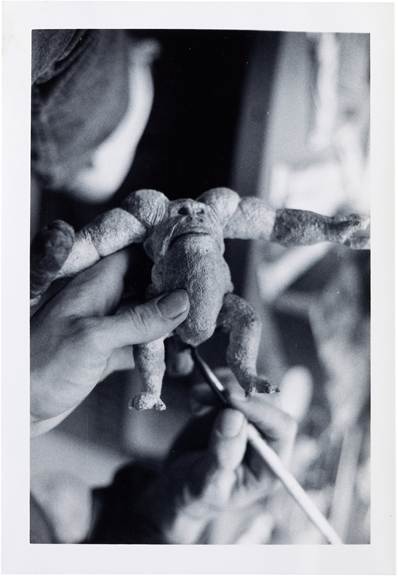
The photos offered in Tippett’s personal production archive from ‘Star Wars’ illustrate the painstaking process undertaken by special effects artists to bring practical effects to life.
A Legacy Made by Hand
What makes Tippett’s collection extraordinary is the opportunity to trace the evolution of modern visual effects through the objects that made it possible. From the miniature creatures of Star Wars to the mechanical marvels of RoboCop and the groundbreaking digital dinosaurs of Jurassic Park, these artifacts document nearly 50 years of cinematic innovation.
The thousands of photographs, drawings, molds, armatures, and production records also preserve the work of the artists and collaborators behind those achievements. As filmmaking becomes increasingly digital, these physical objects offer an increasingly valuable record of an era when artists fundamentally changed what movies could show us.
For Tippett, however, the explanation may be simpler. “I think, on a quasi-philosophical level, what it takes to make things with your hands and eye goes back to the beginning of us as human beings,” he says. “We’re just thing makers.”
Perhaps. But the things Tippett and his collaborators made helped change the history of cinema. One frame at a time.