
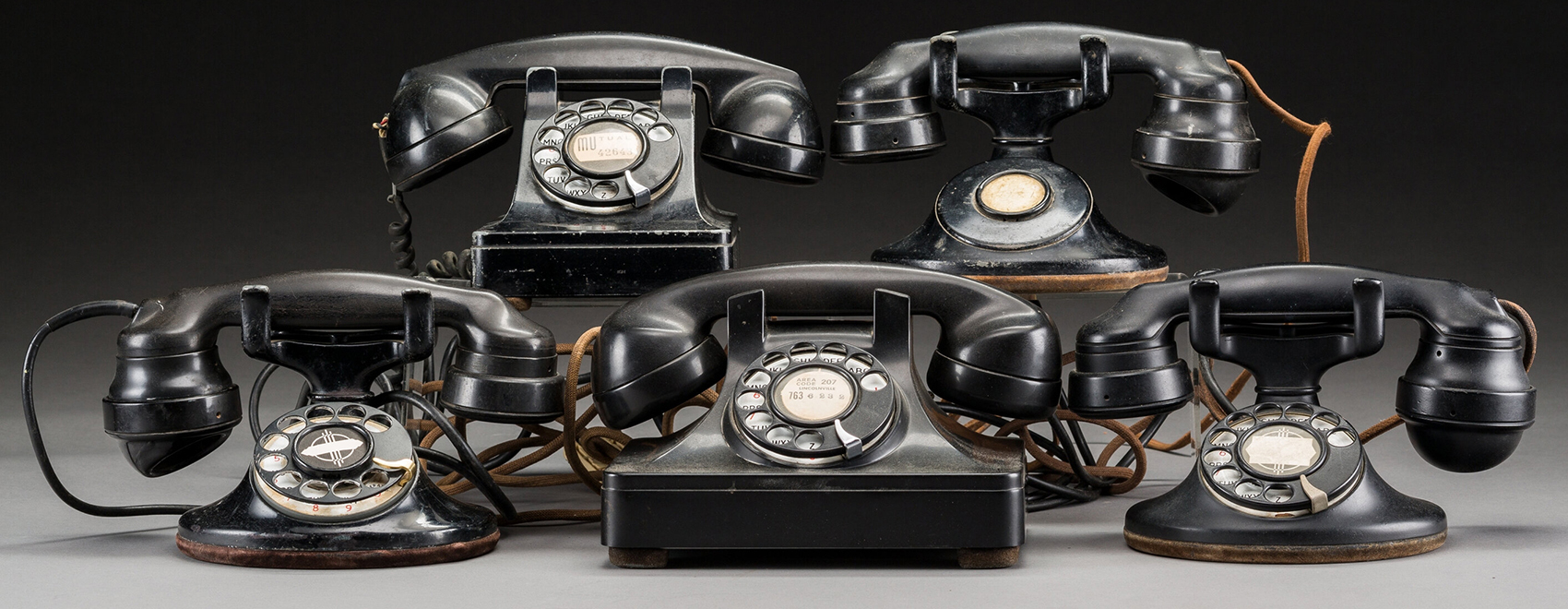
FROM IPHONES TO BATPHONES, RARE ARTIFACTS FROM THE HERITAGE ARCHIVES REVEAL HOW ONE INVENTION RESHAPED COMMUNICATION FOREVER
By Rhonda Reinhart | March 3, 2026
In March 1876, Alexander Graham Bell secured U.S. Patent No. 174,465 — a document that would change the course of human history. The patent described a device capable of transmitting vocal sounds electrically, a concept so radical that it blurred the line between science fiction and reality. Just days after filing his patent, Bell famously summoned his assistant with the words “Mr. Watson, come here, I want to see you,” marking the first intelligible telephone call. What began as a laboratory experiment quickly evolved into one of the most transformative technologies of the modern age.
In honor of the telephone’s 150th anniversary, we’ve rounded up nine related items from the Heritage archives. From an early candlestick model and a sleek smartphone to legendary fictional phones, the following items tell the story of an invention that laid the foundation for the interconnected world we live in today.
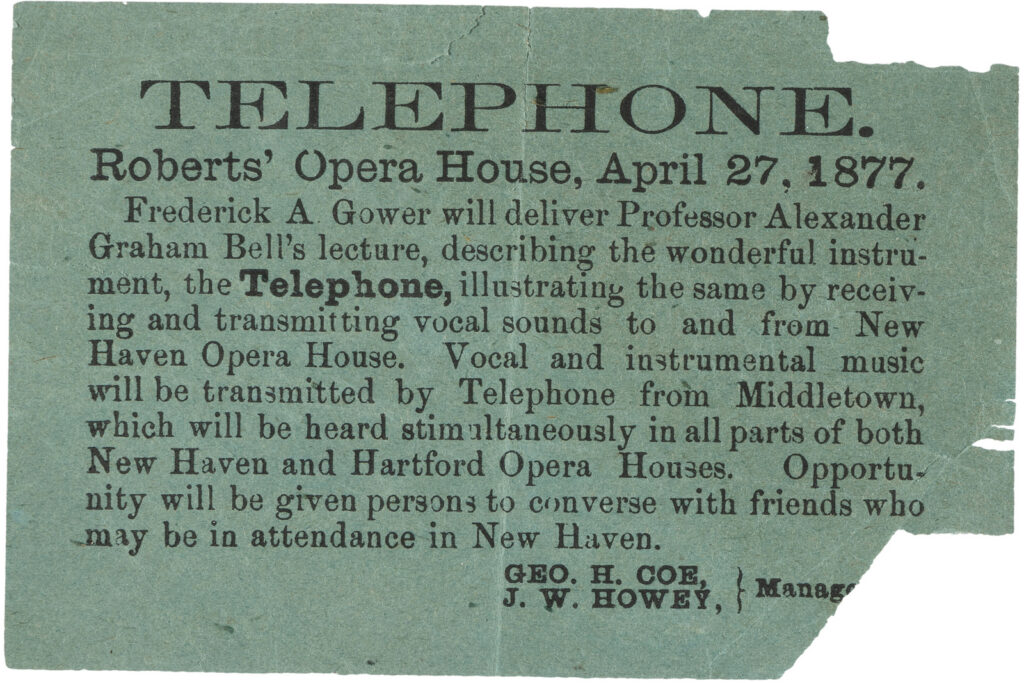
ON APRIL 27, 1877, a year after Bell received his patent for the telephone, the inventor was onstage at Skiff’s Opera House in New Haven, Connecticut, while his associate Frederick A. Gower was onstage at Roberts’ Opera House in Hartford. Thomas Watson, Bell’s chief assistant, was in Middletown, talking alternately with each city and addressing the two cities jointly. This small broadside describing the proceedings is a remarkable survivor from what appears to be the first public demonstration of a long-distance phone call. The rare piece of ephemera sold for $2,062 in an October 2024 Heritage auction.
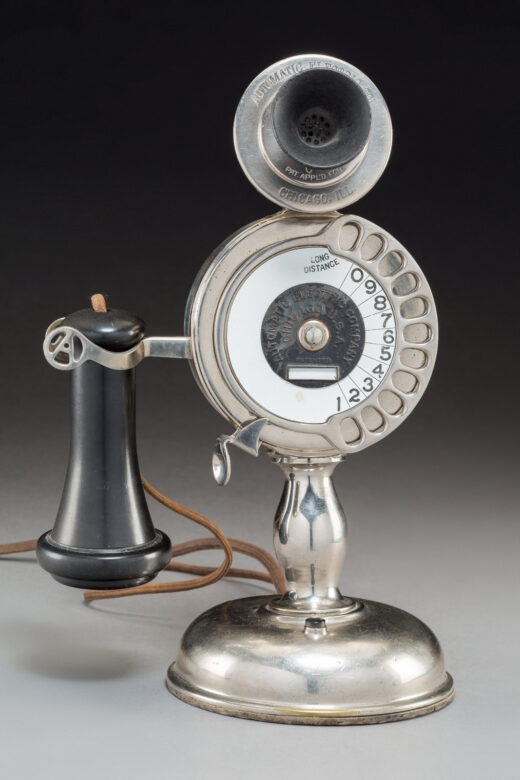
IN THE EARLY 1890s, Kansas City undertaker Almon Brown Strowger transformed the nascent telephone industry when he patented the first automated telephone exchange. According to the National Inventors Hall of Fame, which inducted Strowger in 2006, “frustration over human telephone operators misdirecting his customers’ calls” inspired him to invent the revolutionary system. Soon after came the first rotary dial phone, another Strowger creation. This automatic Electric Co. Strowger potbelly candlestick telephone, circa 1905-1910, realized $2,375 in a June 2018 Heritage auction.
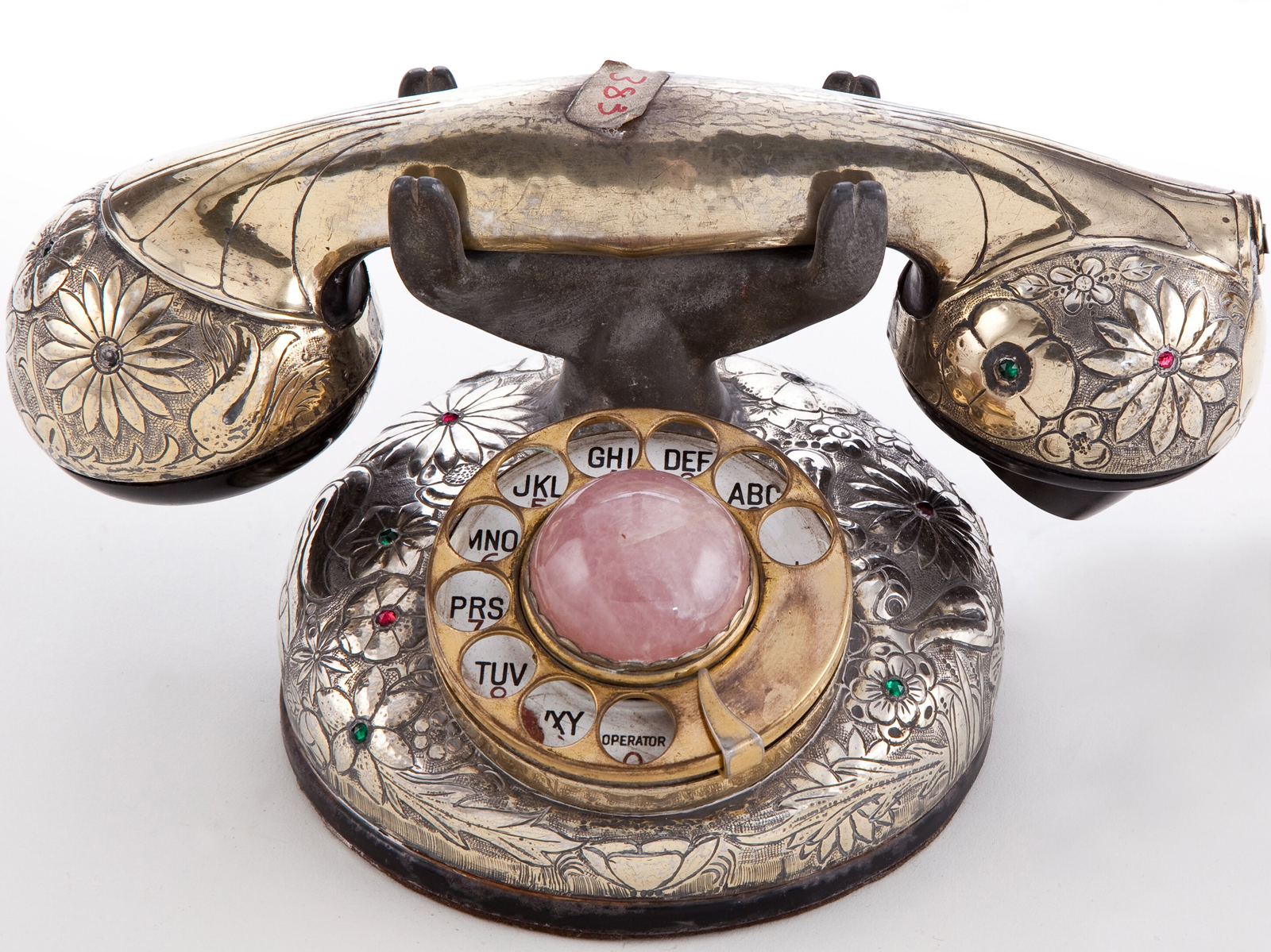
THE KELLOGG SWITCHBOARD and Supply Company was another early player in the telephone business, forming in Chicago in 1897. Though not as widely known today as Western Electric, Kellogg was one of the most important independent competitors in the U.S. telephone industry. In the 1920s, the company produced this specialty rotary dial telephone made of Bakelite, with a decorative sterling silver overlay, engraved flowers, and red and green rhinestones. Hailing from the personal collection of John Wayne, the phone sold for $5,676 in an October 2011 Heritage auction.
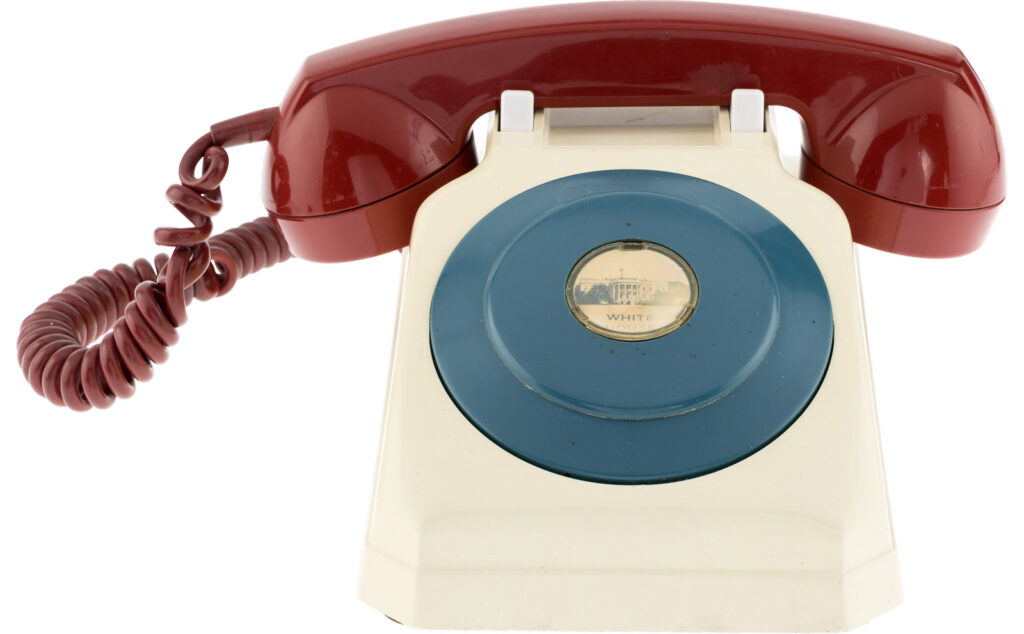
THIS RED, WHITE, AND BLUE White House Hotline telephone was installed at various locations to which President John F. Kennedy traveled, including in the Palm Desert, California, home of Bing Crosby. The phone, which realized $35,000 in a December 2022 Heritage auction, was connected directly to the White House switchboard for the exclusive use of JFK during his visits to California in March and December 1962. That includes being present in Crosby’s home on March 24 of that year, when many biographers believe the president began an affair with Marilyn Monroe.
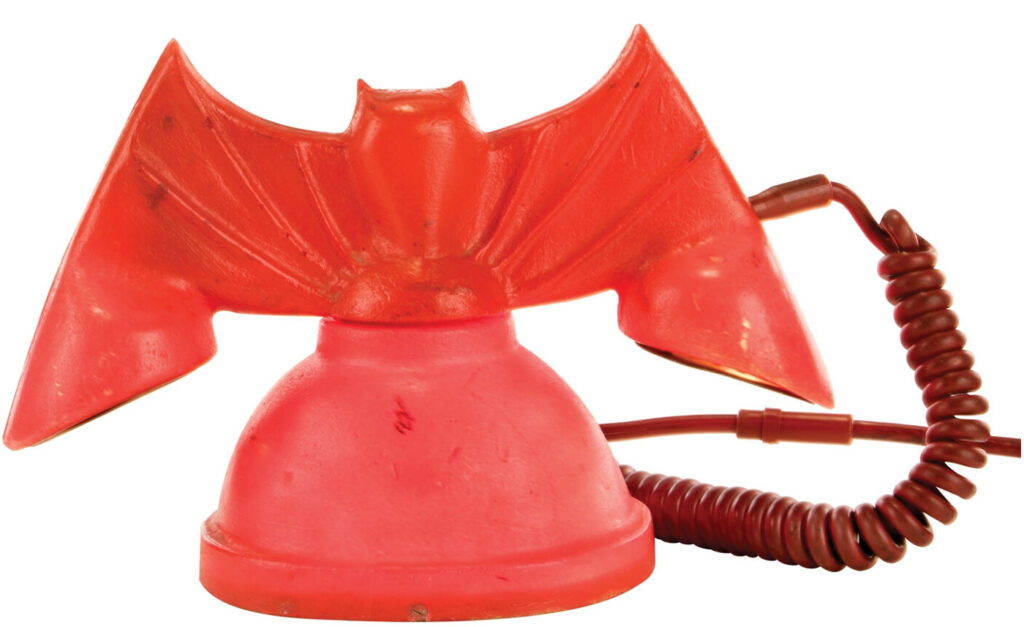
OF ALL THE famous fictional telephones in entertainment history, the Batmobile Batphone from the 1966-68 Batman TV series just might be the most recognizable. While on patrol or in pursuit, the Dynamic Duo could pick up the bat-shaped phone for instant access to the Gotham City Police Department. This version of the futuristic gadget — the only hero working model known to exist — sold for $45,000 in a December 2019 Heritage auction.
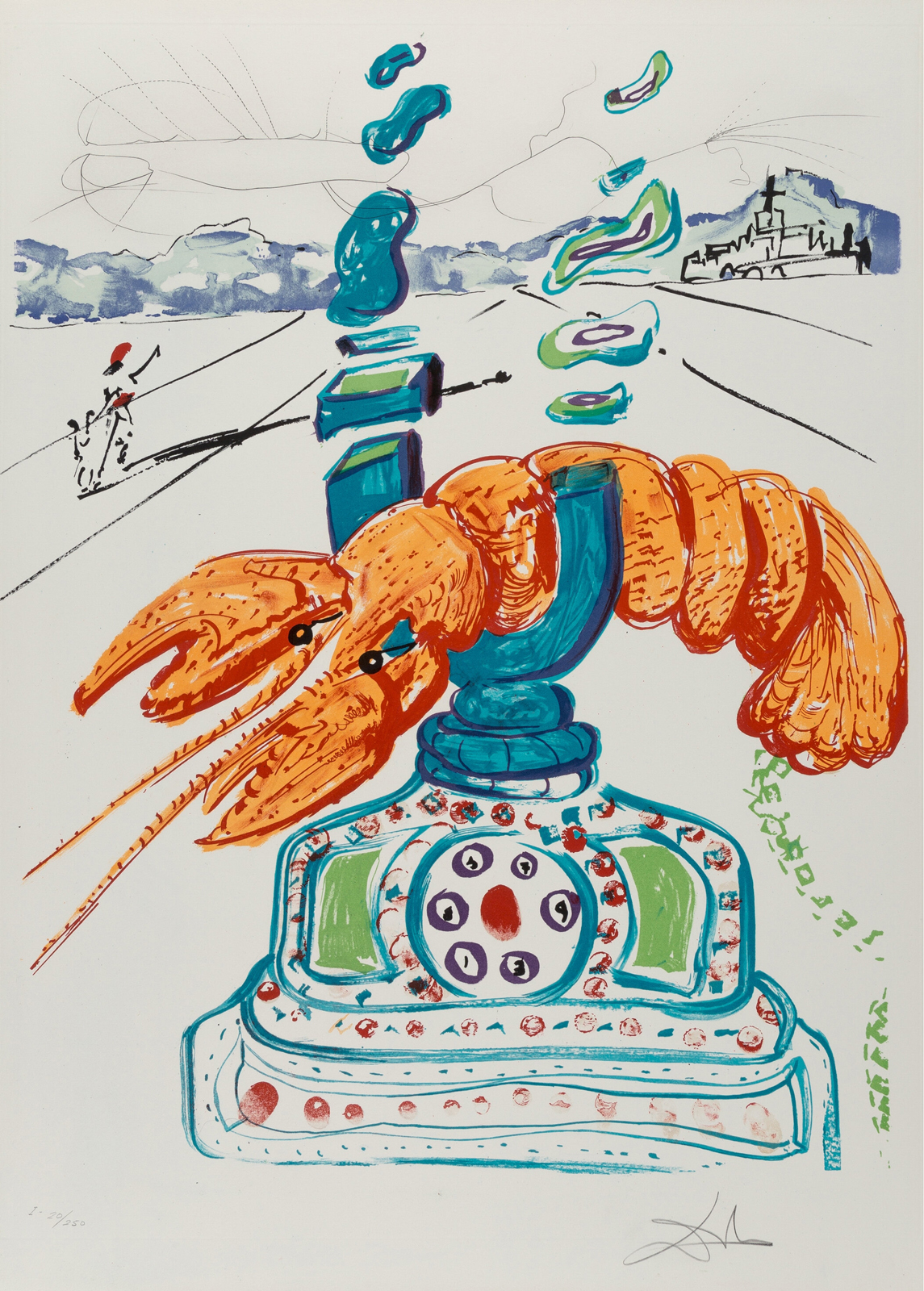
ALMOST 100 YEARS after Bell debuted his most famous invention, Salvador Dalí released this surreal take on the telephone. Cybernetic Lobster Telephone, one of 10 lithographs in the artist’s 1975 print portfolio Imaginations and Objects of the Future, features a recurring Dalí image — the titular crustacean — where the whimsical rotary phone’s handset should be. This print of the work, from an edition of 250, realized $7,187 in an August 2021 Heritage auction.
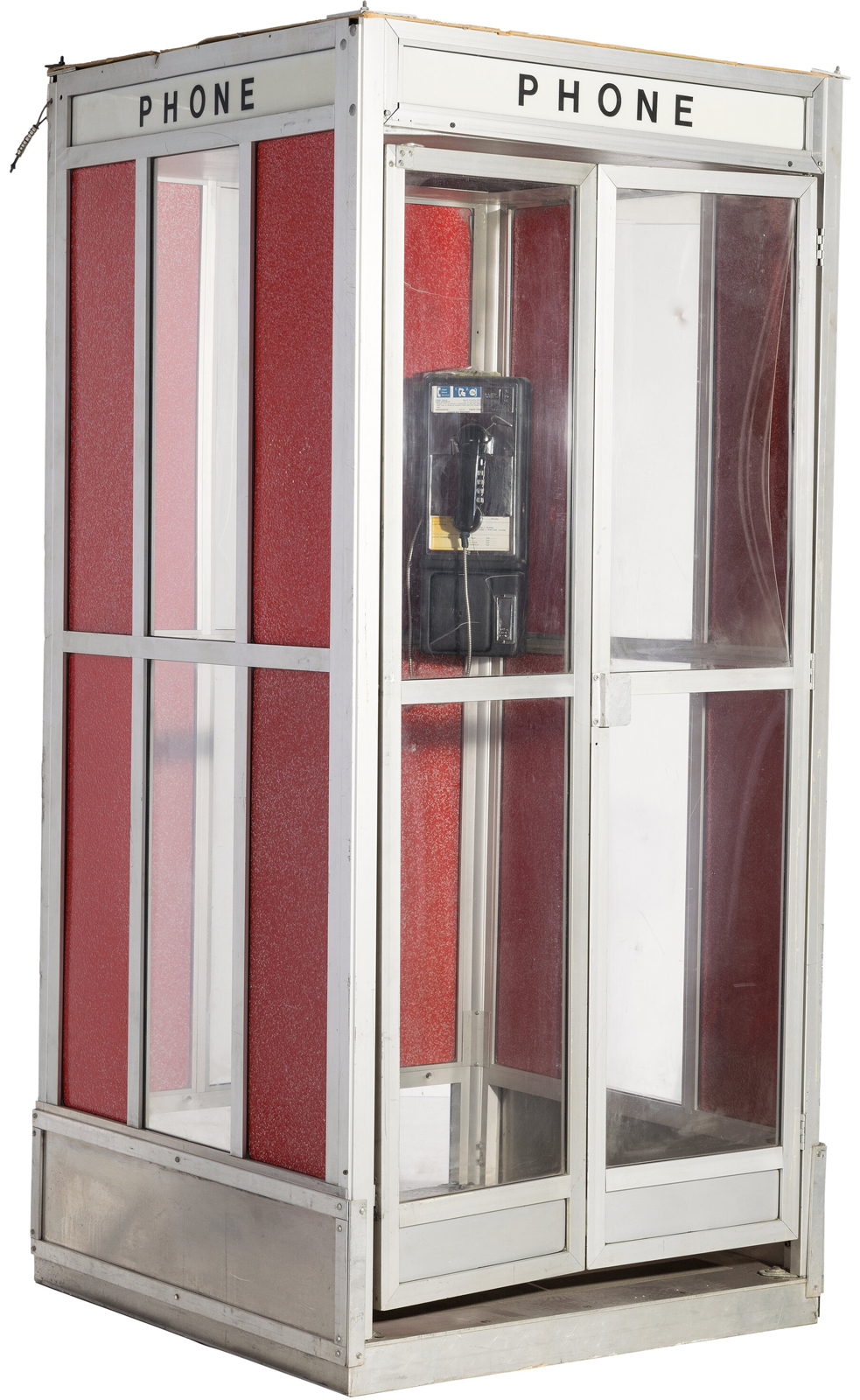
TIME TRAVEL WAS a familiar trope in 1980s cinema, but no one did it with more good-natured slacker appeal than the heroes from Bill & Ted’s Excellent Adventure. With help from an old-school phone booth, William “Bill” S. Preston, Esq. (Alex Winter) and Theodore “Ted” Logan (Keanu Reeves) go on an excellent adventure through time so they can pass their history presentation, create a utopian society, and inspire humanity to “be excellent to each other.” This original telephone booth from the 1989 movie, complete with vintage payphone, realized $23,750 in a March 2024 Heritage auction.
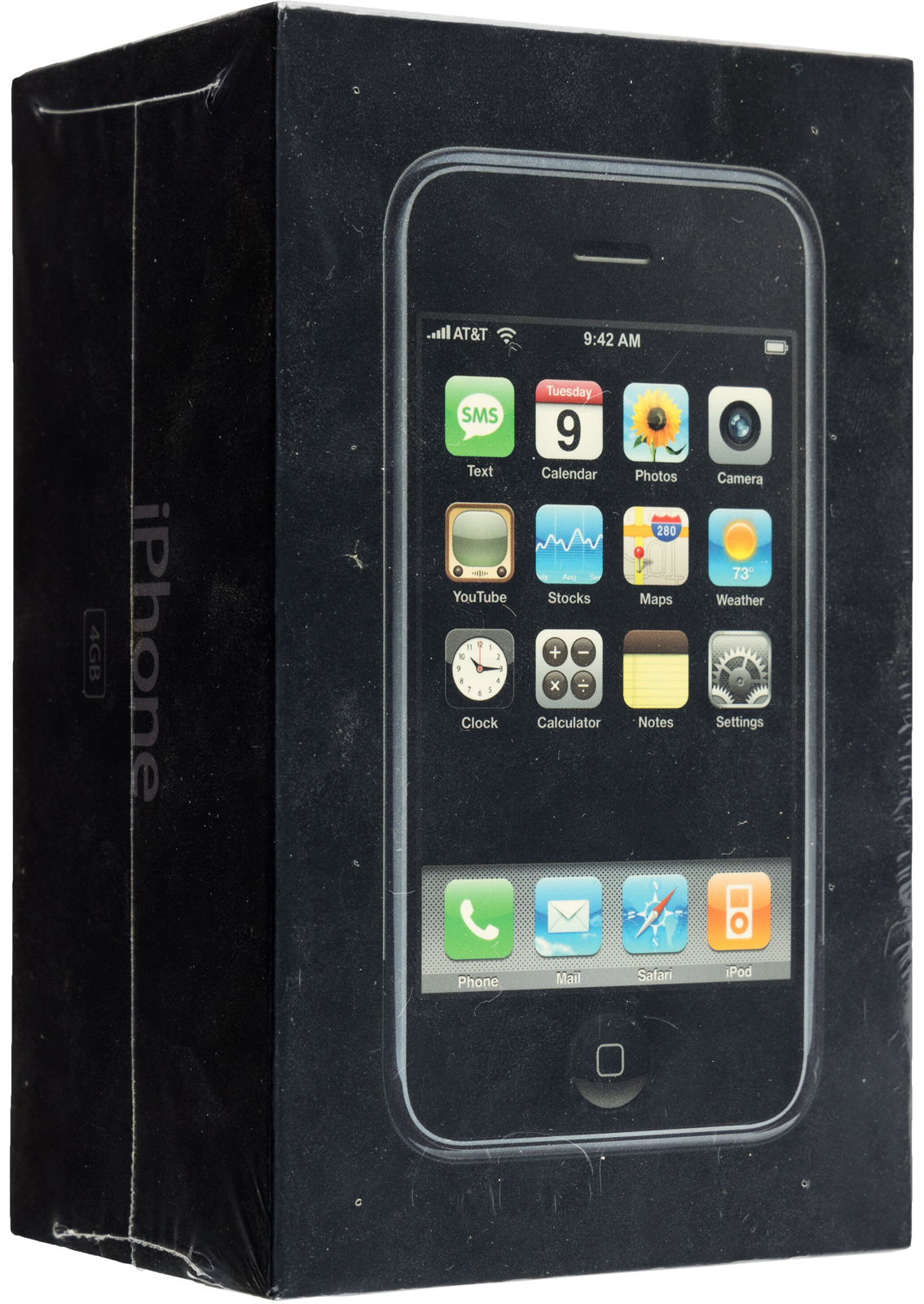
WHEN APPLE RELEASED the first iPhone in June 2007, thousands of people stood in line — some for days — to get their hands on the buzzy new device. Flash-forward nearly two decades, and technophiles still eagerly anticipate each new iPhone iteration (next up: the iPhone 18). On the collectibles front, early-generation items like this sealed-in-box first-generation 4GB iPhone, which sold for $75,000 in an April 2024 Heritage auction, have become hot commodities.
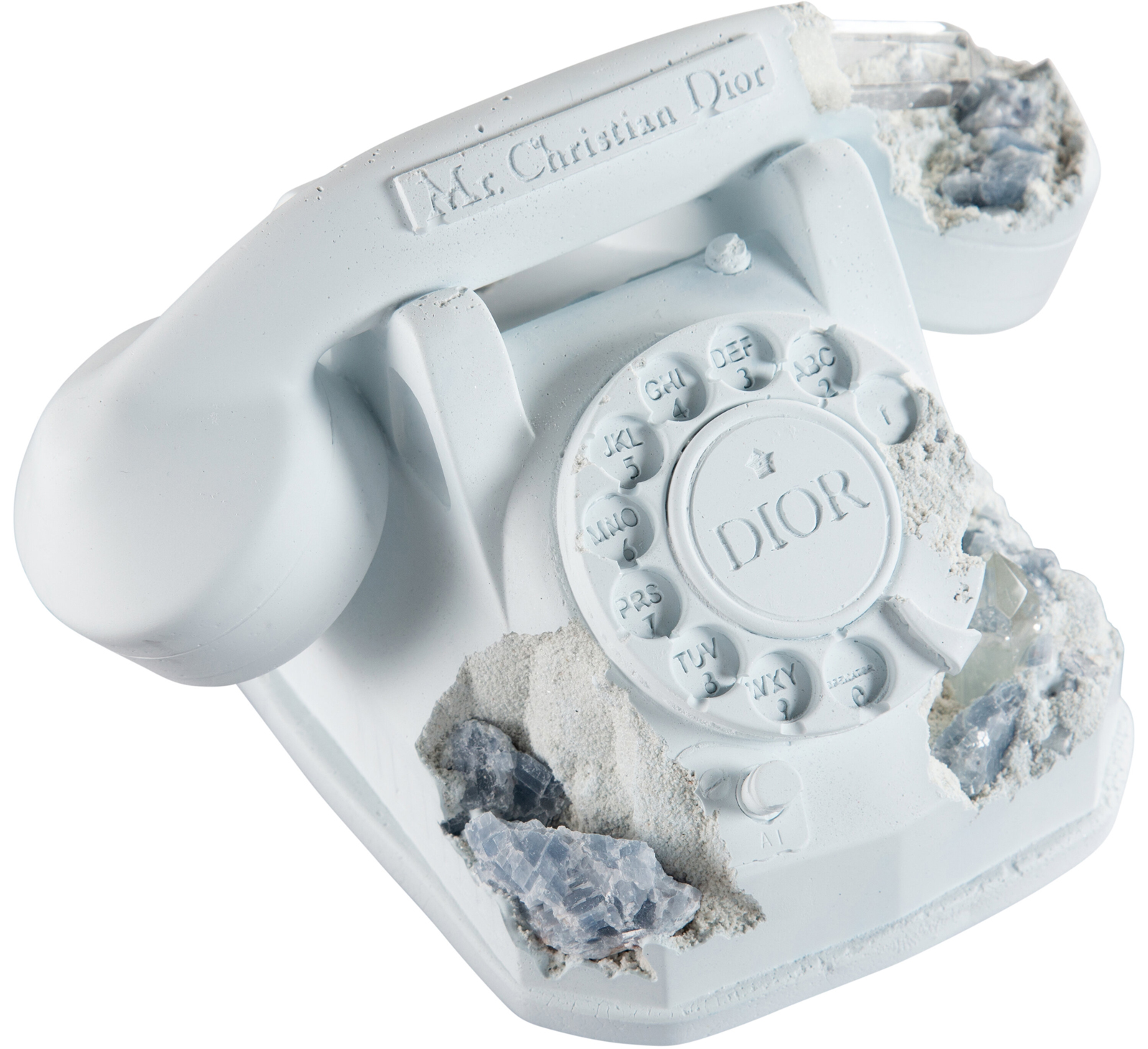
ACCORDING TO A 2024 report, more than three-quarters of Americans live in homes without landlines. But that wasn’t the case, of course, for fashion designer Christian Dior, who died in 1957, long before cellphones became the ubiquitous devices they are today. In 2020, the multimedia artist Daniel Arsham created an objet d’art titled Eroded Telephone based on a vintage phone from Dior’s house in the south of France. Made of Hydrostone and accented with quartz crystals, the limited-edition piece is a nod to Arsham’s popular Future Relic series. This Eroded Telephone, from an edition of 250, sold for $12,500 in a March 2021 Heritage auction.
