A LONG-OVERLOOKED CANVAS IN A SMALL TEXAS MUSEUM IS REVEALED AS A MONUMENTAL STUDY FOR ONE OF THE CELEBRATED BRITISH ARTIST’S GREATEST WORKS
By Christina Rees | May 19, 2026
Two hundred years after John Constable painted The Cornfield, one of the most consequential discoveries connected to the artist in recent memory emerged not from an English country house or a forgotten European collection, but from a museum wall in East Texas.
For decades, visitors to the Jefferson Historical Society and Museum in Jefferson, Texas, passed beneath a monumental landscape believed to be one of the many copies made after Constable’s celebrated 1826 masterpiece. Hung high in a former courtroom inside the town’s Victorian courthouse museum, the painting remained largely outside the view of Constable scholars, its darkened varnish and uncertain attribution obscuring what it truly was: a previously unknown, full-scale autograph oil study for Constable’s celebrated The Cornfield in the National Gallery, London.
Now, after years of technical examination, conservation, and scholarly research, the rediscovered work will headline Heritage Auctions’ June 5 Important European Art Signature® Auction — a remarkable reemergence for a painting that fundamentally reshapes the understanding of one of Constable’s greatest achievements.
“It’s been an extraordinary journey from a museum wall in Texas to the international limelight,” says Marianne Berardi, Heritage’s Co-Director of European Art. “The technical analysis, from pigment testing to infrared examination of what lies beneath the surface, confirmed what we had begun to suspect. This is a work by John Constable himself.”
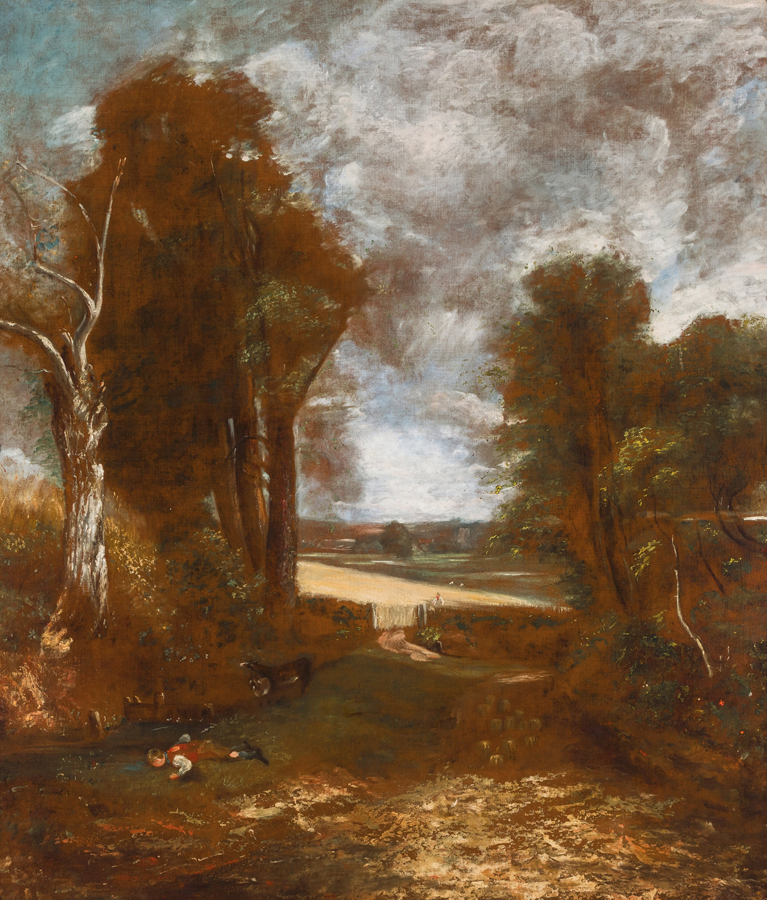
John Constable ‘The Cornfield (full-scale study),’ circa 1820-6. Oil on canvas. 55-1/2 x 47-1/2 inches (141.0 x 120.7 cm). Available in Heritage’s June 5 Important European Art Signature® Auction.
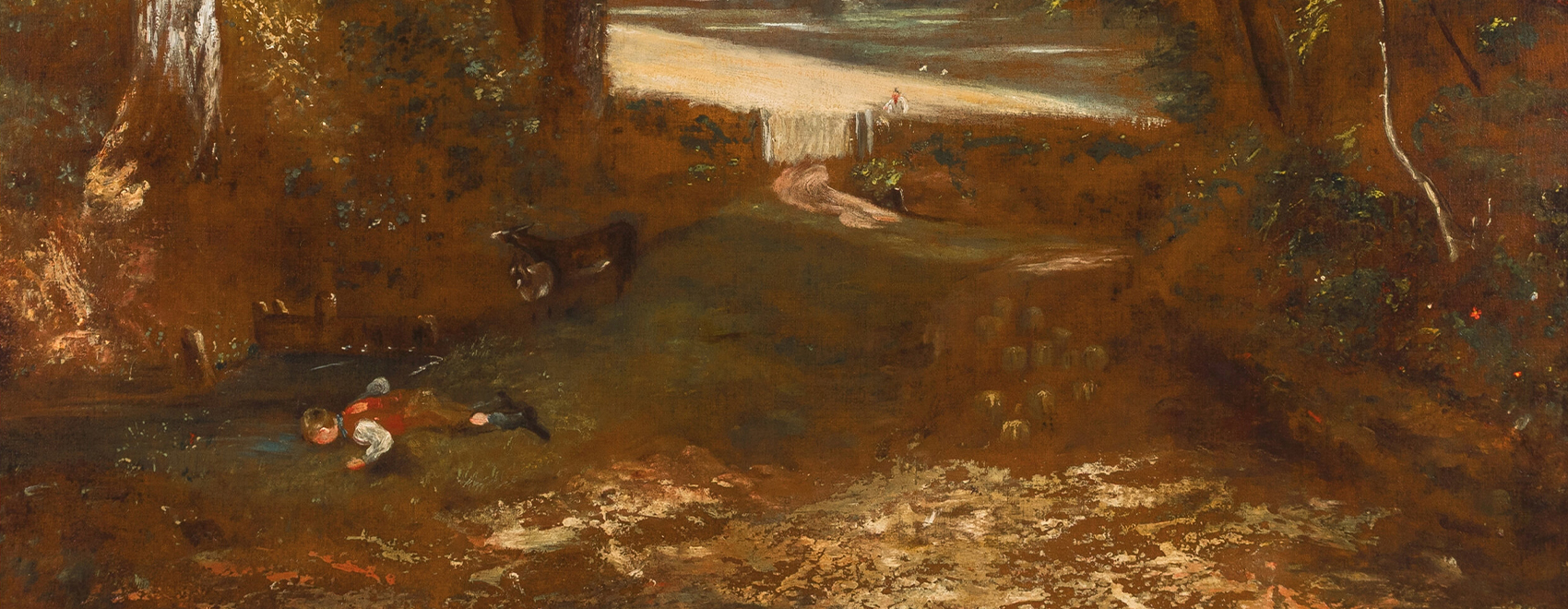
The story carries an almost novelistic improbability. The Cornfield occupies a notable position within British art history, widely regarded alongside The Hay Wain as one of Constable’s defining images of the English landscape. Exhibited at the Royal Academy in 1826, the painting depicts a shepherd boy drinking from a stream along Fen Lane near East Bergholt in Suffolk, where Constable spent his childhood. Following the artist’s death in 1837, admirers purchased the painting and presented it to the National Gallery, making it the first work by the artist acquired for the national collection.
The subject was deeply personal to the artist. Constable walked the lane daily as a schoolboy traveling between East Bergholt and nearby Dedham, and the landscape remained inseparable from his identity as a painter. “Painting is with me but another word for feeling,” he wrote, linking the banks of the River Stour and the memories of his “careless boyhood” to the origins of his artistic vision.
That autobiographical resonance comes through in The Cornfield, a painting long admired for its atmosphere of rural stillness. Yet until now, the details of how Constable arrived at the composition were not fully understood.
The rediscovered 6-foot study changes that.
The first revelation of the discovery is that Constable did not move directly from small preliminary sketches to the final exhibition canvas, as had long been assumed. Instead, the painting confirms that during this mature period of his career he continued the practice of creating full-scale preparatory studies alongside his finished compositions.
“The discovery significantly deepens our understanding of how John Constable developed one of his greatest masterpieces.”— Marianne Berardi, Co-Director of European Art, Heritage Auctions
According to the extensive research undertaken by art historian Anne Lyles, a leading authority on Constable, and conservator Sarah Cove, founder of the Constable Research Project, the newly identified work stood beside the finished painting in Constable’s London studio during the winter months of 1826 as the artist developed the final composition. Technical analysis revealed not only complete consistency with Constable’s materials and methods, but also something more tantalizing: evidence that the artist worked on the canvas during two separate periods.
The revelation suggests that the conception of The Cornfield may have begun years earlier than scholars previously believed.
Infrared reflectography, pigment analysis, and cleaning tests uncovered a layered process beneath the painting’s surface. Differences in paint application, combined with evidence that earlier passages had fully dried before later work resumed, indicate that Constable returned to the composition after a significant interval. Lyles and Cove speculate that the project may have originated as early as 1823 for an earlier commission he did not complete before evolving into the monumental working study for the 1826 masterpiece.
“The discovery significantly deepens our understanding of how he developed one of his greatest masterpieces,” Berardi says.
The rediscovery also illuminates Constable’s mature working practice. While oil sketches formed an essential part of his artistic process, a full-scale preparatory study of this ambition and complexity remained entirely unknown to scholarship until only a few years ago. Its survival offers an unusually intimate record of the artist thinking through the emotional architecture of the painting in real time — refining the placement of figures, adjusting atmosphere and structure, and testing how memory itself could be translated into paint.
Equally astonishing is the path the painting took to Texas.
The Jefferson Historical Society and Museum acquired the work in 1970 as a gift from Newhouse Galleries in New York. At the time, the museum was in the process of building its collection inside the sprawling former courthouse acquired by attorney J.A.R. Moseley, one of the institution’s founders. Newhouse Galleries, which also worked with prominent Texas collectors and museum patrons including Kay Kimbell and Amon Carter, donated the painting as part of an effort to help furnish the museum’s expansive interiors.
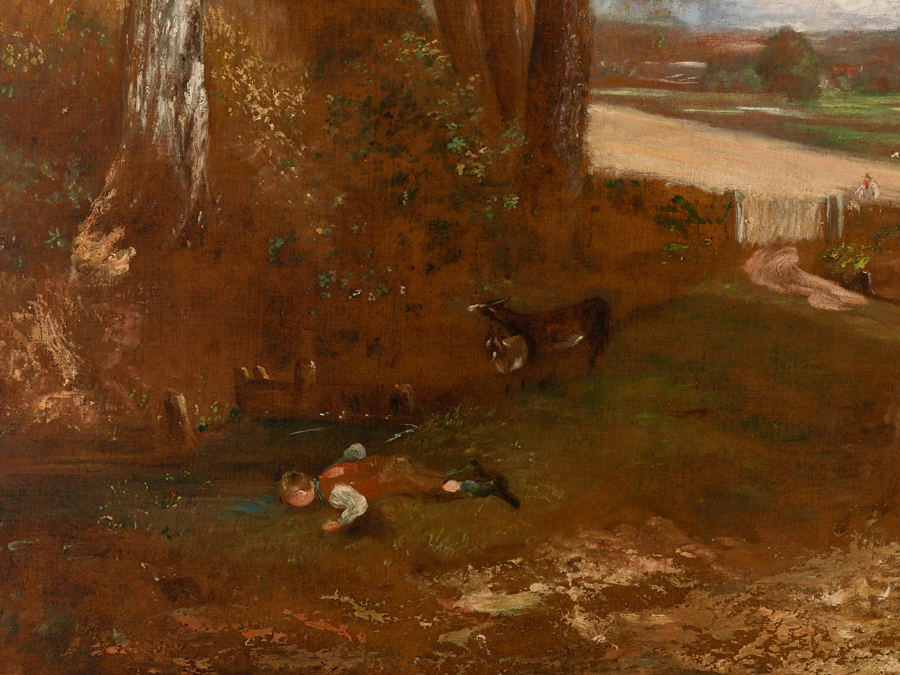
The study, and the finished piece resulting from it, depicts a shepherd boy drinking from a stream near East Bergholt in Constable’s native Suffolk.
In correspondence announcing the gift, gallery owner Clyde Newhouse identified the canvas as “the large sketch for the painting now in the National Gallery in London,” noting that Constable scholar Carlos Peacock endorsed its significance. Local and regional newspapers celebrated the acquisition, with one report quoting Peacock’s observation that the sketch was “nearer to the artist’s original vision than the later, more worked-up picture.”
But over time, uncertainty settled around the attribution. During the mid-20th century, Constable scholarship was still in its infancy, and at least 85 known copies of The Cornfield complicated efforts to establish authenticity. Without a clear provenance before its appearance at Newhouse Galleries, the painting was effectively left untraced.
That began to change in 2017, when the Jefferson museum contacted Heritage Auctions to evaluate portions of its collection as part of a potential reinstallation initiative. Questions quickly emerged about the purported Constable. Beneath the aged varnish and layers of surface dirt, the composition appeared more significant than previously assumed.
At Berardi’s recommendation, the museum commissioned a comprehensive scholarly and conservation study. The painting was shipped to England, where it underwent extensive technical examination before receiving a sensitive restoration by Cove.
The result was not merely a reattribution, but the recovery of a major work within Constable’s oeuvre.
It seems fitting that a painting so deeply connected to memory, landscape, and the persistence of place would survive quietly, almost anonymously, in another rural river town half a world away. Berardi herself drew the parallel between Jefferson and East Bergholt, both communities shaped by waterways and local history, both remarkably linked by this canvas.
And in retracing Constable’s footsteps through Suffolk while researching the work, Berardi found the landscape still carrying traces of the artist’s presence. Fen Lane remains lined with trees. Water still moves through the narrow stream beside the path. The fields continue to open toward the distance much as they did when Constable walked there as a boy.
The painting now returns to public view at a moment of unusual symmetry: the 250th anniversary of Constable’s birth and exactly 200 years after The Cornfield was first exhibited at the Royal Academy.
For the Jefferson Historical Society and Museum, the rediscovery marks the culmination of a long and careful stewardship. For scholars, it opens new avenues for understanding Constable’s process and chronology. And for collectors, it represents the reemergence of a work that invites renewed appreciation of the artist and an opportunity to acquire the working draft for one of his most beloved Suffolk landscapes.
Or, perhaps more accurately, one that had been hiding in plain sight all along.