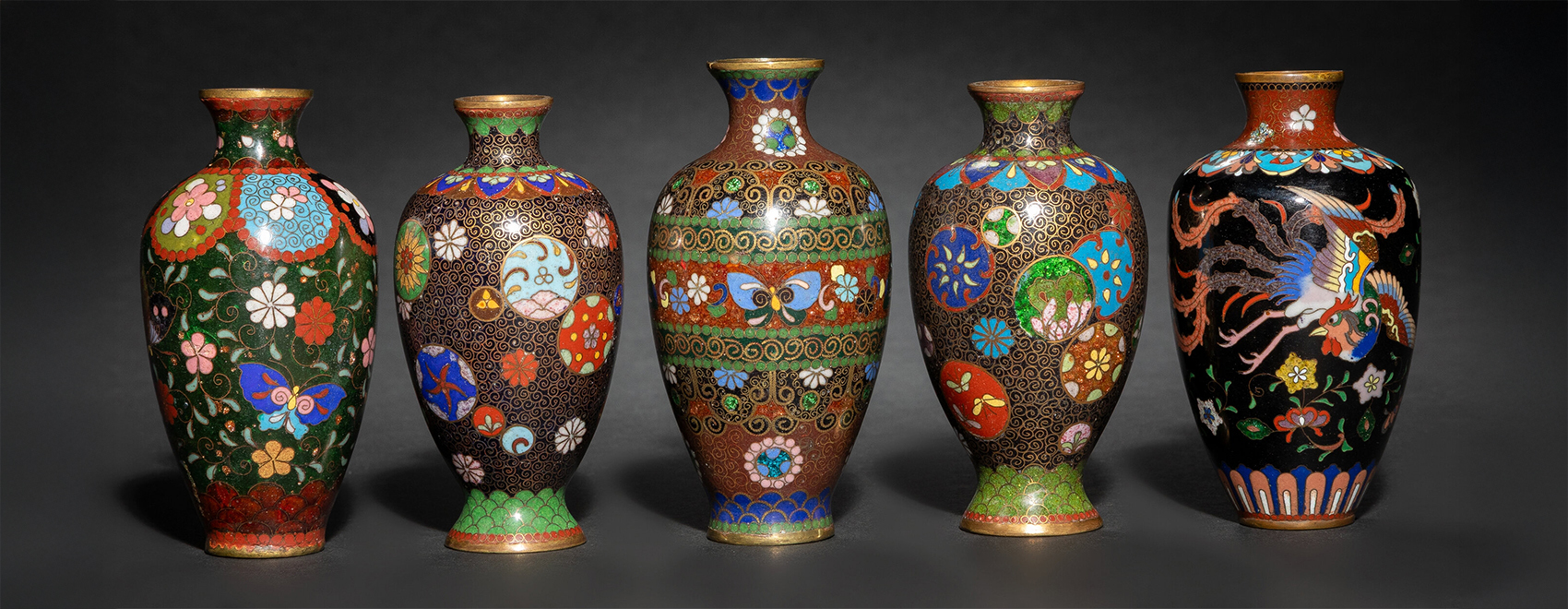
THE ANTIQUE TREASURES RANGE FROM MEIJI-ERA PLATES AND VASES TO EARLY 20TH-CENTURY FIGURAL OBJECTS
By Charlene Wang | September 16, 2025
In the summer of 1985, Michael Barrett and business partner Danny Fried quietly opened the China Club in the basement of the Beacon Hotel on New York City’s Upper West Side. It was meant to be a chill neighborhood hangout, but fate had other ideas. Within a matter of months, the now-legendary nightclub had become a celebrity hotspot due to its rotating lineup of musical performances by the likes of David Bowie, Elton John, Sting, Stevie Wonder, and Prince. The club’s meticulously curated interior, which Barrett himself designed, also played a role, attracting musicians, movie stars, art dealers, and fashion designers with its art-forward vibe.
Beyond his role as a nightclub impresario, Barrett nurtured a discerning eye for art and design and spent time as an antiques dealer. Over decades of designing spaces and accumulating objects for his bars and clubs, he collected copious Asian antiques and developed a particular passion for Japanese cloisonné. Known in Japan as shippo-yaki, or “seven treasures,” the term derives from Buddhist texts that list seven precious materials – gold, silver, lapis lazuli, crystal, agate, coral, and pearl – suggesting the brilliance and rarity embodied in these luminous works.
In cloisonné, delicate metal wires define compartments that are filled with enamel pastes, then fired to achieve jewel-like surfaces. From the mid-19th century onward, Japanese artisans perfected this technique, producing objects admired at world expositions and collected across Europe and America. The pieces in Barrett’s Asian cloisonné collection, a portion of which will be offered through Heritage Auctions on September 25, exemplify this golden age: vases, plaques, and vessels of luminous color, intricate detail, and extraordinary technical mastery.
Below, we present highlights from Seven Treasures: Japanese Cloisonné from the Collection of Michael Barrett Showcase Auction.
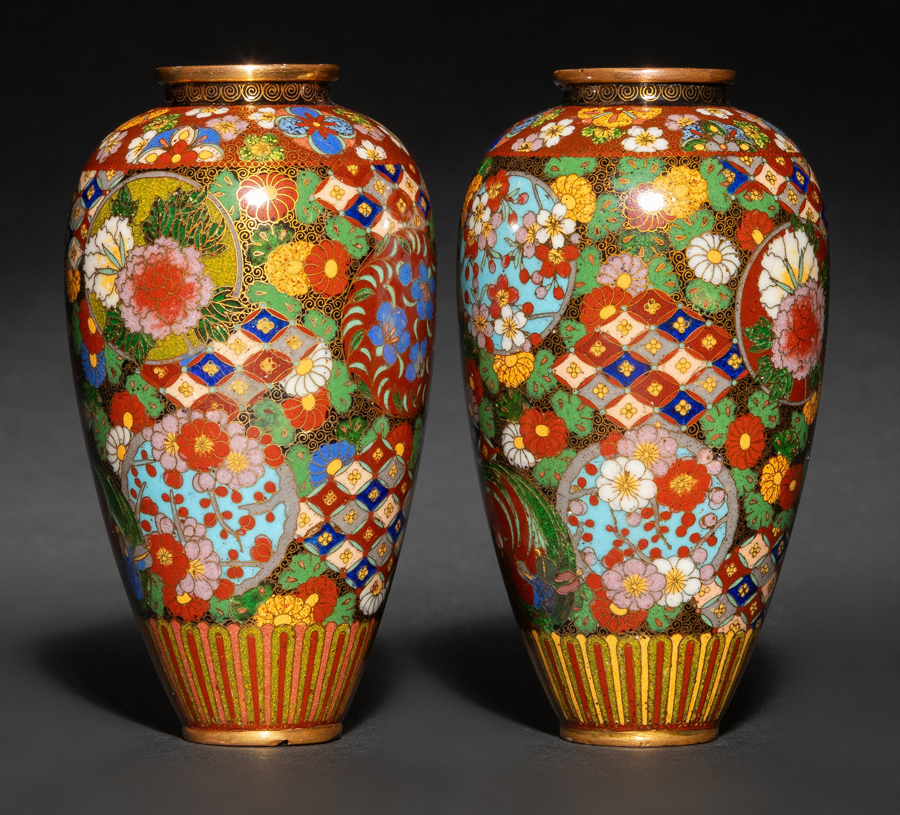
A pair of Japanese cloisonné enamel and goldstone vases
Meiji period
4-7/8 x 2-1/2 x 2-1/2 inches (12.5 x 6.5 x 6.5 cm) (each)
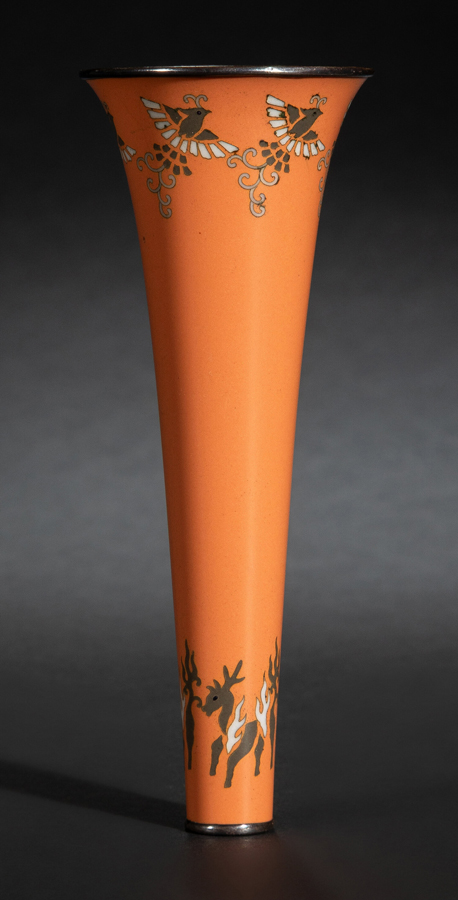
A Japanese salmon-ground cloisonné enamel vase
Meiji period
6-1/2 x 2-1/2 x 2-1/2 inches (16.5 x 6.3 x 6.3 cm)
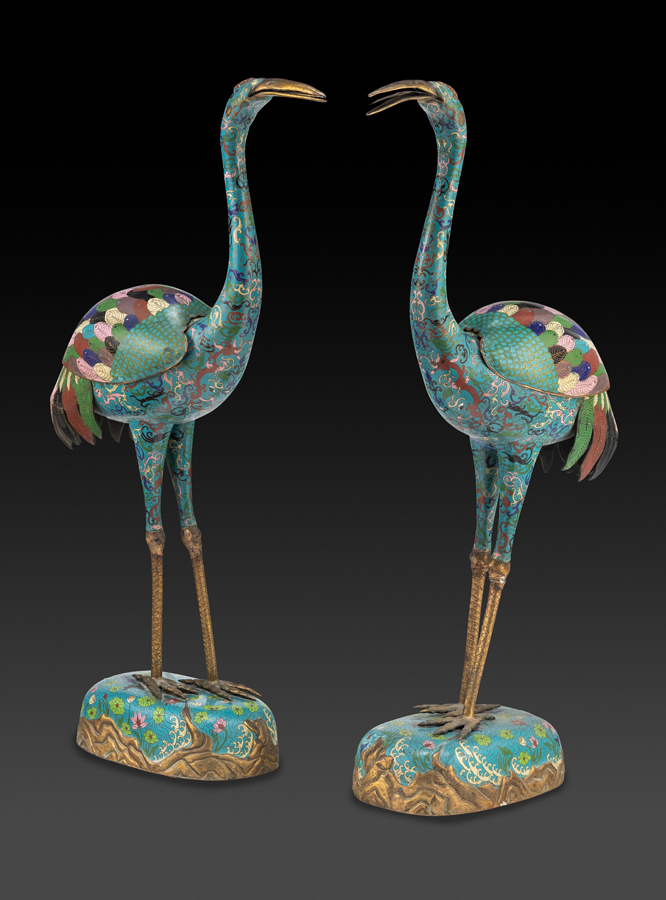
A pair of Chinese cloisonné enamel cranes
Early 20th century
36-3/4 x 6 x 14-1/2 inches (93.3 x 15.2 x 36.8 cm) (each)
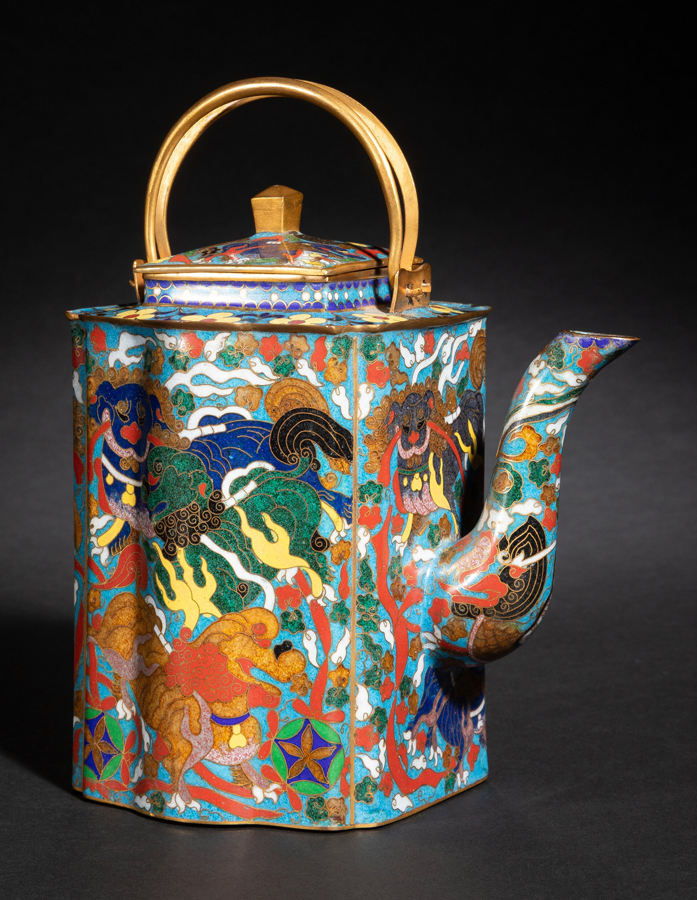
A Chinese cloisonné enamel teapot
Republic period
7-1/2 x 4-3/4 x 6-1/2 inches (19.1 x 12.1 x 16.5 cm)
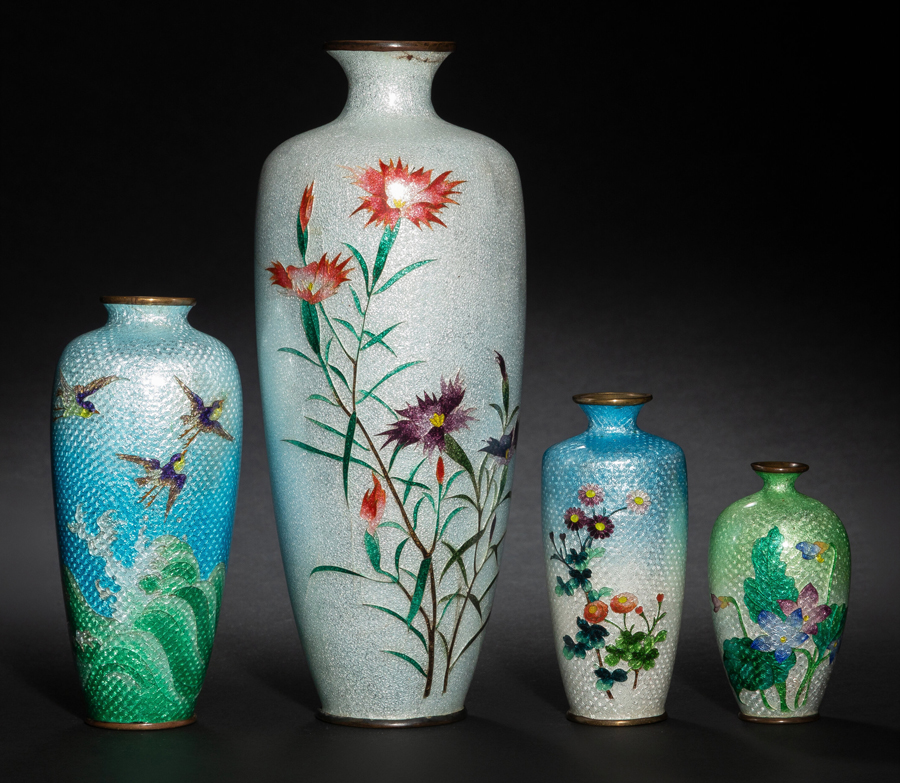
Four Japanese ginbari cloisonné enamel vases
Meiji period
10 x 4 x 4 inches (25.4 x 10.2 x 10.2 cm) (tallest)
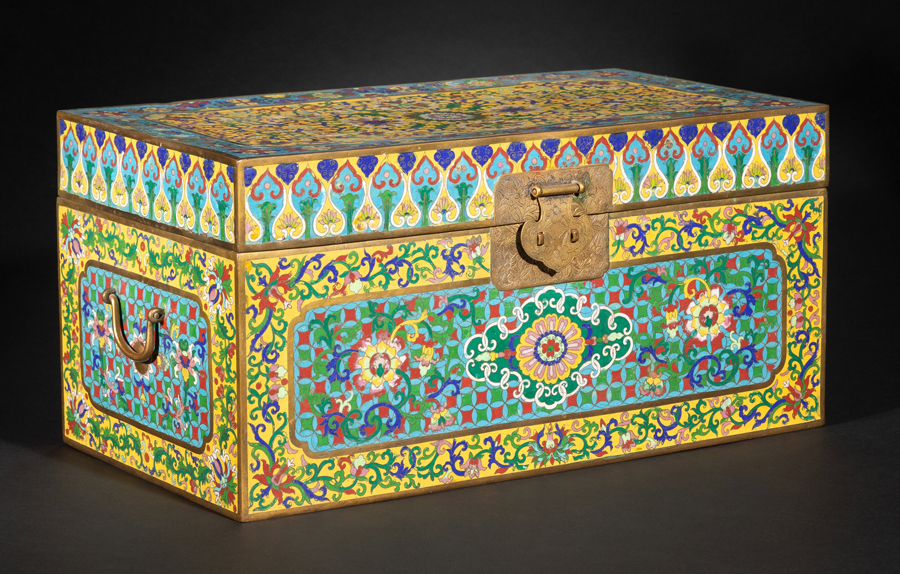
A Chinese cloisonné enamel trunk
20th century
9-1/2 x 19-1/4 x 10-3/8 inches (24.1 x 48.9 x 26.4 cm)
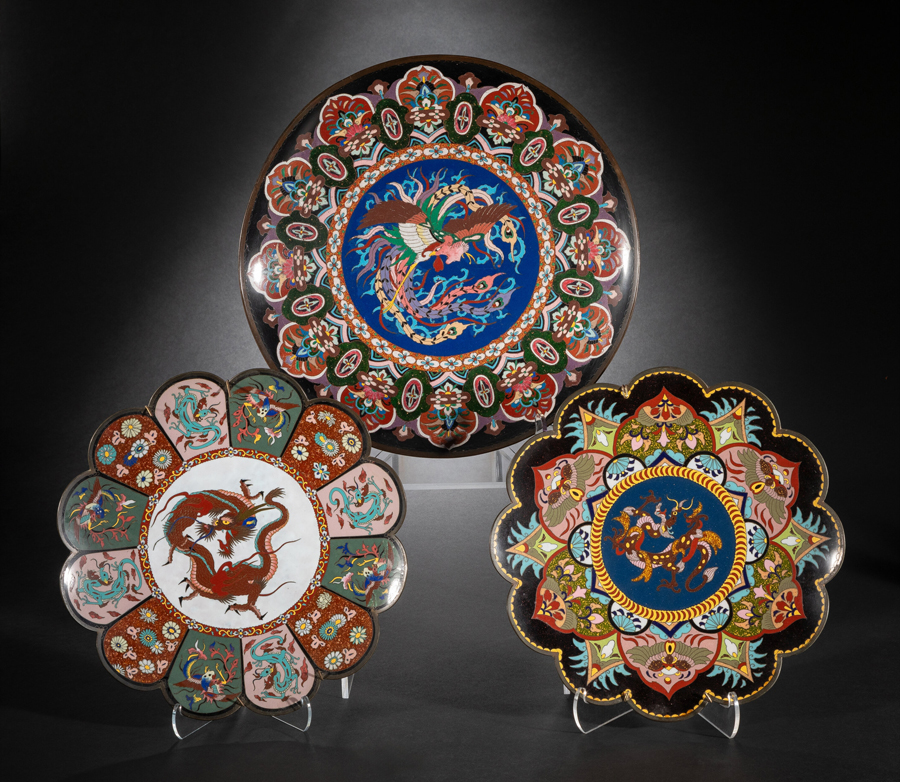
Three Japanese cloisonné enamel plates
Meiji period
2 x 14-1/4 x 14-1/4 inches (5.1 x 36.2 x 36.2 cm) (largest)
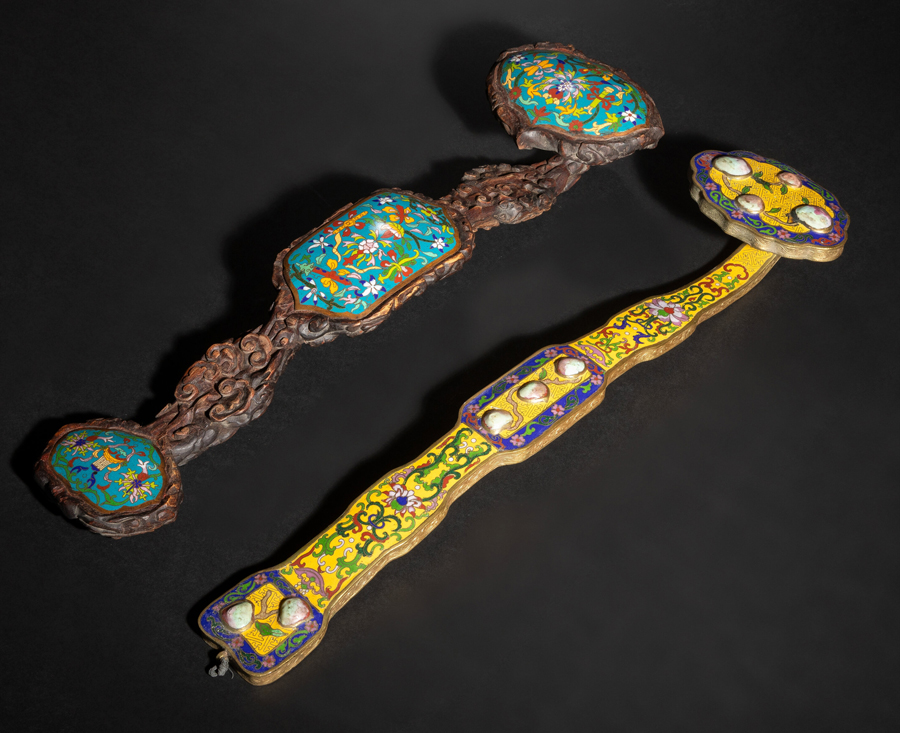
Two Asian cloisonné enamel ruyi scepters
20th century
22-3/4 x 5-3/8 x 3 inches (57.8 x 13.7 x 7.6 cm) (largest)
Go here for more images and information on all 122 lots in the treasure-filled September 25 auction.