A NEWLY RESTORED FAMILY HOME AND RECENTLY PUBLISHED BOOK REVEAL THE ARTIST NOT AS ICON, BUT AS DAUGHTER, SISTER, AND KEEPER OF A POWERFUL LINEAGE
By Andrew Nodell | May 5, 2026
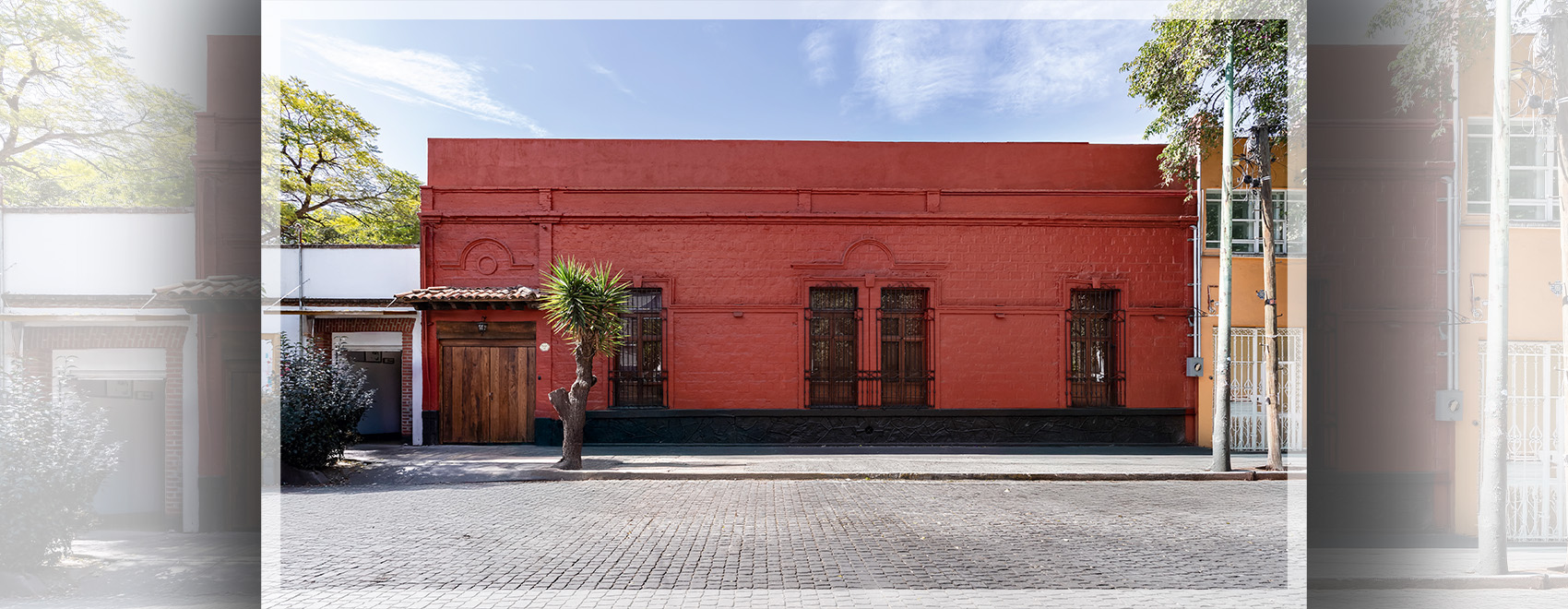
In 1890, a fresh-faced German immigrant named Wilhelm Kühlo arrived in Mexico, changed his name to Guillermo Kahlo, and, 14 years later, built a cobalt-colored house in the historic Coyoacán district of Mexico City where he and his wife, Matilde, would go on to raise their four daughters. Now famously known as Casa Azul, the home served as a hybrid studio and living space for artist Frida Kahlo and her husband, Diego Rivera. In 1958 — four years after Frida’s death at age 47 — it was opened as Museo Frida Kahlo. All the while, the family’s true private sanctuary rested behind a sienna-colored facade adjacent to Casa Azul, and, for the first time in nearly a century, it has been lovingly restored and opened to the public as Museo Casa Kahlo, a celebration of both the entire family and their most famous relative.
Purchased by Frida’s parents in 1930 and inhabited by generations of the Kahlo family until 2022, this private refuge is now the subject of Casa Kahlo: Frida Kahlo’s Private Home and Sanctuary, recently released by Rizzoli and written by the artist’s grandniece, Mara Romeo Kahlo, and her daughters, Mara de Anda Romeo and Frida Hentschel Romeo.
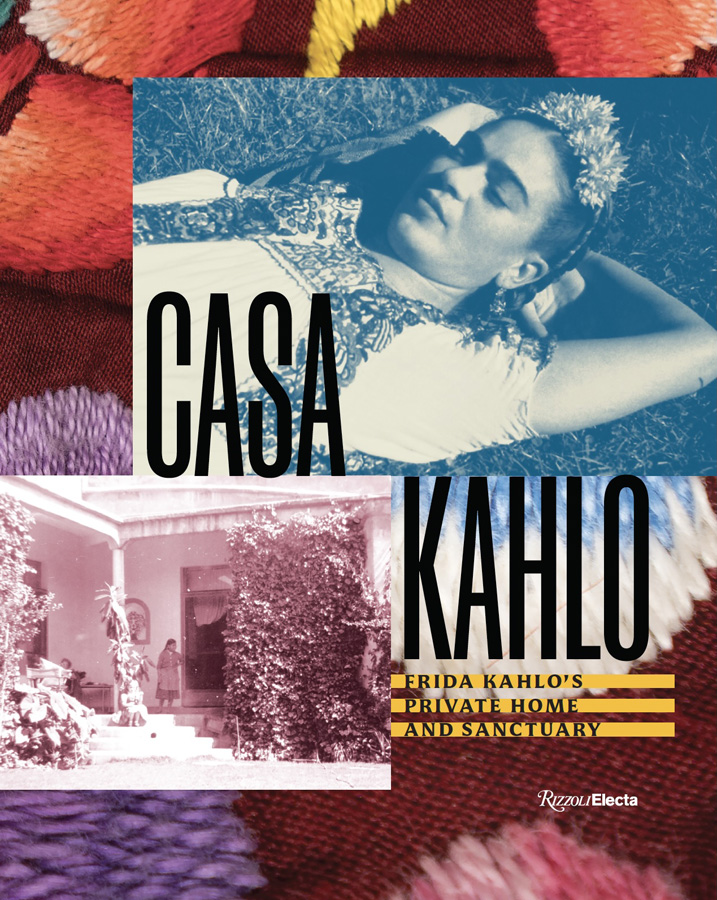
© Casa Kahlo: Frida Kahlo’s Private Home and Sanctuary by Mara Romeo Kahlo and Mara de Anda Romeo and Frida Hentschel Romeo, Rizzoli, 2026
“Casa Azul was very much a ‘public’ house, [while] Casa Kahlo was [Frida’s] spiritual home,” notes Romeo Kahlo. Casa Kahlo paints Frida as a family-rooted daughter, sister, and aunt through a carefully preserved collection of letters, decorative objects, and personal mementos — all beautifully photographed and presented alongside rare historic images.
After embarking on this years-long journey, the artist’s grandniece has a new appreciation for the strength of spirit held by generations of the Kahlo clan. “By telling our family story, I understand with more clarity where I come from,” explains Romeo Kahlo, who was born just a year before Frida’s death. “I realize I come from a lineage of very strong women and of deeply rooted values. I feel very proud of being their direct descendant.”
“The spirit of the Kahlo lineage is in our blood, and we feel compelled to honor and share it,” adds co-author Hentschel Romeo. Here, Romeo Kahlo discusses with Intelligent Collector the importance of preserving their broader family legacy, surprising discoveries made during restoration work, and lessons she’s gleaned from her “Tía Frida.”
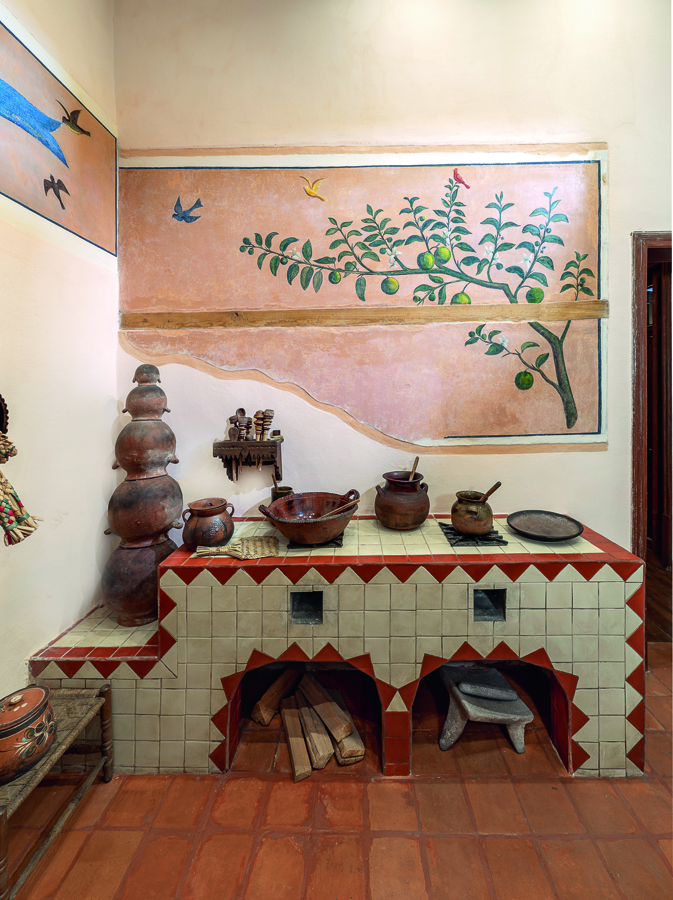
The kitchen at Casa Kahlo features murals painted by Frida. © Casa Kahlo: Frida Kahlo’s Private Home and Sanctuary by Mara Romeo Kahlo and Mara de Anda Romeo and Frida Hentschel Romeo, Rizzoli, 2026.
INTELLIGENT COLLECTOR: What were the challenges in archiving the contents of Casa Kahlo while preserving the history of your family and the home?
MARA ROMEO KAHLO: The work of archiving lasted for several years. When Isolda [Frida’s niece and longtime resident of Casa Kahlo] died in 2007, we discovered letters, photos, drawings, dedicated books, Guillermo’s negative plates, cameras, paintbrushes, and other items all over the house. [We found things] in closets, drawers, boxes, and inside books. So, we needed to be very careful when deciding what was to be kept and what was trash. It was a process that seemed endless, as we kept finding “golden nuggets” in places we wouldn’t have imagined.
IC: What were you surprised to discover as you converted the home and later wrote this book?
MRK: We didn’t know we’d be able to uncover the kitchen murals that Frida painted and were painted over in the 1960s. This was the major discovery. We also discovered jewelry made by Frida and her sisters, and we also had boxes and sacks with stones — Frida used to make, and remake, her own stone necklaces. And when deciding what to showcase in the museum, we dove deep into those boxes of stones and found we had all the pieces to re-create one of Frida’s necklaces.
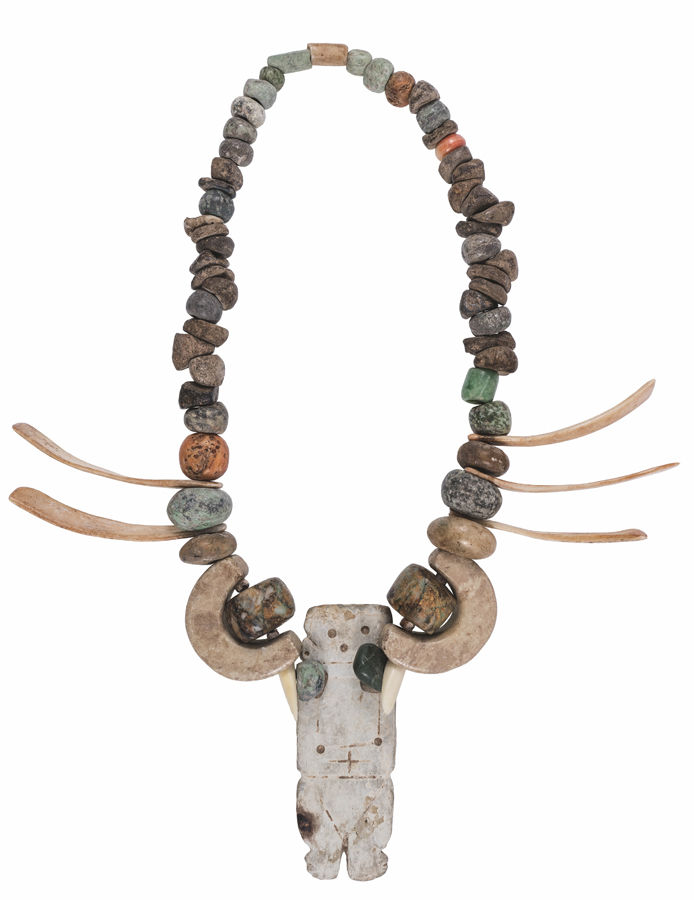
The book and museum showcase pieces from Frida’s distinctive jewelry collection, like this handmade stone necklace. © Casa Kahlo: Frida Kahlo’s Private Home and Sanctuary by Mara Romeo Kahlo and Mara de Anda Romeo and Frida Hentschel Romeo, Rizzoli, 2026.
IC: How has this process of both restoring the home and writing the book been cathartic for you and your family?
MRK: Uncovering the mural transported me back to my grandmother Isolda’s house. I could almost smell the morning coffee as I sat next to my mother and in front of my grandmother, having breakfast and looking at the birds in the tree on the right. The process of turning my home into a museum and writing the book has made me feel so much closer to the Kahlos. I draw from their strength, their conviction. This museum is the product of several generations unknowingly working for this same purpose.
IC: In what ways has it made you feel closer to your ancestors?
MRK: I relearned the challenges we all went through — from Guillermo to my mother and then me — and I realize we all became stronger from them. Our conviction outweighs the shortfalls, and we’ve always found the strength to keep providing for ourselves and for our family.
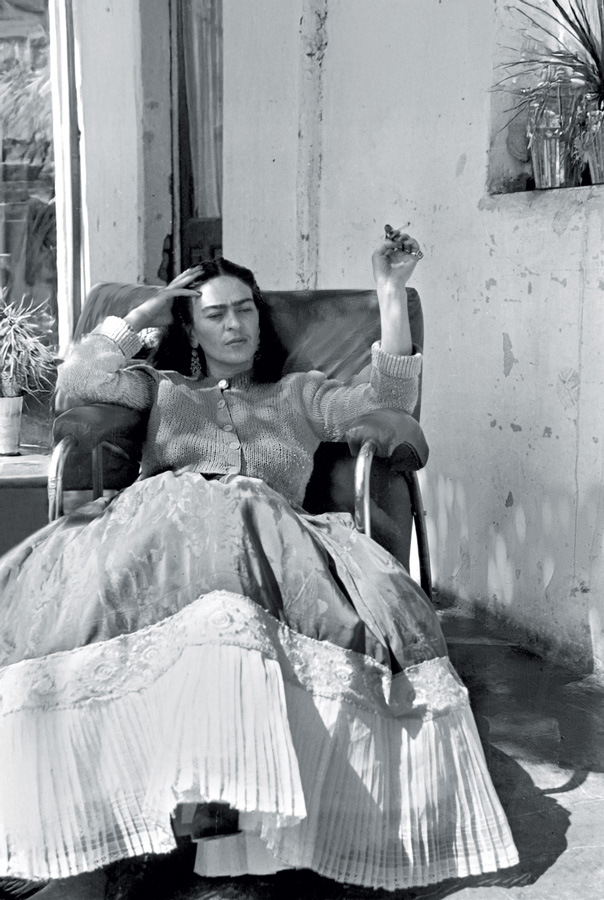
Frida at Casa Kahlo. © Casa Kahlo: Frida Kahlo’s Private Home and Sanctuary by Mara Romeo Kahlo and Mara de Anda Romeo and Frida Hentschel Romeo, Rizzoli, 2026.
IC: What do you hope readers will take away from this book?
MRK: That greatness comes from support and from lifting one another. For Frida, the role her family played in her life was a catalyst for her to become who she is today. Readers can get a glimpse of Frida’s origin story and gain insight into another layer of her legacy.
IC: How do you envision the legacy of Museo Casa Kahlo being preserved for future generations?
MRK: Museo Casa Kahlo will be the guardian of the stories and of our memories. That will preserve our history; Fundación Kahlo will take the Kahlo legacy into the future. Both will run under the same ethos: más amor, más familia, más México.