FROM THE SKULL OF A MASSIVE SEA CREATURE TO A TOWERING CAVE BEAR SKELETON, THE SUMMER EVENT REVEALS A HAIR-RAISING FOSSIL AT EVERY TURN
By Craig Kissick | August 19, 2025
The fossil record chronicled by the geologic time scale teems with creatures that are hard to imagine in today’s world. Some terrifying examples of these ancient beasts can be found in Heritage’s August 29 Nature & Science Signature® Auction. Not only visually striking, but also full of scientific intrigue, such monsters among us include an ominous mosasaur skull dating to the Cretaceous Period, a fully articulated bear-dog skeleton out of the Oligocene Epoch, a towering cave bear skeleton from the Ice Age, and a sinister dire wolf skull dating to the Pleistocene Epoch. These singular fossils are surreal in many ways, often not at all resembling any modern animals alive today.

This mosasaur skull dating to the Cretaceous Period was found in North Texas in November 1991 and is now available in Heritage’s August 29 Nature & Science Signature® Auction. The skull has been expertly repaired and restored and comes affixed to a custom metal armature.
Mosasaur Fossil Skull
While not actually a dinosaur – since it lived an aquatic, rather than a terrestrial lifestyle – the mosasaur (particularly the Tylosaurus variety) must be what people think of when they imagine the infamous Loch Ness Monster. With lengths approaching 50 feet (15 meters), such sea monsters dominated the prehistoric seaways and featured large skulls full of conical teeth. The mosasaur skull featured in Heritage’s August auction was discovered in North Texas, not far from Heritage’s Dallas headquarters. The find, which was unearthed decades ago by a legendary local couple renowned for their superb fossil-hunting skills, contains a formidable skull measuring some 43 inches (109 centimeters) long. The skull of the enormous sea creature is beyond visually dramatic and has been expertly restored.
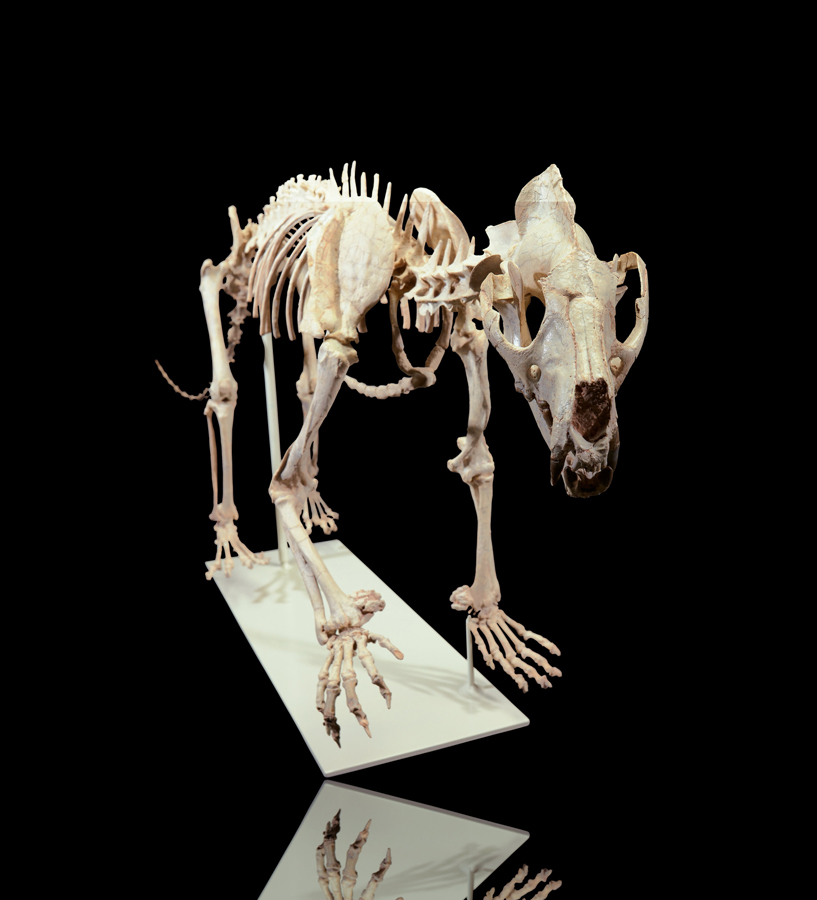
Found in South Dakota, this bear-dog skeleton dates back more than 20 million years. Though it exhibits characteristics of both bears and dogs, the amphicyonid was not closely related to either animal.
Daphoenus Fossil Skeleton
An extinct carnivore, the bear-dog was a terror of South Dakota’s famed White River Badlands. Known as Daphoenus, the creature dates back over 20 million years and is well known to serious collectors of the vertebrate fossils out of the acclaimed Oligocene deposits. The featured bear-dog specimen consists of one elegant and fully articulated skeleton that has been painstakingly repaired and prepped, resulting in a spectacular display piece. This wonderful offering is a natural work of art with an almost lifelike appearance. The predator looks as if it were still stalking some unlucky prey animal. Classified an amphicyonid, this was a scary-looking mammal hunter.
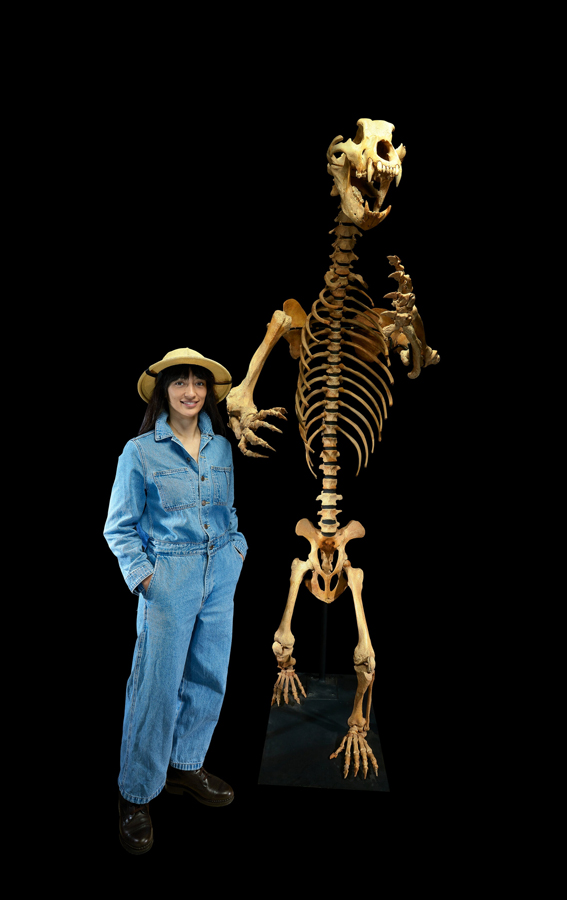
A formidable creature of its time, the cave bear ended its reign some 24,000 years ago in what is today Romania. This fossilized cave bear skeleton, available in Heritage’s August 29 Nature & Science Signature® Auction, stands more than 8 feet tall.
Fossil Cave Bear Skeleton
While bears – even large varieties like the Kodiak grizzly and polar – are still around, the cave bear, known as Ursus spelaeus, is no more, and human competition for the caves in which it lived might have contributed to its extinction. Part of the iconic Ice Age megafauna, cave bears were the largest of all bears and, while looking highly predatory, most likely had a diet that was primarily herbivorous. The offered cave bear skeleton stands over 8 feet (2.4 meters) tall and presents as a complete skeleton fully reassembled on a custom armature. This monstrous beast was a horror in what is now Romania well before Dracula sank his fangs in his first unsuspecting victim.
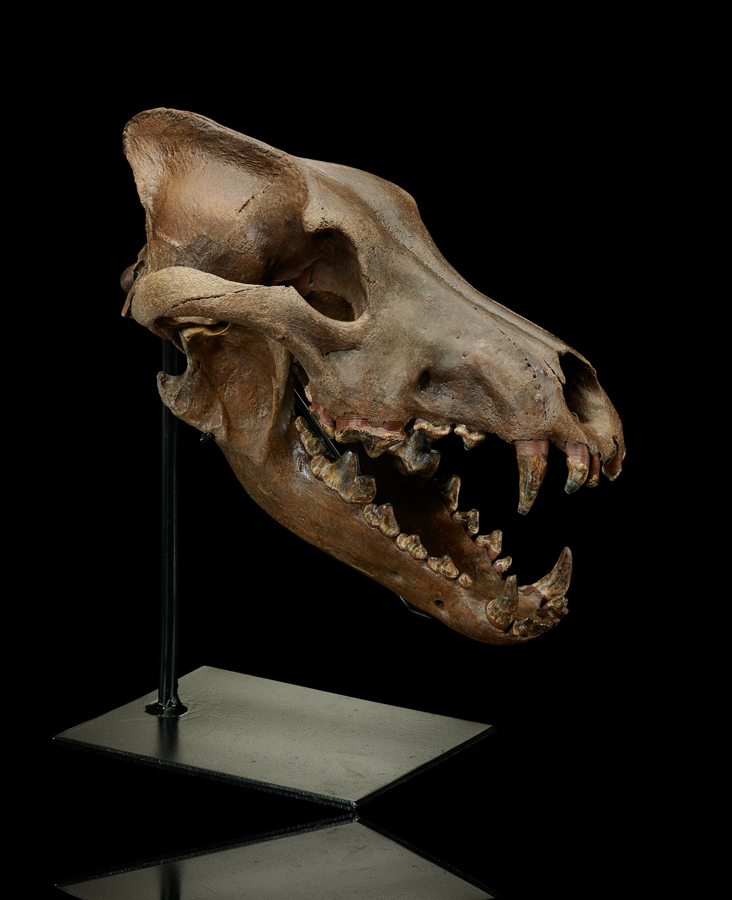
During the Ice Age, dire wolves coexisted with gray wolves but were two distinct species that did not interbreed. This specimen of Aenocyon dirus represents a river find out of Iowa and boasts a complete, and natural, maxilla.
Dire Wolf Skull
Anyone who was a serious fan of the blockbuster HBO series Game of Thrones will be familiar with the dire wolf. Larger and stronger than the modern gray wolf, these pack hunters from the Pleistocene Epoch were apex predators tormenting members of the megafauna of the Ice Age tens of thousands of years ago. While, arguably, the ancient wolves are no longer extinct given recent (successful) efforts to partially clone them, fossils representing Aenocyon are rare, impressive, and highly collectible. The dire wolf skull offered by Heritage is an incredible example of the ferocious canid, boasting a fully intact maxilla whose only signs of wear and tear are the results of a life well lived. With its dark coloration, bold bony structure, and a jaw full of jagged, mottled teeth, this fossil looks seriously spooky.
The vast expanse represented by geologic time and chronicled through the fossil record provides amazing evidence of past life stranger than any work of fiction has ever proposed. Varieties of real-life “monsters,” from trilobites in the Paleozoic Era to dinosaurs in the Mesozoic Era, certainly have no peer in contemporary taxonomy. Fortunately, we know about these mythical creatures from Earth’s past because of incredible fossils like the ones in Heritage’s August 29 Nature & Science auction – an event in which your own monster could be lurking just around the corner.