
RARE LUNAR AND MARTIAN METEORITES, FORMED ACROSS VAST DISTANCES AND MILLIONS AND BILLIONS OF YEARS, OFFER COLLECTORS A TANGIBLE CONNECTION TO THE SOLAR SYSTEM
By Craig Kissick | April 21, 2026
With renewed global attention on the moon, sparked in part by NASA’s Artemis II mission and its successful flyby of Earth’s only natural satellite, interest in lunar material has surged once again. While Apollo-era specimens remain the property of the U.S. government, collectors have a rare alternative: lunar meteorites, natural fragments of the moon that have traveled roughly 238,900 miles to Earth.
Among the more than 79,000 meteorites cataloged in the Meteoritical Bulletin, a database managed by the Lunar and Planetary Institute, fewer than 1,000 are confirmed lunar in origin. That scarcity alone places them among the most coveted materials in the field of natural history collecting.
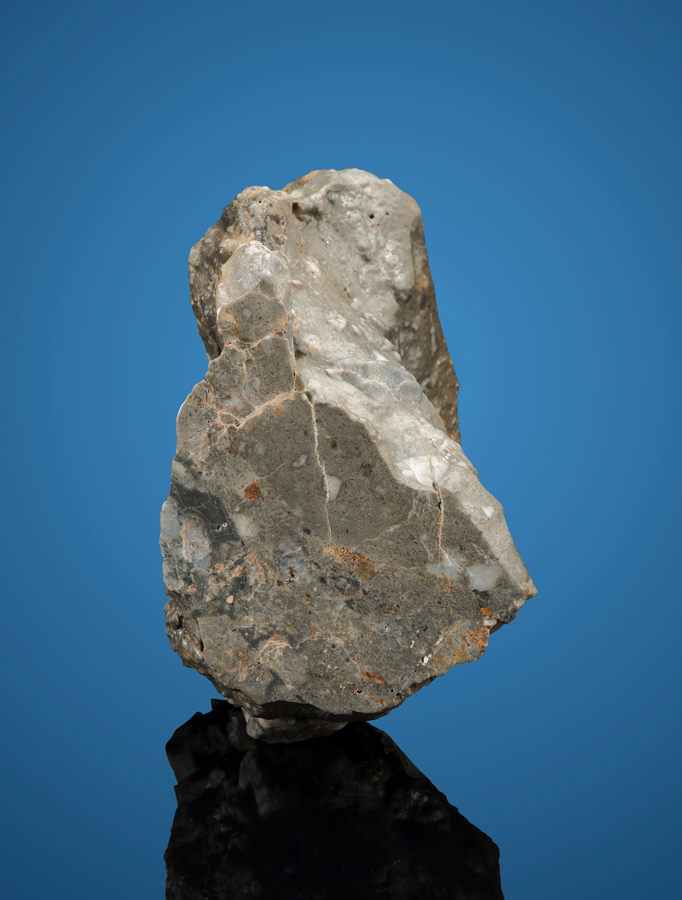
Touat 008 lunar meteorite. Main mass, 792.24 grams. Lunar (troctolite melt breccia). Adrar, Algeria. Found: February 2023.
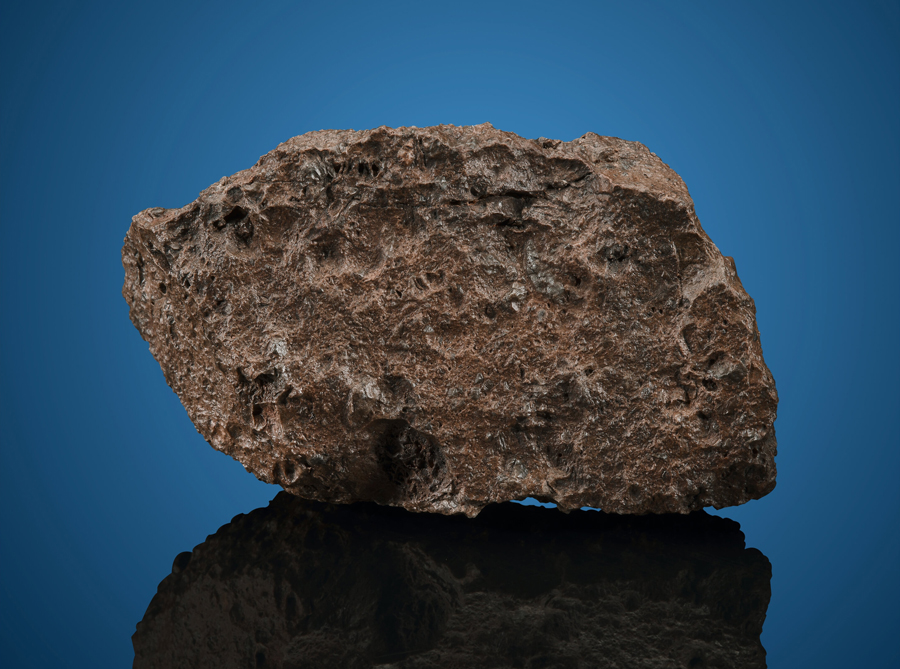
Oued El Hamim 001 lunar meteorite. 608.73 grams. Lunar (fragmental breccia). Ajdabiya, Libya. Found: 2024.
Heritage’s April 29 Nature & Science Signature® Auction presents a compelling selection of these extraordinary objects, including 10 notable lunar specimens spanning a range of types and sizes, as well as jewelry incorporating authentic lunar material. The appeal is immediate: Few objects offer such a direct and tangible connection to another celestial body.
Lunar meteorites fall within the broader classification of “stones,” distinct from iron and stony-iron varieties. Many are feldspathic breccia — sedimentary rocks formed from lunar highlands material fused together by asteroid impacts. When cut and polished, these specimens often reveal complex internal structures, with contrasting clasts that create visually striking compositions.
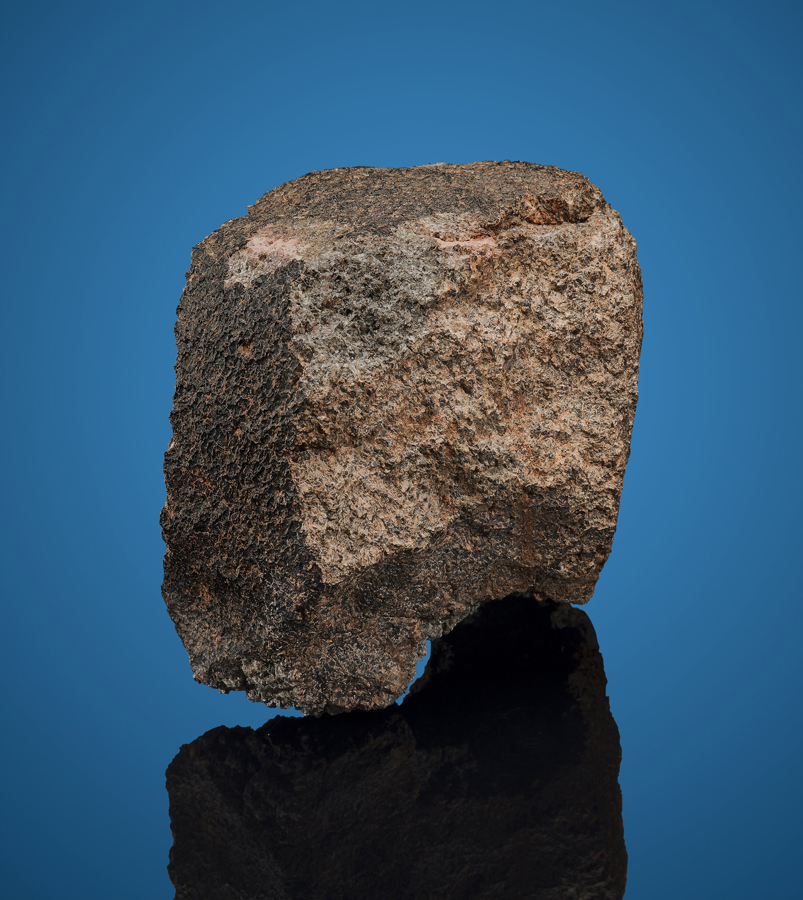
NWA 17754 Martian meteorite. Main mass, 1,027.07 grams. Martian (shergottite). Algeria. Found: 2025.
The auction includes lunar pieces ranging from under 10 grams to nearly 800 grams, highlighted by the main mass of Touat 008, the largest known piece of this scientifically important find. There is also a superb example of Oued El Hamim 001, a 600-plus-gram specimen exhibiting evidence of rare aqueous alteration, an unusual and significant feature in lunar material.
While the moon remains the most accessible extraterrestrial source, it is not the only one represented. The auction also features remarkable Martian meteorites, including the main mass of NWA 17754, a newly classified shergottite discovered in 2025. Weighing more than a kilogram, this incredible piece displays a prominent peripheral fusion crust, as well as a large amount of exposed granular surfaces showcasing numerous hues associated with Mars.
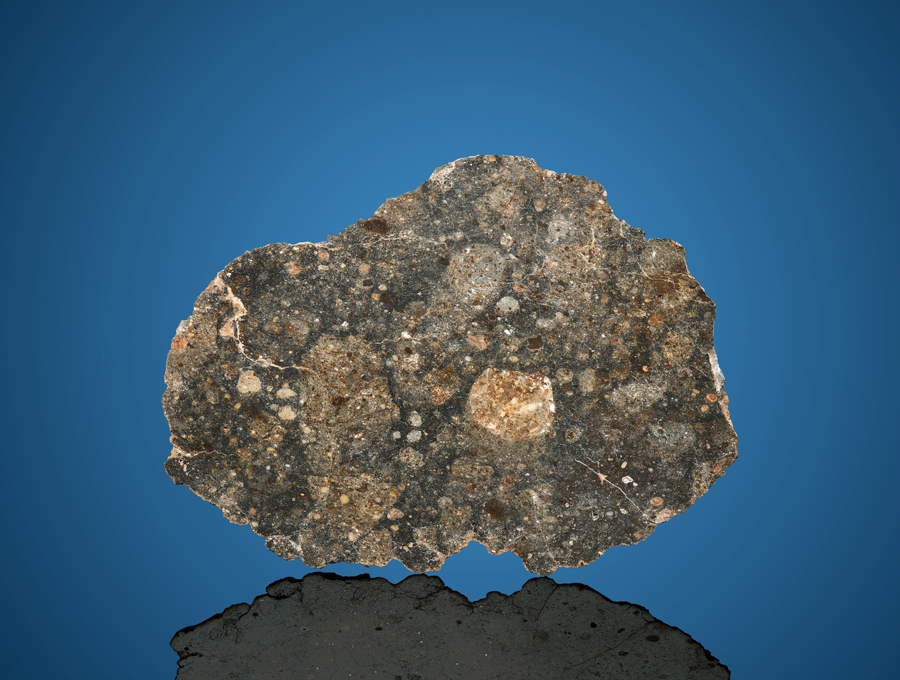
NWA 10636 meteorite slice. 133.53 grams. Howardite. Morocco. Found: 2014.
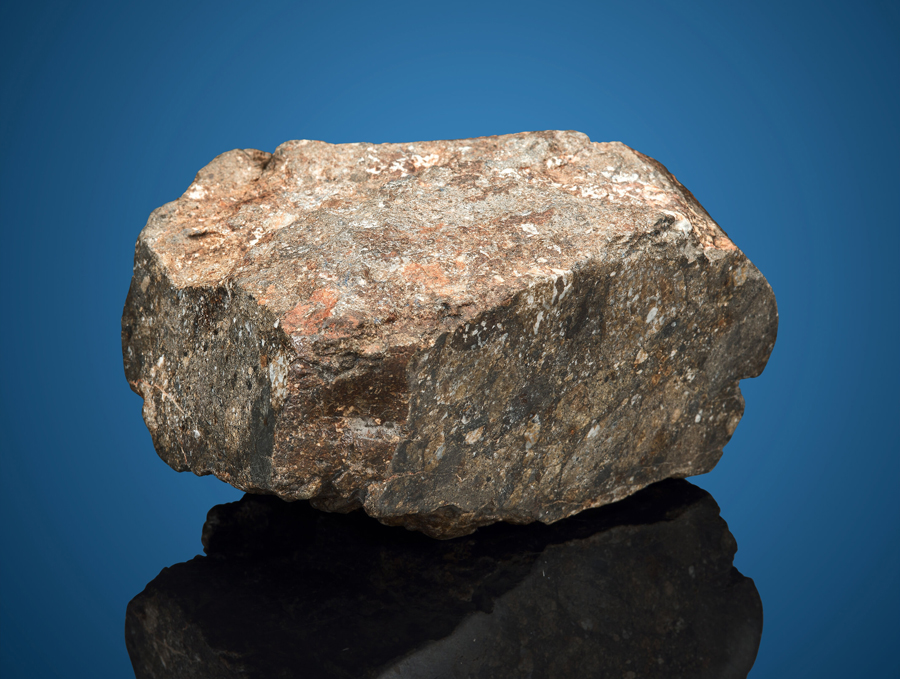
NWA 13280 meteorite end cut. Main mass, 761.37 grams. Eucrite-pmict. Northwest Africa. Found: 2019.
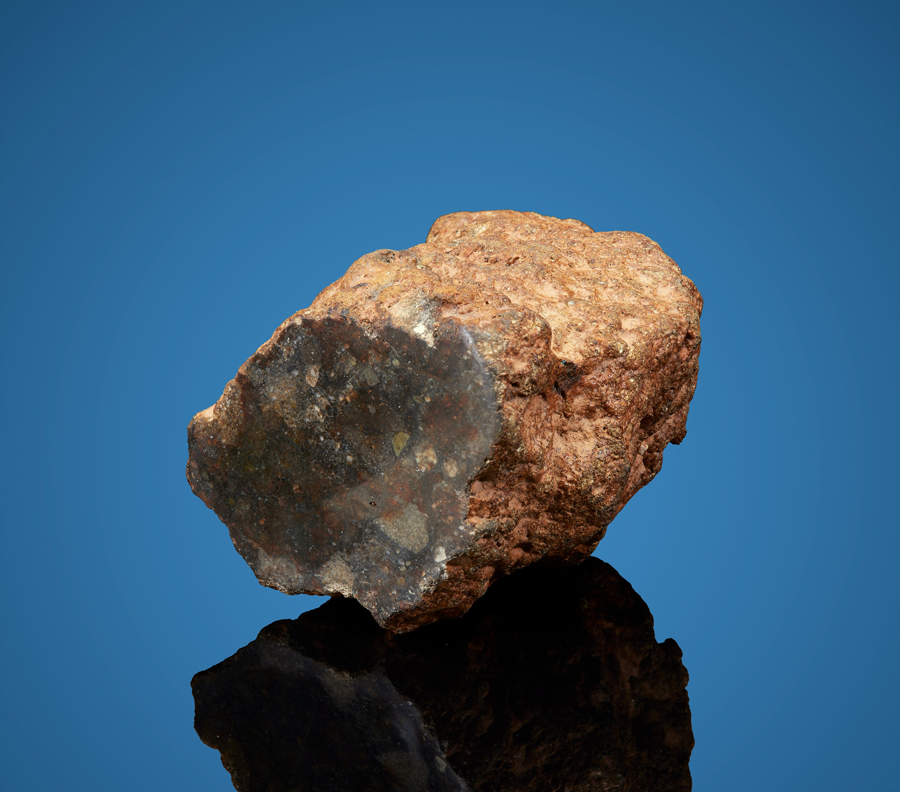
NWA 15788 meteorite end cut. 354.3 grams. Diogenite-pm. Northwest Africa. Found: 2022.
Collectors will also note the presence of material from the “HED Clan,” which includes howardites, eucrites, and diogenites. These specimens, widely believed to originate from asteroid 4 Vesta and rarely encountered at auction, offer another dimension of planetary collecting, bridging the gap between lunar and deeper-space material. Heritage’s April 29 auction features representatives of all three categories, including two captivating slices and two quite substantial end cuts.
Meteorites occupy a unique position in the collecting world. They are at once scientific specimens, natural sculptures, and artifacts of cosmic history. Those originating from certain parent bodies, such as the moon, Mars, or Vesta, carry an additional level of significance, offering not just rarity, but provenance on a planetary scale. In a collecting landscape defined by uniqueness, few objects can rival the appeal of these extraterrestrial visitors. They are, quite literally, out of this world.