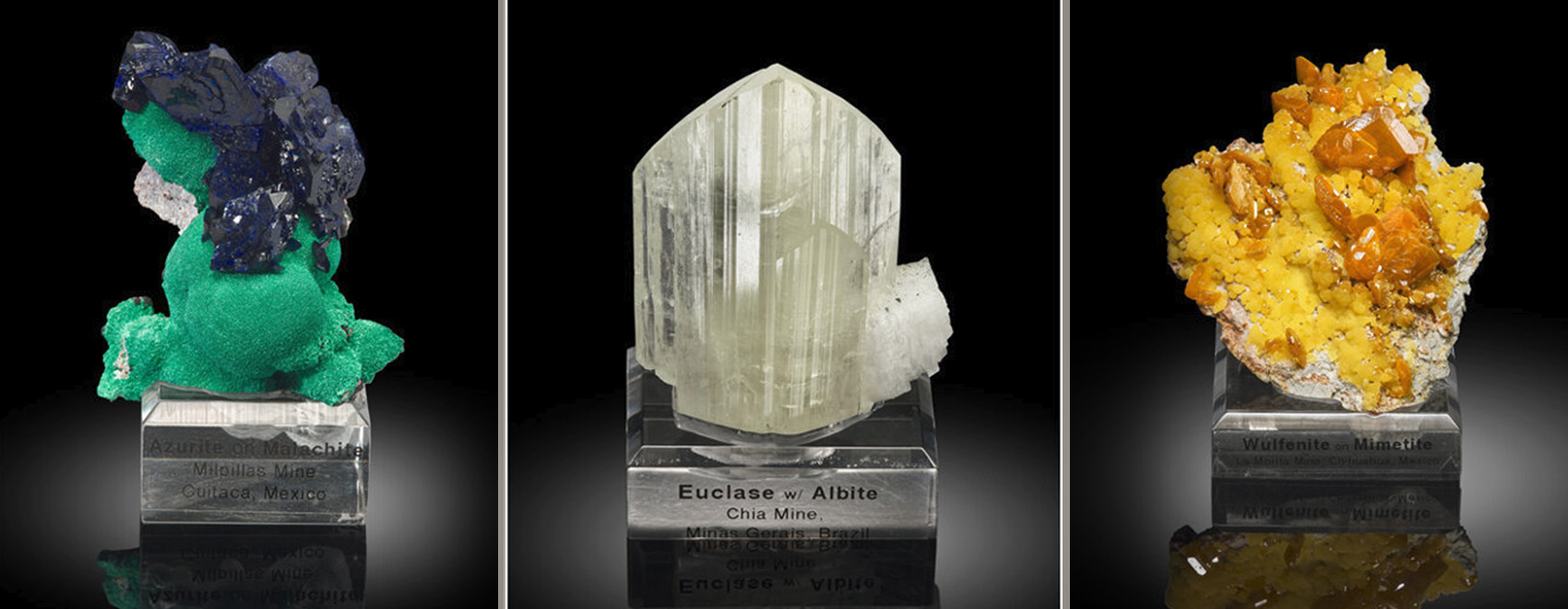
SHAPED BY DECADES OF EXPLORATION AND A DISCERNING EYE, THE BRUCE CARTER COLLECTION BRINGS RARE, MUSEUM-CALIBER MINERALS TO MARKET
By Steve Lansdale | May 5, 2026
Collectors often arrive at their passions through predictable paths: inheritance, education, or proximity to the field. Bruce Carter’s story is anything but predictable. Heritage’s May 16 The Collection of Bruce Carter Fine Minerals Signature® Auction is the culmination of a life that has moved from New England quarries to Alaskan wilderness camps, from South American travels to Hollywood film sets, but always back to minerals.
Carter’s collecting story begins, as many do, with a moment of wonder. As a boy in Connecticut, he became captivated by a clear cluster of Brazilian quartz sitting on his sister’s dresser. In its clarity and structure, he saw something deeper — what he would later describe as “a flash of the world’s primordial beauty.” That moment ignited a curiosity that never left him. His father recognized it immediately and began taking him to quarries and mineral localities across the Northeast. By the age of 12, Carter had already built a respectable collection.
But this was only the beginning.
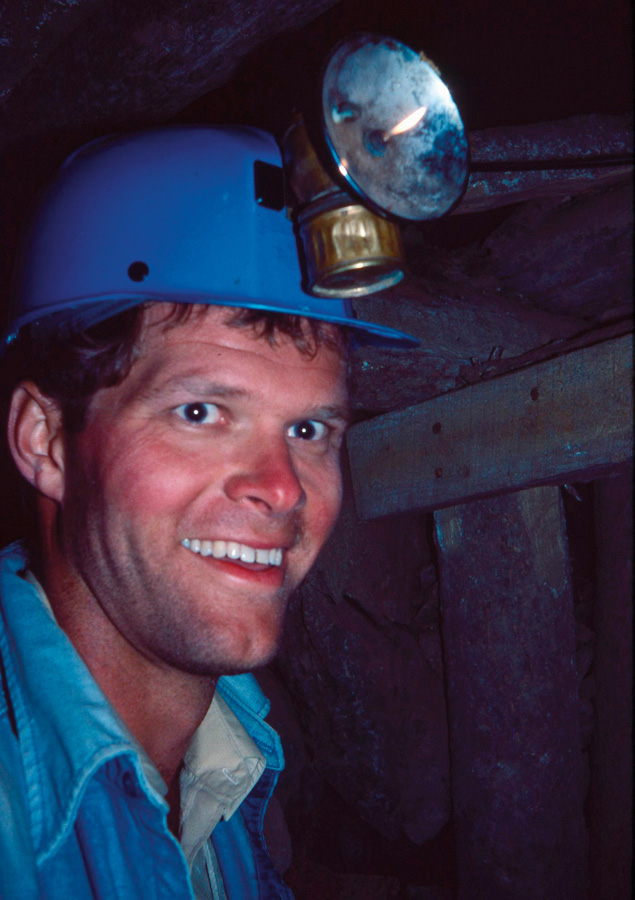
Bruce Carter on a research expedition in 1983, investigating the once-auriferous rocks of the extinct gold mines in Northern Colorado
Unlike many collectors who follow a linear path into their field, Carter’s life has taken dramatic turns. A geology major who excelled in mineralogy, he moved into mineral exploration, chasing uranium in Washington, gold in California, and strategic metals in Alaska. One near-fatal plane crash in the Alaskan wilderness — survived only through skill, luck, and three days of waiting for rescue — marked a turning point. Eventually, Carter stepped away from exploration, embarking on a global journey that led, improbably, into a decades-long career in film and television production in Los Angeles. Yet, through all of it, minerals remained constant.
When Carter attended his first major mineral show in Pasadena, he encountered the upper tier of the field, the kind of material that transcends specimen and becomes art. It was a revelation. No longer limited by means, he began collecting with intention. Over time, his collection grew into one of remarkable depth, built on rarity, crystallographic perfection, and visual impact.
“Bruce Carter’s collection is among the finest ever to come to auction,” says Nic Valenzuela, Heritage’s Director of Fine Minerals. “He has a very good eye for aesthetics, understands the significance of minerals, and has assembled a trove of incredible specimens that will make great additions to any cabinet.”
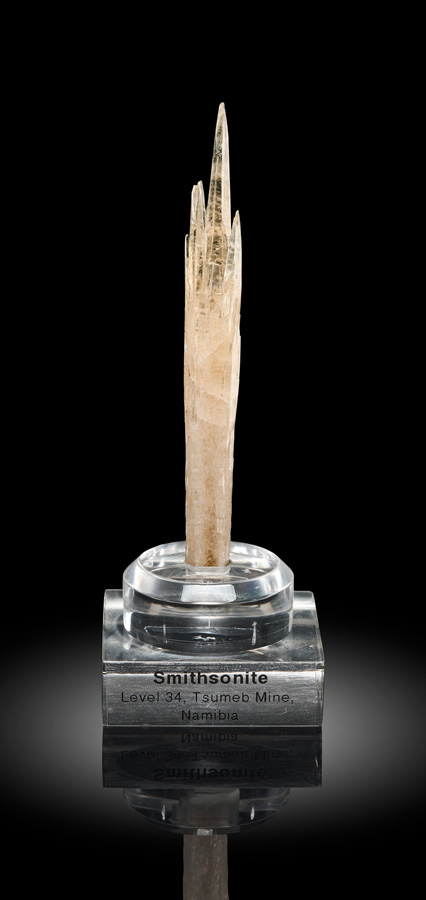
Smithsonite. Level 34, Tsumeb Mine (Ongopolo Mine), Tsumeb, Oshikoto Region, Namibia. 13.0 x 1.5 x 1.2 cm (5.1 x 0.59 x 0.47 in). From the Collection of Bruce Carter.
Among the headline pieces is an extraordinary smithsonite from the famed Tsumeb Mine in Namibia, a locality long revered for producing some of the most beautiful mineral specimens in the world. Previously held in the collection of noted mathematician and collector Steve Smale, the needle-like stunner is exceptionally rare, with only 8 to 10 specimens showing any crystals of significant size. Of those, two found their way to the Smithsonian Institution.
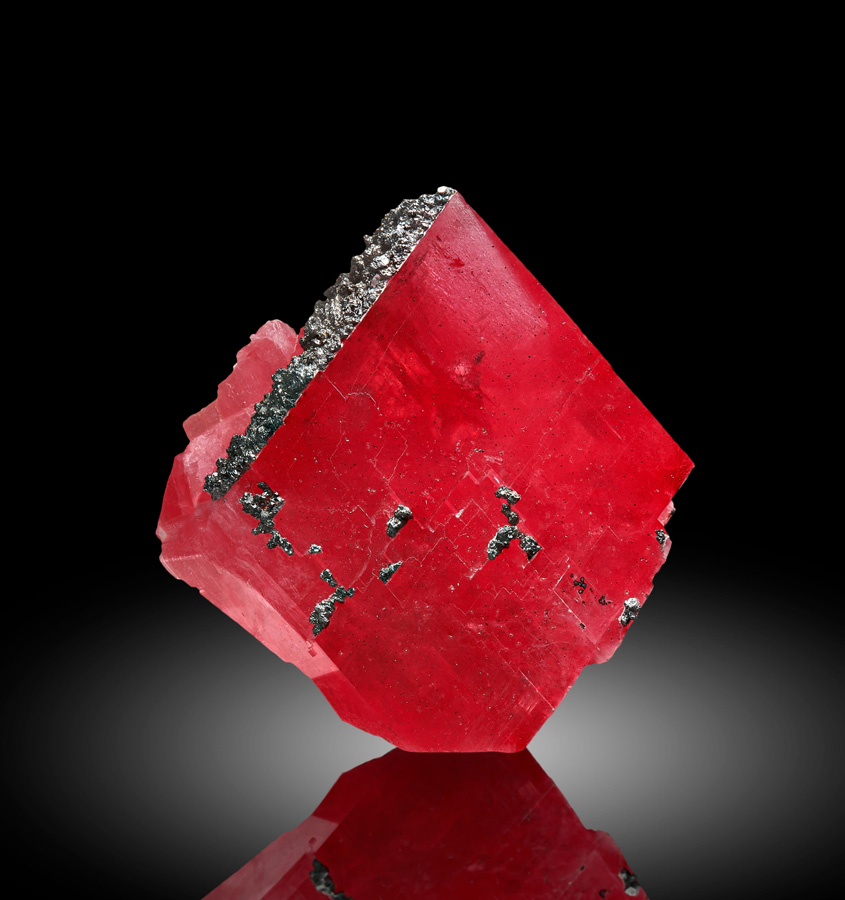
Rhodochrosite with Tetrahedrite. Good Luck Pocket, Sweet Home Mine, Alma Mining District, Park County, Colorado, USA. 6.5 x 6.2 x 2.8 cm (2.56 x 2.44 x 1.11 in). From the Collection of Bruce Carter.
Equally compelling is a rhodochrosite with tetrahedrite from the legendary Sweet Home Mine in Colorado. The Good Luck Pocket, from which this specimen emerged, is one of the most celebrated discoveries in American mineral collecting. Here, the crystal’s intense cherry-red color is framed by darker tetrahedrite, creating a composition that is both dramatic and balanced. It is a piece that embodies Carter’s preference for specimens that marry geological significance with aesthetic clarity.
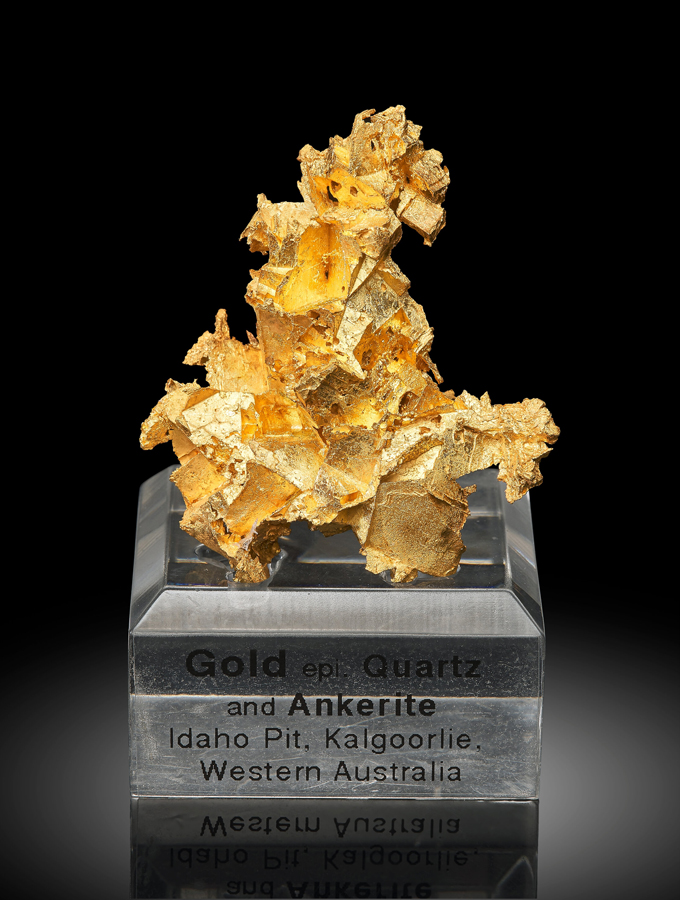
Native Gold epimorph after Quartz and Ankerite. Idaho Gold Mine (Idaho Pit), Kalgoorlie Consolidated Gold Mines, Kalgoorlie-Boulder Shire, Western Australia, Australia. 5.8 x 4.7 x 3.3 cm (2.28 x 1.85 x 1.29 in). From the Collection of Bruce Carter.
The collection’s scope extends well beyond traditional showpieces. A native gold epimorph from Western Australia demonstrates the collector’s appreciation for unusual formation processes. Unlike more traditional nuggets, the gold in this specimen is epimorphed, having formed around associations of quartz and ankerite, which have since been removed. Epimorphed specimens of native gold are incredibly rare, especially those that hail from Australia’s Idaho Gold Mine.
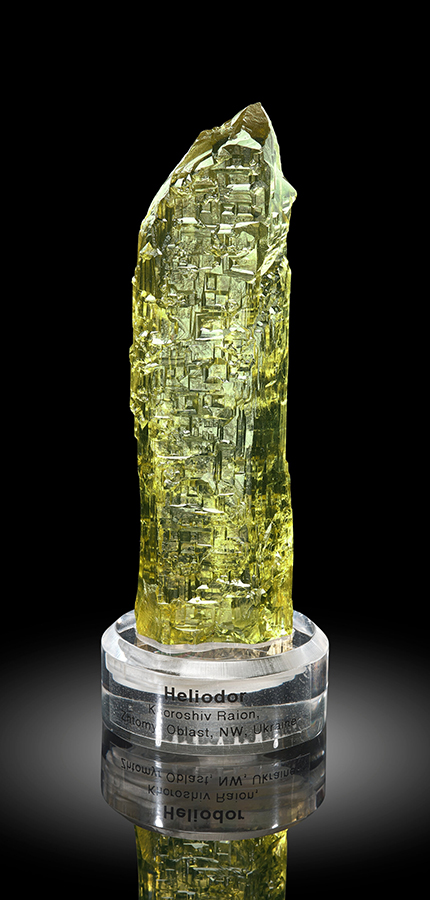
Heliodor. Khoroshiv Raion (Volodarsk-Volynskii), Zhytomyr Raion, Zhytomyr Oblast, Ukraine. 15.2 x 4.1 x 2.5 cm (5.98 x 1.61 x 0.98 in). 281.6 grams. From the Collection of Bruce Carter.
A Ukrainian heliodor offers another perspective — this time, a gem-quality beryl crystal whose etched surfaces and luminous interior create a striking visual interplay.
Also offered is a stunning fluorite with hematite on calcite from India’s Mahodari Quarry, which is known for producing yellow, translucent botryoides of fluorite. “There are a few of this find out there, but nothing like this one, to my eye,” Carter says. “When I found this, it was in a basalt vug, with a window on the left side revealing the wonders within. Had I found it as it is now, I wouldn’t have thought it was genuine. Cutting it open caused the basalt matrix to spall off.”
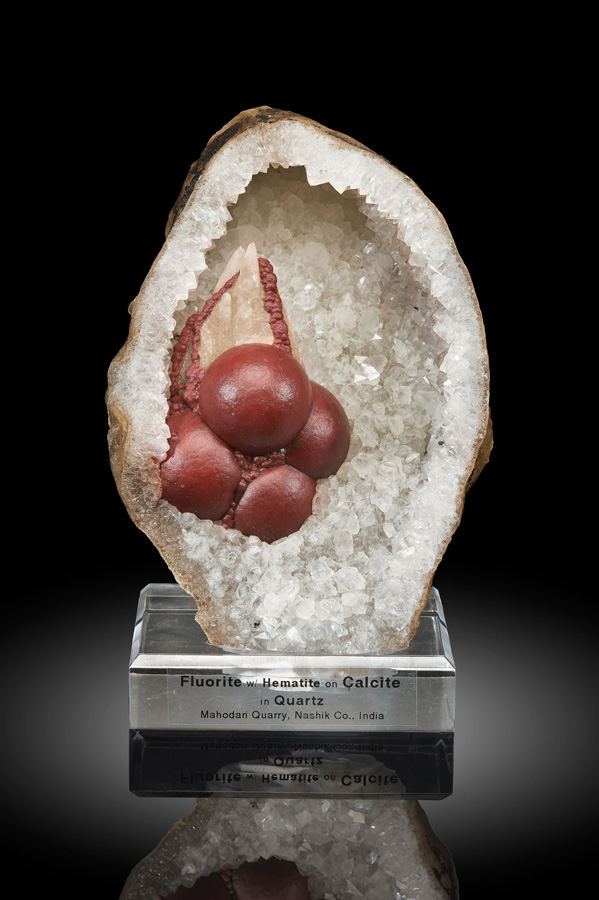
Fluorite with Hematite on Calcite. Mahodari quarry, Sinnar, Nashik District, Nashik Division, Maharashtra, India. 18.7 x 12.2 x 6.0 cm (7.36 x 4.81 x 2.36 in). From the Collection of Bruce Carter.
Carter’s collecting philosophy reflects the same instinct that carried him through exploration and film: an ability to recognize something worth pursuing, even when it lies outside the obvious path. His collection is not encyclopedic for its own sake; it is selective, built around moments of discovery and an enduring fascination with the natural world’s capacity for beauty.
That fascination has always been shared. Carter exhibited his collection at shows across the country. And, in addition to being a longtime member of the Geological Society of America and a fellow of The Mineralogical Record, he joined the board of Oregon’s Rice Northwest Museum of Rocks and Minerals in 2013, contributing to the broader mineral community. Like many serious collectors, he understands that stewardship is part of the role and that these objects, while privately held, belong to a larger continuum of knowledge and appreciation.
Now, through Heritage’s upcoming auction, collectors across the globe have an opportunity to step into that continuum.