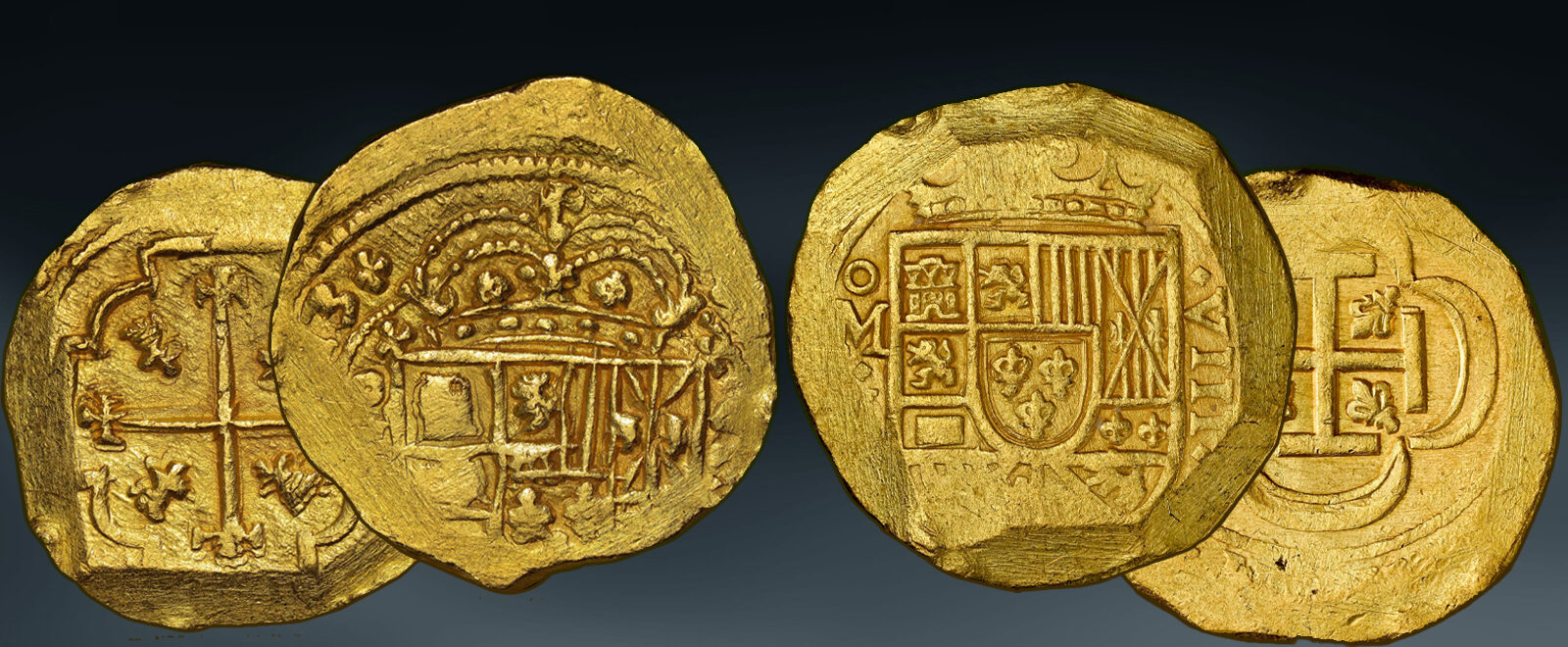
SHIPWRECK COINS ARE AMONG THE HOTTEST COLLECTIBLES IN NUMISMATICS, BUT THE MARITIME TREASURES HAVEN’T ALWAYS HELD SO MUCH APPEAL FOR COIN COLLECTORS
By Jesse Hughey | February 17, 2026
By 1622, the Spanish Empire was deeply in debt. It claimed land on four continents, had just ended a truce with its Dutch provinces, and was in the fourth year of what would come to be called the Thirty Years’ War and 50-some-odd years into the related and overlapping Eighty Years’ War, or Dutch Revolt. Spanish ships were carrying plundered treasure out of the New World as fast as they could be loaded with gold, silver, copper, emeralds, pearls, indigo, tobacco, and more to repay creditors.
Nuestra Señora de Atocha, named for the Basilica of Nuestra Señora de Atocha in Madrid, was one such ship, tasked as the rear guard, or almirante, to defend a fleet of 28 ships loaded with treasure from Dutch, French, and English raiders. The Atocha alone carried more than 40 tons of gold and silver plus emeralds and other precious cargo — much of it intended to be the dowry for Philip IV’s wedding. And a considerable amount of the treasure onboard the ship was smuggled in secret compartments and in passengers’ and crew members’ belongings to avoid the 20% quinto levied on trade with the Indies and additional taxes that could bring it up to 40%. Loading the ships with goods and tallying them took so long that the fleet was delayed by six weeks by the time the ships departed from Havana, Cuba, for Spain on September 4, in the most dangerous part of the hurricane season.
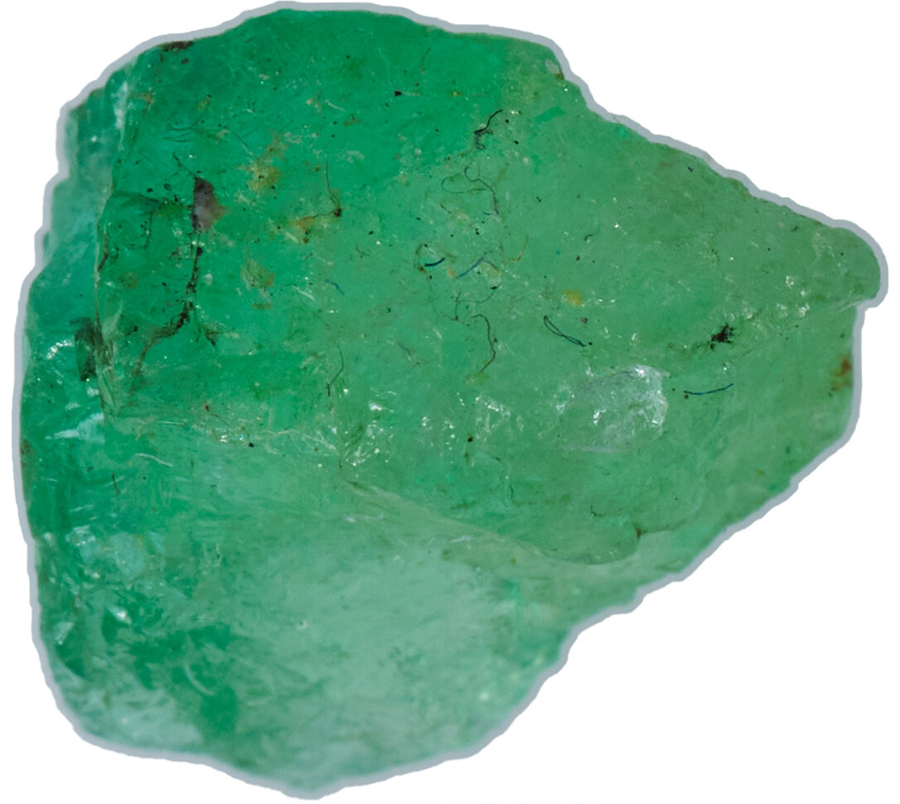
Colombian emeralds were central to the treasure cargo of Spanish galleons, which navigated treacherous routes from the New World to Spain. The ships often succumbed to piracy, storms, or battles, sending vast fortunes, including these prized emeralds, to the ocean’s depths. This 3.22-carat emerald recovered from the ‘Nuestra Señora de Atocha’ is available in Heritage’s February 23 Spotlight: Shipwreck & Treasure World Coins Showcase Auction.
Disaster struck almost immediately. The second day of the voyage, the fleet was hit by a hurricane in the Florida straits. Twenty of the ships managed to ride out the storm that day and the next, but eight were lost, including the Atocha and her sister ship, the Santa Margarita. Those two were swept into the Florida Keys, where the Santa Margarita ran aground and wrecked on the reefs. The Atocha was overcome by waves and sunk in deeper water. Of the 265 lives onboard, only five survived.
Spanish salvage efforts recovered most of the Santa Margarita’s treasure over the next decade by sending enslaved people down in brass diving bells, killing many of them in the process and writing off their lives as business expenses. But the vast treasures in the Atocha remained out of reach, 55 feet below the surface, for the next 350 years.
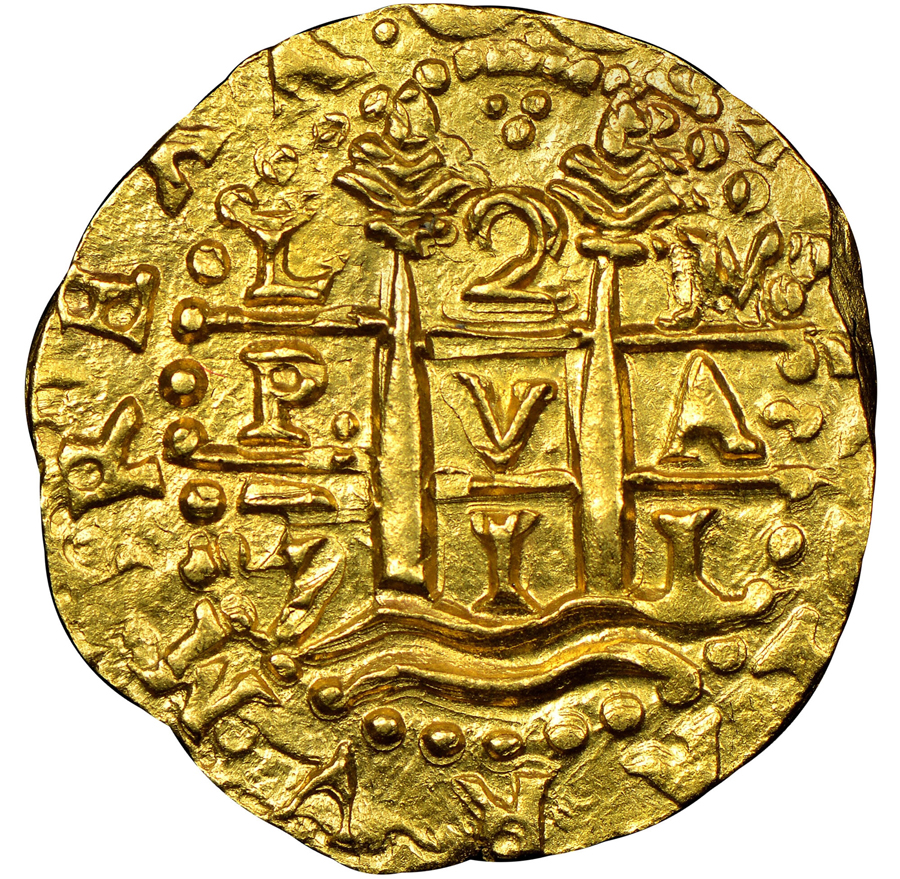
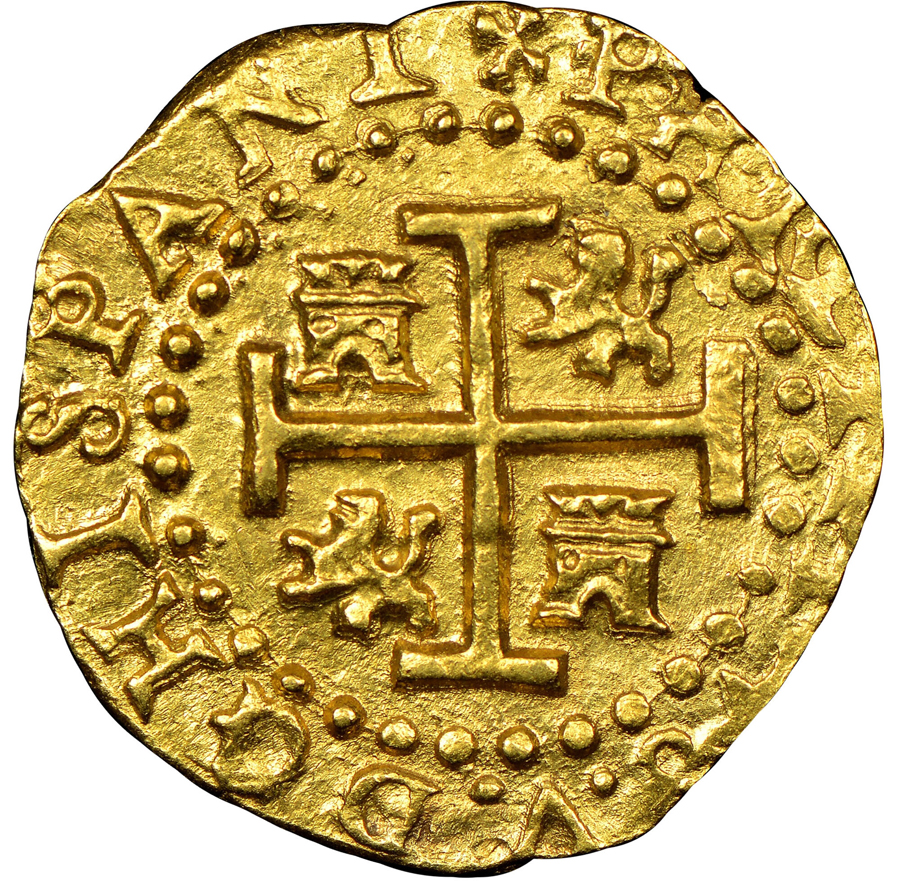
This Philip V gold cob 2 Escudos, dated 1711 and graded MS66 by NGC, was salvaged from the 1715 Fleet, which sank off Florida’s Treasure Coast. The coin was discovered by treasure hunters in 2015 off Douglass Beach near Fort Pierce, Florida. Now it is one of the many highlights in Heritage’s February 23 Spotlight: Shipwreck & Treasure World Coins Showcase Auction.
It wasn’t until 1973 that any of the Atocha’s cargo was recovered, when a small crew led by Mel Fisher and his company, Treasure Salvors, pulled up three silver bars that were unmistakably matched to the Atocha’s manifest. His company continued searching for years, recovering scattered artifacts and gold bars until finally discovering the mother lode in 1985: piles of silver bars and chests full of coins, emeralds, and more worth an estimated $450 million, making it the most valuable shipwreck in history — at least for the next 30 years. Its worth would be dwarfed by the 2015 discovery off the coast of Colombia of the Spanish galleon San José, which sank in 1708 with cargo valued today at $17 billion or more — almost all of which remains on the ocean floor as Indigenous groups, Spain, Colombia, and American treasure hunters fight over it in courts.
Today, coins from the Atocha and other shipwrecks can command premium prices from collectors intrigued by the history of these recovered treasures. On February 23, Heritage presents an auction dedicated entirely to coins and other treasures recovered from the sea. In Spotlight: Shipwreck & Treasure Featuring Selections from the Salvager Collection World Coins Showcase Auction, lots range from a 3.22-carat emerald salvaged from the Atocha to a silver ingot weighing more than 74 pounds to coins recovered from the Golden Fleece, which sank in the northern Caribbean. Aside from gems and precious metals, salvage operations often find fascinating items of historic interest, such as an astrolabe from the Golden Fleece and ceramic cups and saucers from a 1752 wreck in South China.
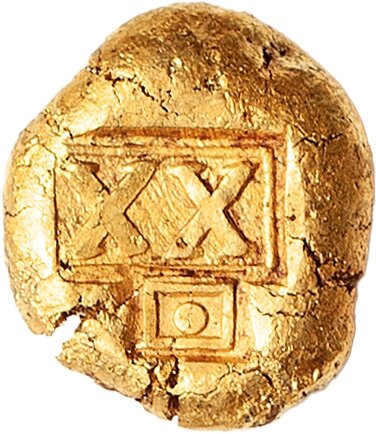
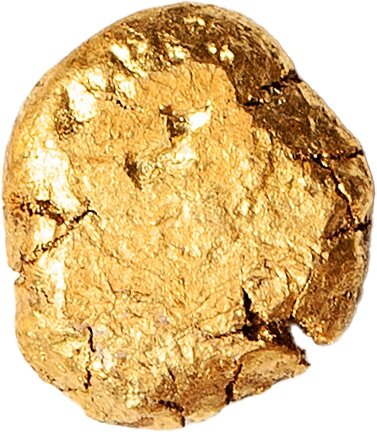
This circa-1550 Charles & Johanna gold splash, or ‘oro corriente,’ was recovered from the ‘Golden Fleece’ shipwreck in the northern Caribbean. Available in Heritage’s February 23 Spotlight: Shipwreck & Treasure World Coins Showcase Auction.
But shipwreck coins weren’t always so desirable. In fact, until fairly recently, the opposite was the case, says Heritage Auctions Numismatist Thomas Ribeiro. “Until about a decade ago, a shipwreck coin was a damaged coin,” he says. “No one wanted to collect them because they were considered to be diminished in value just like if they had a hole or a scratch on them. Around 2010, people started to understand their historical importance.”
Historically significant treasures from shipwrecks include coins and bullion from Spanish, British, French, Dutch, and other fleets stretching back hundreds of years. The 1715 Treasure Fleet, which comprises 11 Spanish ships and some 1,500 sailors lost in a hurricane along the east coast of Florida on July 31 of that year after setting off from Havana for Spain, is also heavily represented in the shipwreck coin market. Common coins from the Atocha and the 1715 Fleet and other Spanish wrecks include 8 Reales, or “pieces of eight” in the lingo of pirate movies, some in the form of cobs, crude irregularly shaped coins that were hand-struck in the New World. Precious metals, coins, and other valuables are also recovered from more modern ships, such as silver from World War I and II cargo vessels sunk by German submarines.
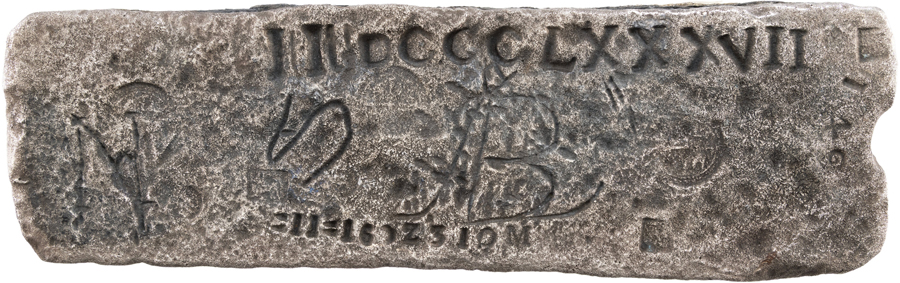
Treasure hunter Bob Marx discovered this Philip IV silver ingot in the ‘Nuestra Señora de Las Maravillas’ shipwreck. The ingot, which weighs an impressive 74.56 pounds, is available in Heritage’s February 23 Spotlight: Shipwreck & Treasure World Coins Showcase Auction.
Most shipwreck coins on the market today originate from salvage operations in the 1970s and ’80s, Ribeiro says, as there were fewer regulations on keeping recovered artifacts. The legal ownership of salvaged cargo varies depending on relevant laws in the state, territory, or nation where it is found, and the matter becomes more complicated for valuables recovered in international waters or spread over multiple jurisdictions.
Multiple parties often make compelling claims for ownership. Decades or centuries after a Spanish fleet ship goes down, does the cargo within it belong to whoever finds it, the current Spanish government, the government of the country where the artifacts were found, the insurance company that paid out a claim on it at the time of the wreck, or the country or Indigenous people from whom the treasures were plundered in the first place? It would be an oversimplification to say it was “finders keepers” in the 1970s and earlier, but it was more salvor-friendly than it is today. It’s a legal quandary that may become more common as technology for exploring the ocean floor advances.
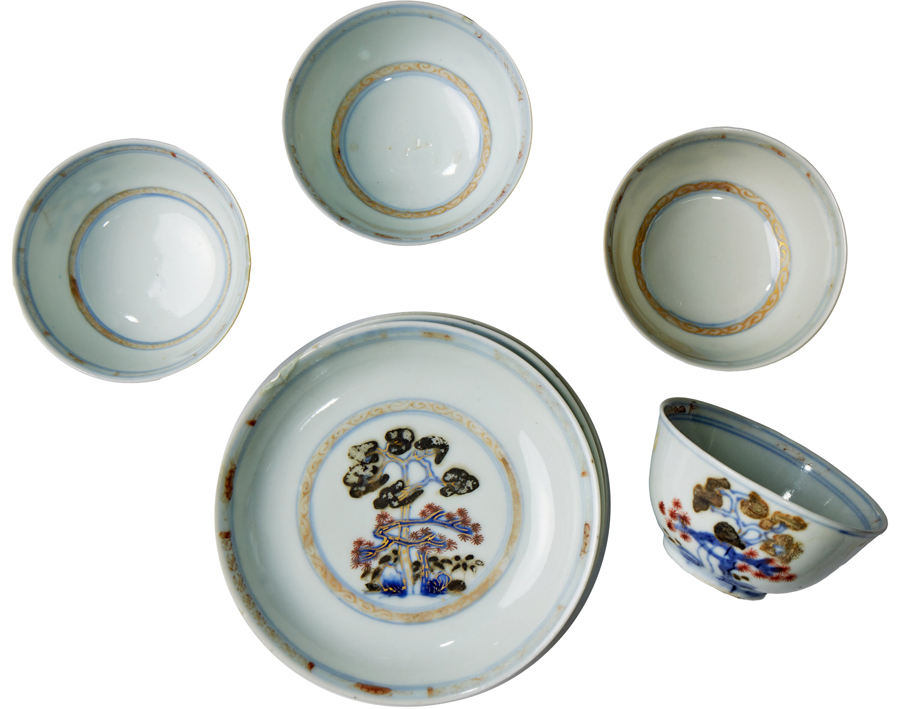
These delicate porcelain pieces available in Heritage’s February 23 Spotlight: Shipwreck & Treasure World Coins Showcase Auction were salvaged from the ‘Geldermalsen,’ which sank in the South China Sea in 1752.
Heritage Auctions World and Ancient Coins Managing Director Kyle Johnson says the auction house occasionally sold material from the 1715 Fleet or 8 Reales from the Atocha over the years and began to explore the category more seriously in 2023 with a sale dedicated to shipwreck coins. One regular client who had bought a few 40-coin lots of Atocha cobs more than 10 years ago broke up his collection into individual coins, each with a certificate of authenticity, and made a return of more than four times his initial investment. “We saw the success and the appetite in the market,” Johnson says. “It’s definitely one of the most historically interesting venues we’ve pursued.”
As for why the recent spike in interest, Johnson thinks a few factors could be in play. “The U.S. market is so advanced at this point, both in terms of value and how many people are into collecting U.S. coins, that it kind of makes newer collectors focus elsewhere, where they can be more competitive,” he says. “Probably the majority of our shipwreck buyers are American, even though none of those [Atocha and 1715 Fleet] coins that we sell are technically U.S. coins.”
But the interest goes beyond numismatic appeal.
“I think shipwrecks and treasure are just so cool, and in the last 20 years, they’ve had a lot of pop culture representation,” he says. “Pirates of the Caribbean, National Treasure — that kind of material has led to some curiosity. … While there is an aspect of coin collecting, I think it appeals to a wider audience just because of the cool factor. People are fascinated with treasure.”