
THE ICONIC WORLD CUP ARTIFACT SHOOTS ITS SHOT AT HERITAGE AUCTIONS
By Steve Lansdale | August 4, 2026
It is, simply put, the most famous soccer ball in history. Few objects from any sport can rival its cultural impact. This is the ball Diego Maradona used to score both the infamous “Hand of God” goal and the dazzling “Goal of the Century” during Argentina’s 1986 World Cup quarterfinal against England — a single match that produced two of the most iconic moments ever witnessed on a playing field. Now the photo-matched ball, offered in Heritage’s August 21–23 Summer Platinum Night Sports Auction, joins the pantheon of sports artifacts alongside Babe Ruth’s “Called Shot” baseball, the football from the “Immaculate Reception,” and the ball from Joe Montana’s legendary touchdown pass to Dwight Clark known simply as “The Catch.”
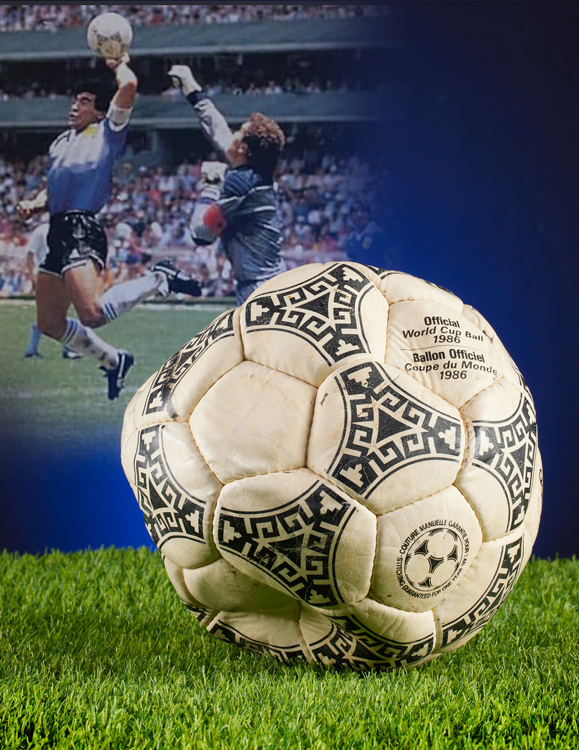
Diego Maradona’s ‘Hand of God’ and ‘Goal of the Century’ soccer ball, photo-matched to Argentina’s 1986 World Cup quarterfinal win against England, is the headline lot in Heritage’s August 21–23 Summer Platinum Night Sports Auction.
Argentina and England met in the 1986 World Cup quarterfinal just four years after the Falklands War, adding political tension to a matchup between two legitimate title contenders. After an intense scoreless first half, the 25-year-old Maradona, the Argentinean striker who had taken international soccer by storm with his electric style and highlight-reel goals, raced behind the English defense and outjumped English goalkeeper Peter Shilton, who at 6-1 stood a full 8 inches taller than the 5-5 Maradona, to knock in the game’s first goal in the 51st minute. Members of the English squad immediately turned to the officials in protest, contending that the score should be waved off because Maradona had scored the goal with his left hand, not his head. But referee Ali Ben Nasser and assistant referee (linesman) Bogdan Dochev missed the infraction, and in the absence of any kind of replay, the goal stood.
After the game, Maradona explained the goal to the gathered media. “Un poco con la cabeza de Maradona y otro poco con la mano de Dios,” he said — translated: “a little with the head of Maradona and a little with the hand of God.” It was less an outright denial of a violation of the rules and more of a deflection, deftly dancing around the question.
“The British outcry resonated throughout the soccer world,” says Chris Ivy, Heritage’s Director of Sports Auctions. “One of the proudest soccer nations in the world felt like a victim of one of the most significant miscarriages of justice in the history of the sport. The English felt that their team, a squad that had legitimate hopes of winning the World Cup that year, had been robbed, and their reaction, whether accurate or not, was understandable.”
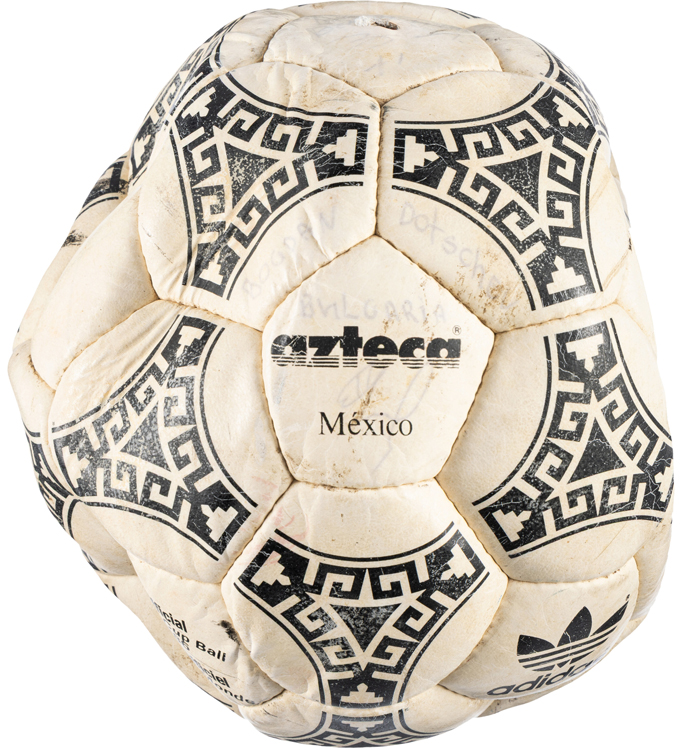
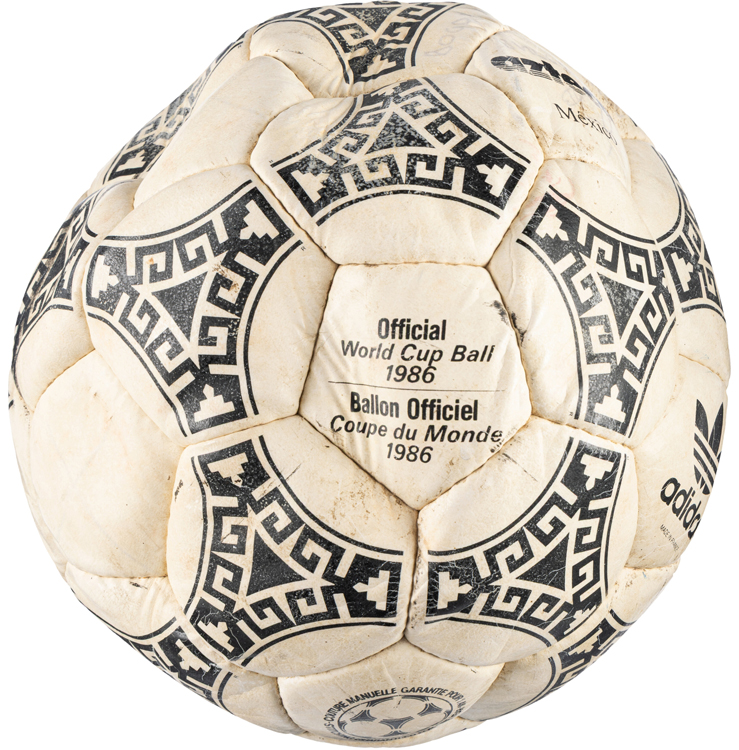
Four unforgettable minutes at the 1986 World Cup transformed this ordinary match ball into one of the most iconic artifacts in sports.
The controversial goal changed the match. Four minutes later, Maradona changed history when he collected a pass a few yards behind the midfield line and shredded the English defense, dribbling past five would-be defenders on a 60-yard sprint toward the goal and tucking the ball past Shilton in what came to be known as the “Goal of the Century.” The goal was no meaningless highlight at the end of a lopsided contest. It stood up as the game-winner, a tally that sent Argentina through to the semifinal, which it won over Belgium before knocking off West Germany in the title game to win the World Cup.
Four decades later, the “Hand of God” remains one of the most controversial goals in sports history, while the “Goal of the Century” is still celebrated as one of its greatest. Together, they encapsulate the audacity and brilliance that made Maradona a global icon. That both moments were created with the same ball elevates it beyond a remarkable piece of game-used equipment. It is one of the most significant artifacts ever to emerge from the world’s biggest sporting event and a tangible reminder of two of the most famous goals in soccer history.