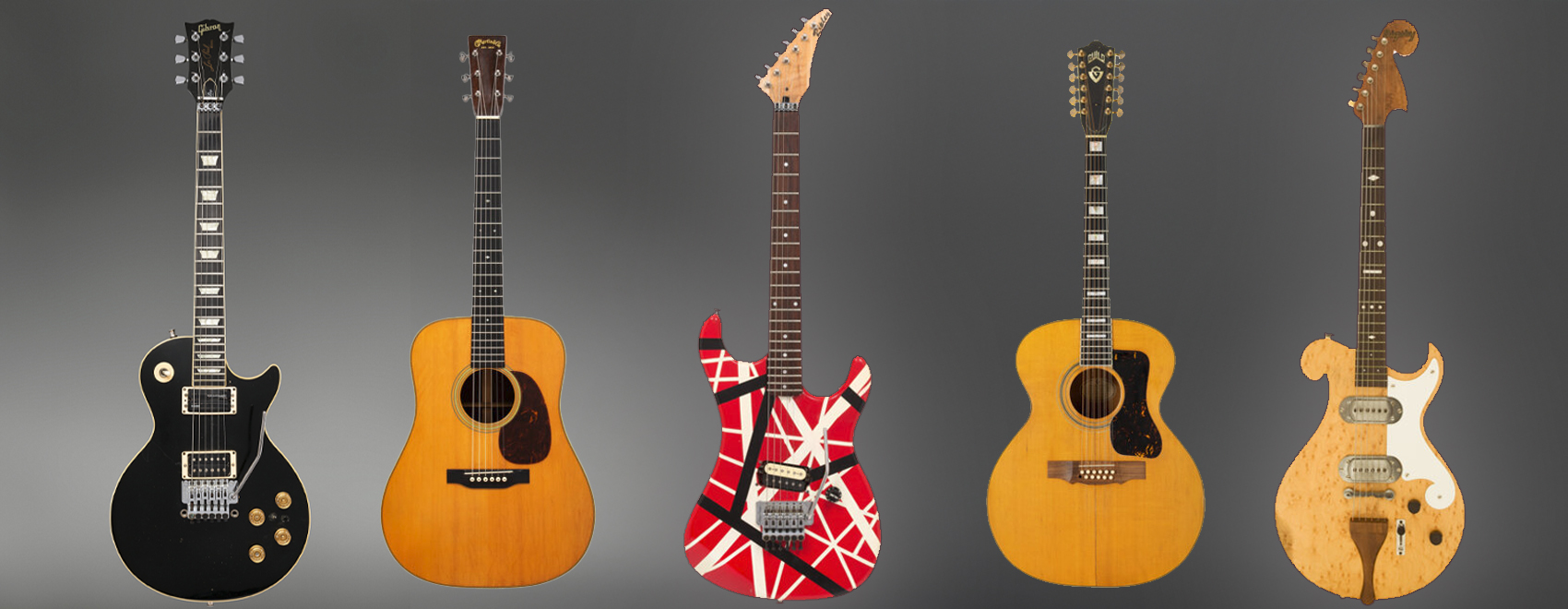
WHETHER YOU’RE CHASING YOUR DREAM SIX-STRING OR A ROAD-WORN ROCK RELIC, HEED THIS SEASONED ADVICE FOR CURATING A COLLECTION THAT’S AS PERSONAL AS IT IS PLAYABLE
By Merritt Martin | February 3, 2026
From blues to metal, the guitar provides some of the most identifiable sounds of a music act. Skill and showmanship notwithstanding, fans and instrumentalists can literally capture and collect iconic sounds via the physical implements that create them. That makes guitars — vintage ones, in particular — prime fodder for collecting.
There are many motivations for collecting vintage six-strings (and adjacent instruments in the category — bass guitars, banjos, mandolins, etc.), and like any music genre, trends have a place in the discussion. Heritage’s Director of Vintage Guitars and Musical Instruments, Aaron Piscopo, says one trend he’s seeing is newer and younger collectors focusing on particular years. “People are looking to buy their birth-year guitar,” he says. “So, for example, people born in 1985 are looking to get guitars made that year.” As a result, late-1970s and early-’80s guitars are beginning to rise in popularity.
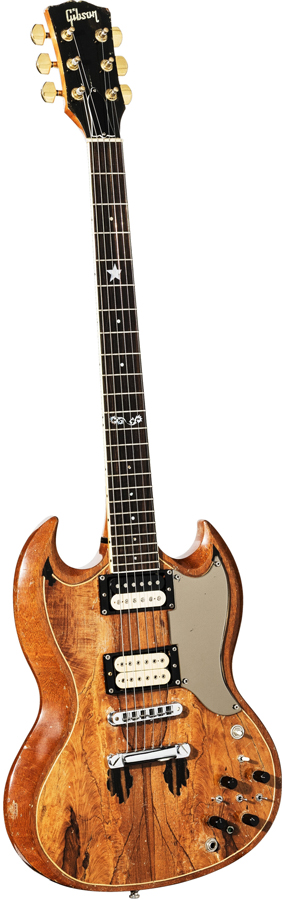
In a December 2025 Heritage auction, one lucky collector acquired one of the most historically important guitars in rock history: Frank Zappa’s ‘Baby Snakes’ guitar. The legendary instrument, instantly recognizable from Zappa’s electrifying performances of the late 1970s, sold for $375,000.
But Piscopo stresses that while chasing a trend can be fun, there are some key rules to playing the collecting game. As with any collectibles category, he encourages hunters to “take your time, build relationships with reputable dealers, read widely, and don’t hesitate to ask questions.” He says a thoughtful, informed approach pays dividends over time no matter what you collect. But with vintage guitars, there are some finer points to picking out the perfect tune and the winning bid.
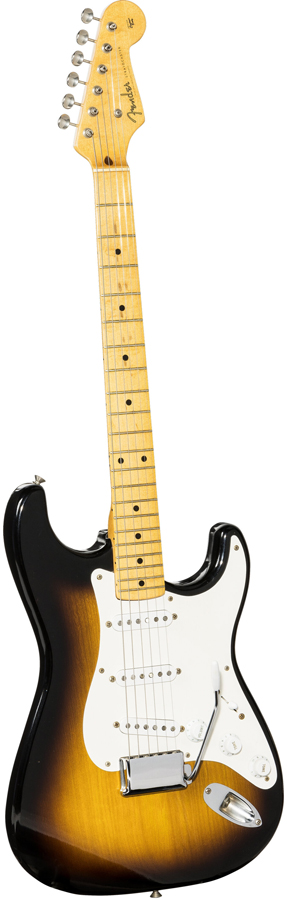
Many collectors seek out significant instruments in the history of guitar making, as evidenced by this 1954 Fender Stratocaster Sunburst electric guitar, which realized $300,000 in a December 2024 Heritage auction. The guitar is one of the earliest Stratocasters ever made and represents the dawn of one of the most iconic electric guitars in history.
Practice With Passion
Any musician worth obsessing over showcases their passion through song, and when it comes to building a great collection of vintage guitars, Piscopo notes that the same sentiment applies. He says the most important advice he can possibly give is to collect what you’re genuinely passionate about. “A strong personal connection to the instruments will guide better decisions and create a collection that’s meaningful, not just market-driven,” he says. “Passion often leads to deeper research, smarter purchases, and long-term satisfaction.” There’s no best practice when it comes to passion, either. Some will hunt their favorite styles, sounds, or celebrity axes. It’s all valid.
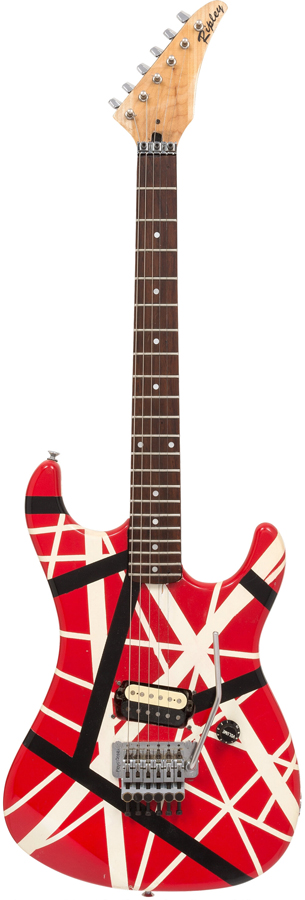
Regardless of their celebrity status, vintage guitars with signs of use can hold even more appeal than their pristine counterparts. This ‘Frankenstrat’ electric guitar originally owned by Eddie Van Halen, complete with nicks, coating wear, and yellowed stripes, is a prime example. The circa 1984 guitar sold for $50,000 in an April 2021 Heritage auction.
Don’t Fret Over Wear
Think Willie Nelson’s “Trigger,” B.B. King’s “Lucille(s),” Prince’s “Cloud,” or Eddie Van Halen’s “Frankenstrat.” Famous guitars from beloved musicians hold varying degrees of wear (sometimes famously so, as in the case of “Trigger”). And depending on the type, it can be a good thing. Piscopo assures that honest playwear is often embraced by collectors, especially if the guitar has been well cared for otherwise. This applies to non-celebrity vintage pieces as well. “These instruments were made to be played, and signs of use can actually add to their story and appeal,” Piscopo says. “What matters more is whether the guitar has been maintained with integrity, without questionable modifications or neglect.” This can be particularly important to the estimated 90 percent of Heritage’s instrument collectors who are musicians, many of whom will look for a player-grade piece with a particular sound they can enjoy themselves — on or off stage.
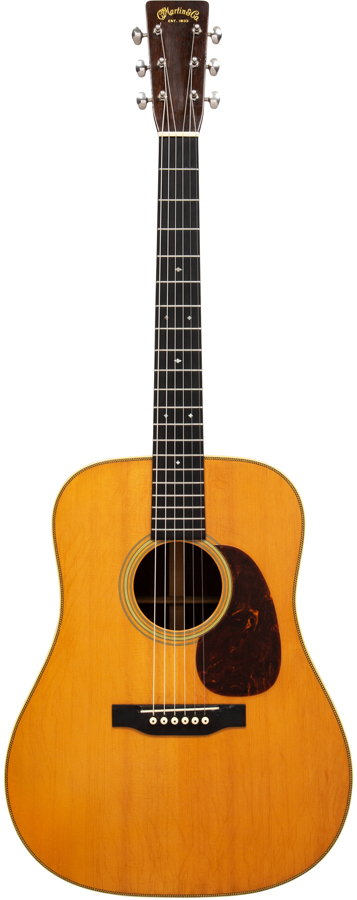
Pre-war Martin acoustic guitars like this 1937 Martin D-28 ‘Herringbone,’ which realized $281,250 in an April 2021 Heritage auction, make up one of the anchor categories in the vintage guitar market.
They’re Big Names for a Reason
Piscopo says instruments with documentation and ties to known artists can exceed expectations at auction due to the emotional connection fans have and the innate rarity of the guitars. This is something to consider if trading or selling is a goal later. But collecting isn’t all about star power. He says there are a few categories that consistently anchor the vintage guitar market. “Pre-war Martin acoustics remain a gold standard because these guitars are beautifully crafted, historically significant, and continue to appreciate in value,” he says. “In electrics, late-1950s to early-1960s Gibsons and Fenders are core to the market. This was a golden era for American guitar making, and instruments from this period have both collector and player appeal.”
For those who enjoy championing a brand before its creations become vintage, there are boutique brands like Collings Guitars of Austin, Texas, garnering great attention, but whether they’ll achieve global fame remains to be seen. “Once upon a time, Paul Reed Smith was one of those, but now he’s a household name, very popular along with Fender and Gibson,” Piscopo says. “We didn’t know 20 or 30 years ago if he’d catch on, but now those guitars are worth a great deal.”
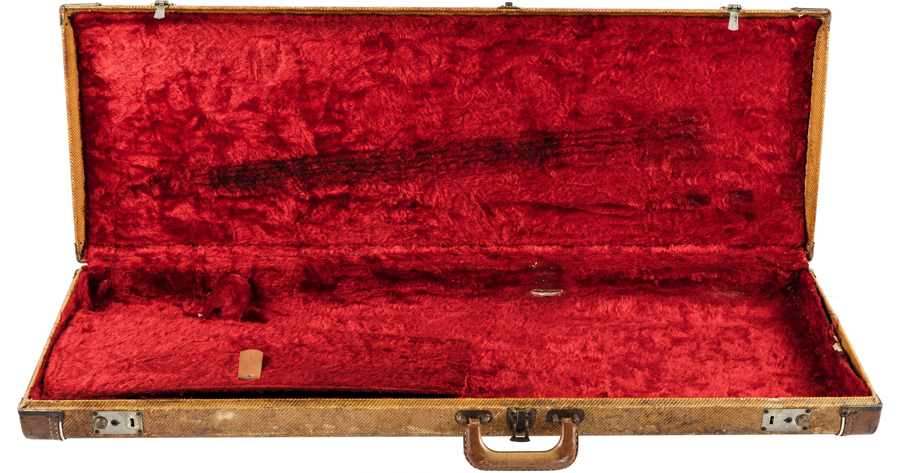
Original amps and cases are also highly collectible. This circa 1955-1957 Fender tweed hardshell guitar case, which was designed to fit Stratocaster and Telecaster models of the era, sold for $1,875 in a December 2025 Heritage auction.
You Can Complete the Set
Robert Johnson might say the devil is at the crossroads, but for many collectors, he’s in the details. Piscopo agrees, offering if someone purchases a rare guitar, they might aim to get it as close back to stock as they can. So, that means now they’re on the hunt for this part and that part. “They’re looking for the right case, and they’re looking for the amp that it would have been played out of. There’s a market for all of it,” he says. Cases, especially, can be hot items. Piscopo says original Fender tweed hardshell cases can be worth up to $5,000 on their own. In fact, Heritage recently sold a circa 1955-1957 Fender tweed case. Even vintage straps can make an impact, especially those known to have been worn by celebrities. Jimi Hendrix favored the patterned Ace straps, for example.
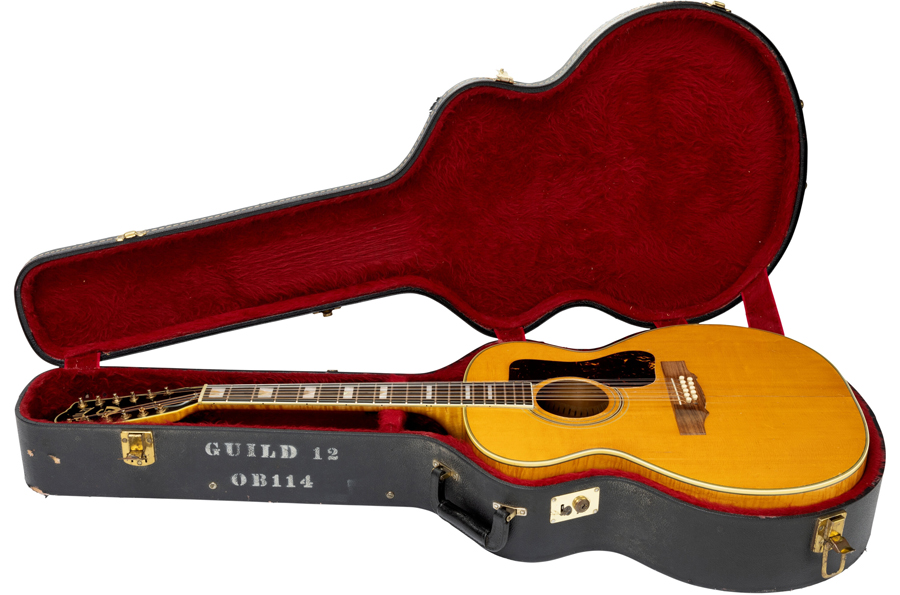
Heritage’s Aaron Piscopo recommends storing acoustic guitars in their cases, like this original case for Stevie Ray Vaughan’s 1969 Guild F-412, which he played on ‘MTV Unplugged’ in early 1990. The guitar and case realized $225,000 in a May 2023 Heritage auction.
Making a Case for Storage
Just as it goes with vinyl records, concert posters, and many other collectibles, when it comes to preservation, proper storage is essential to maintaining both condition and value. Piscopo recommends keeping acoustic guitars in their cases with a dehumidifier or in a room with controlled humidity, ideally around 45 to 50 percent. Extremes in temperature or humidity are the enemy, causing cracks, warping, or finish issues. Electric guitars should also be kept in stable conditions, and that means out of prolonged exposure to sunlight, which can fade finishes and damage plastics. (Speaking of finishes, don’t refinish or repaint a guitar, unless you’re ready to shred that resale value.) Piscopo shares another storage tip that is often forgotten: “Detune any guitar if it’s in storage or if you’re not playing it,” he says, “especially on acoustic guitars where that tension can cause bridges to pull up and un-glue.” Any guitars sent from Heritage arrive detuned, but it’s a good idea to check the string tension on instruments procured from other sources and simply as regular practice.