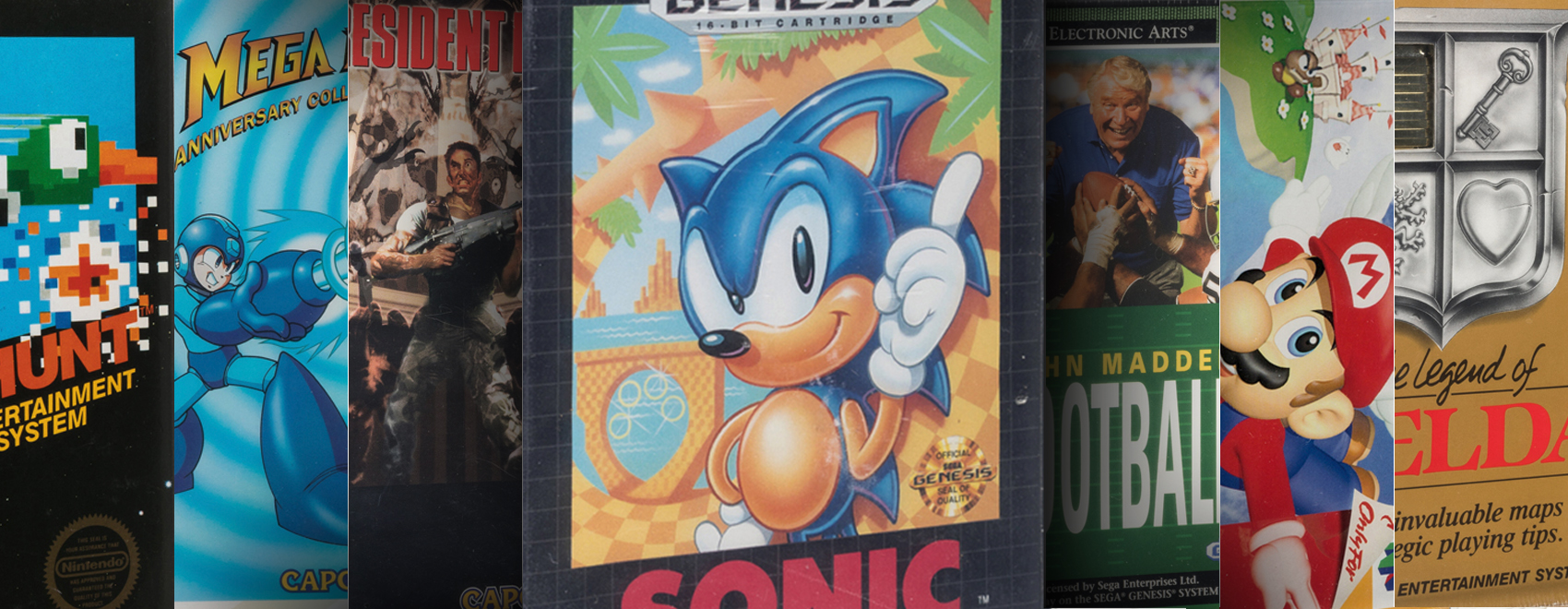
RARE NINTENDO RELEASES, BELOVED SEGA CLASSICS, AND ELUSIVE HIGH-GRADE TITLES ARE FUELING A NEW ERA OF VINTAGE VIDEO GAME COLLECTING
By Brett Weiss | June 2, 2026
Over the past couple of decades, perceptions of collecting vintage video games have shifted dramatically. In the 1980s and 1990s, titles from earlier consoles were typically seen as outdated — or, at best, nostalgic curiosities — rather than collectibles on par with baseball cards or comic books, and complete-in-box or sealed copies held relatively little premium in what was then a niche hobby. Today, it’s an entirely different story, with rare and sought-after games regularly commanding thousands or more at auction. With that in mind, here are seven key things to consider when building a video game collection.
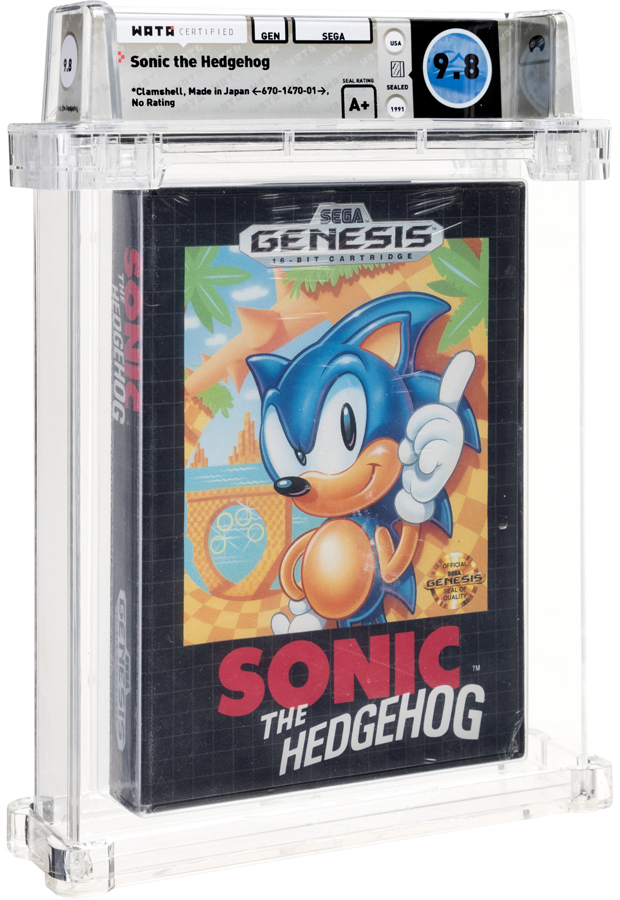
This near-mint, early production copy of ‘Sonic the Hedgehog’ sold at Heritage Auctions in 2022 for $360,000, an unthinkable sum just a few years prior.
1. Nintendo Is King
While standout titles on Sega, Sony, Microsoft, and other platforms perform well in today’s collector’s market, Nintendo releases remain the most reliable barometer of demand. This is especially true on the NES, where early Black Box titles and landmark releases like Castlevania, Mega Man, and Metroid are highly coveted. That enthusiasm carries across the entire Nintendo lineage — from the Super NES and Game Boy to the N64, GameCube, Wii, and beyond — where flagship franchises such as Mario, Zelda, and Pokémon consistently set the benchmark for value, desirability, and long-term growth. Even in a shifting market, Nintendo’s combination of nostalgia, innovation, and iconic characters continues to anchor the hobby.
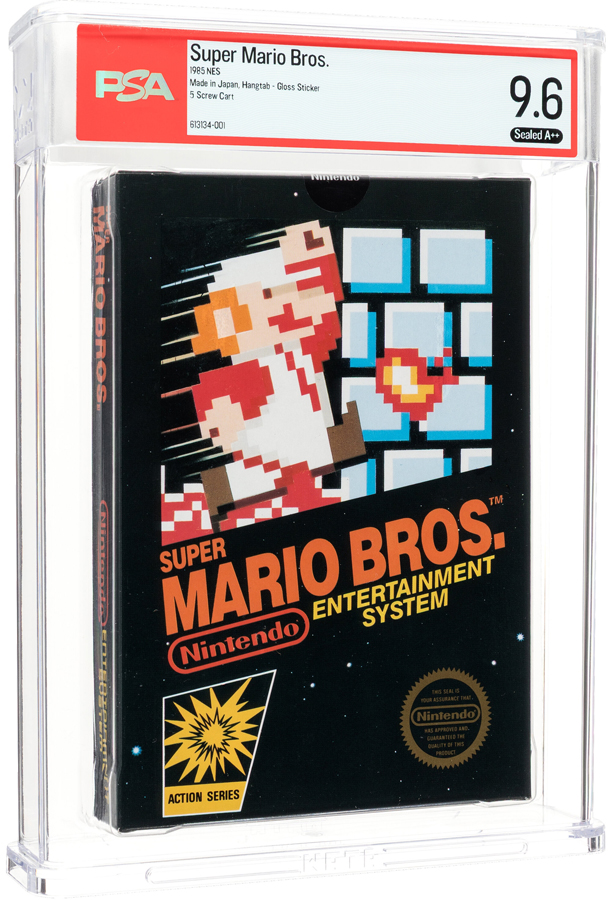
This 9.6 A++ second-production copy of ‘Super Mario Bros.,’ available in Heritage’s June 12-13 Video Games Signature® Auction, is the most significant video game collectible ever brought to auction.
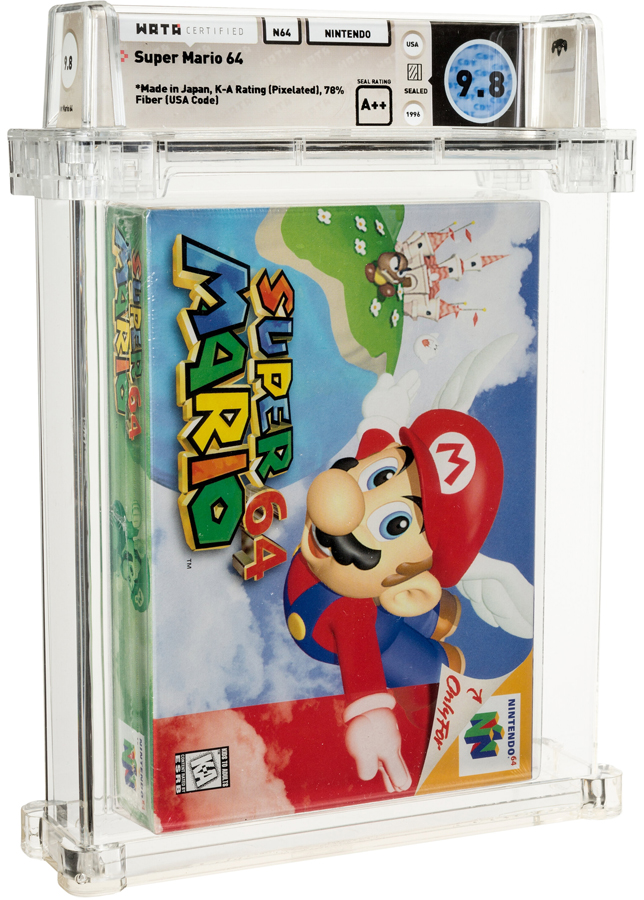
The most expensive video game ever sold at public auction is a Wata 9.8 A++ copy of ‘Super Mario 64,’ which realized $1,560,000 at Heritage in 2021.
2. Sega Does What Nintendon’t
Sega ultimately lost the console wars to Nintendo, but the company remains beloved by countless gamers and collectors, with the Sega Genesis standing as its most iconic system. Alongside blockbuster hits like Sonic the Hedgehog, Streets of Rage, and Golden Axe, cult favorites such as Crusader of Centy, Splatterhouse II and III, and MUSHA continue to command a premium. Sports titles are also highly sought after, particularly entries in the Madden, NBA Jam, and NHL Hockey series, reflecting both nostalgia and their lasting gameplay appeal. At the same time, collector attention has broadened beyond the Genesis, with growing demand for titles on the Master System, Saturn, and Dreamcast. Even Game Gear games have seen a notable price surge in recent years.
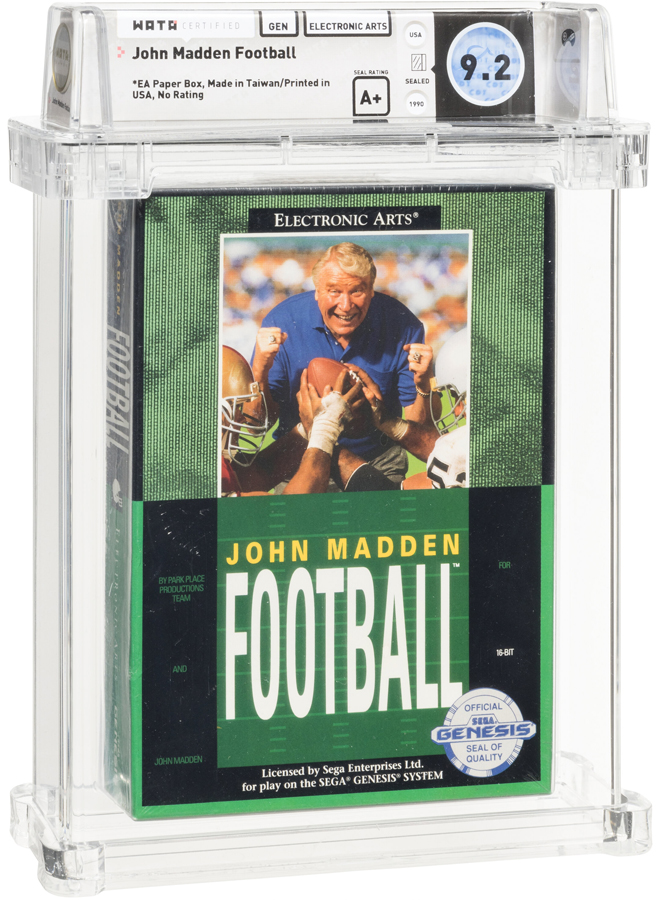
The most expensive game for a Sega console ever sold at auction is a sealed copy of ‘John Madden Football’ (Genesis) in the original cardboard box, which realized $480,000 at Heritage in 2022, surpassing the previous record held by ‘Sonic the Hedgehog’ at $430,500.
3. Collecting Complete-in-Box and Sealed Games
While cart- and disc-only games suit the needs of many gamers, collectors are another story altogether. Most prefer their games to be complete in the box (CIB), with the original packaging, manuals, and inserts adding both historical context and display appeal — elements that were often discarded back in the day, making intact copies far less common today. Obviously, manuals often provide crucial information for understanding how to play the game. Many collectors take it a step further and seek out sealed games, particularly if they have no intention of playing them. These untouched copies make for striking shelf pieces and are typically much scarcer, especially when no warehouse finds or “new old stock” discoveries have surfaced. In many instances, it’s simply a fluke that a game from the NES or Atari 2600 era has remained sealed for decades, which helps explain its rarity, desirability, and the premium it commands.
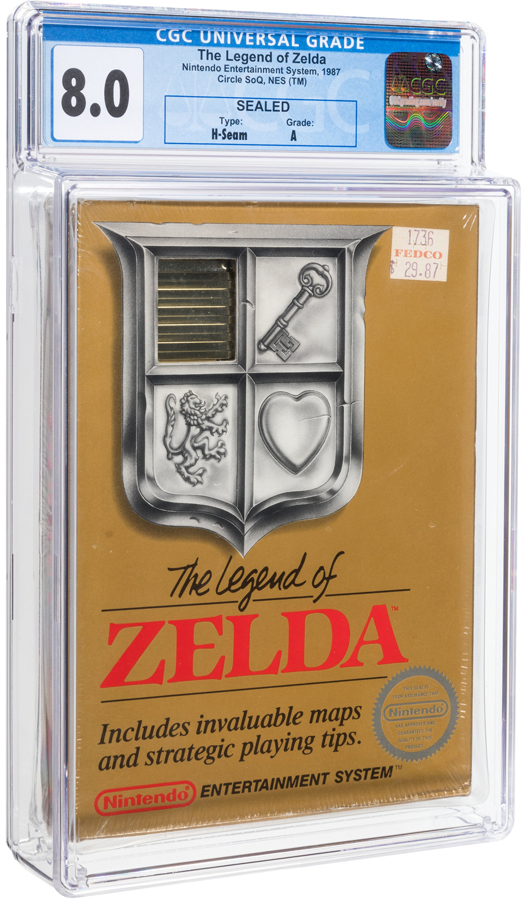
This sealed first-production copy of ‘The Legend of Zelda’ sold at Heritage in 2024 for $288,000. A similar CIB example would likely sell for less than 20 percent of that, and cart-only examples typically go for around $30.
4. The Variant Effect
Variants in packaging can be the difference between a nice collectible and a true trophy, with NES Black Box releases serving as the prime example: Matte-sticker first-production copies — sealed with Nintendo’s branded sticker prior to gloss stickers and then shrink-wrap — are especially prized. Hangtab NES games offer another key early-run indicator, featuring the die-cut retail hanger used through mid-1987 before being discontinued in the U.S. Sega collectors pursue similar distinctions, including early cardboard-box releases like John Madden Football, which predate later clamshell packaging. Beyond these, collectors track numerous other variants identified by text differences, box formats (such as longbox and jewel case for PlayStation), and details like the shape of the Nintendo Seal of Quality (round vs. oval). Notably, prior to the launch of Heritage’s Video Game category in 2019, even hardcore collectors focused primarily on basic factors such as condition and whether a game was complete or sealed. Today, however, variants have taken on far greater importance, playing a central role in a game’s collectability.
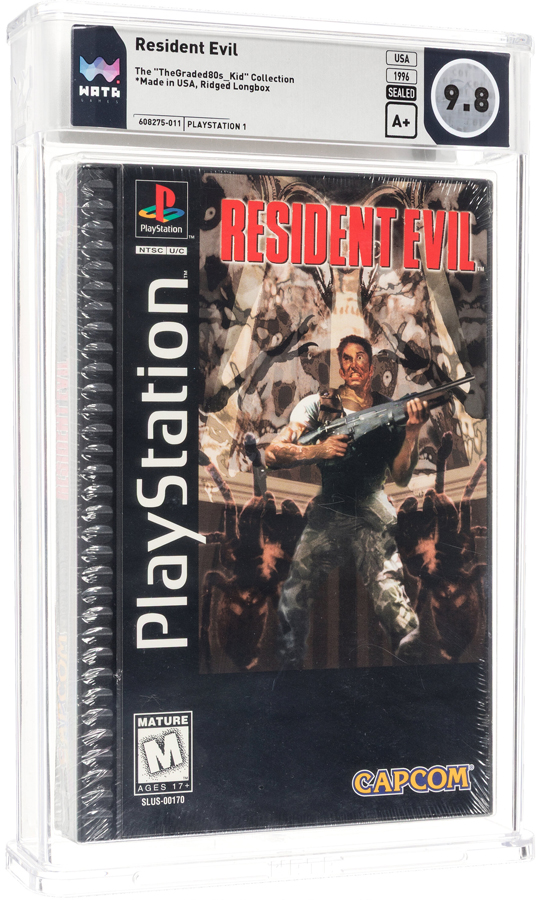
This census-topping copy of ‘Resident Evil’ for the PlayStation in the longbox format sold at Heritage in March 2026 for $125,000. A standard jewel case example in similar condition would likely bring around $20,000.
5. Condition Can Make All the Difference
Condition is a critical factor in video game collecting, with certain types of wear appearing more frequently than others. Corners, for example, are especially prone to wear and are often the first place to show signs of handling. Packaging material also plays a major role: Plastic cases used for systems like the Sega Genesis and Master System, as well as the PlayStation 2, Xbox, and GameCube, tend to be more durable than the cardboard boxes used for consoles like the Atari 2600, NES, SNES, Nintendo 64, and Game Boy. That said, not all plastic is created equal: Longboxes for PlayStation, Sega CD, and Sega Saturn are notoriously fragile and prone to cracking. Discerning collectors closely examine details such as edge wear, creasing, concaving, tears, and surface impressions, the last of which are often caused by someone using the box as a writing surface. For sealed games, the condition of the shrink-wrap is also important, with graders noting such issues as scuffing, holes, and the size and placement of any tears in the seal. Creases on the back are generally more acceptable from a display standpoint than those on the front, and that distinction is often reflected in the grades assigned by VGA, CGC, and PSA. For opened games, the condition of the cartridge/disc, manual, and inserts is also highly important.
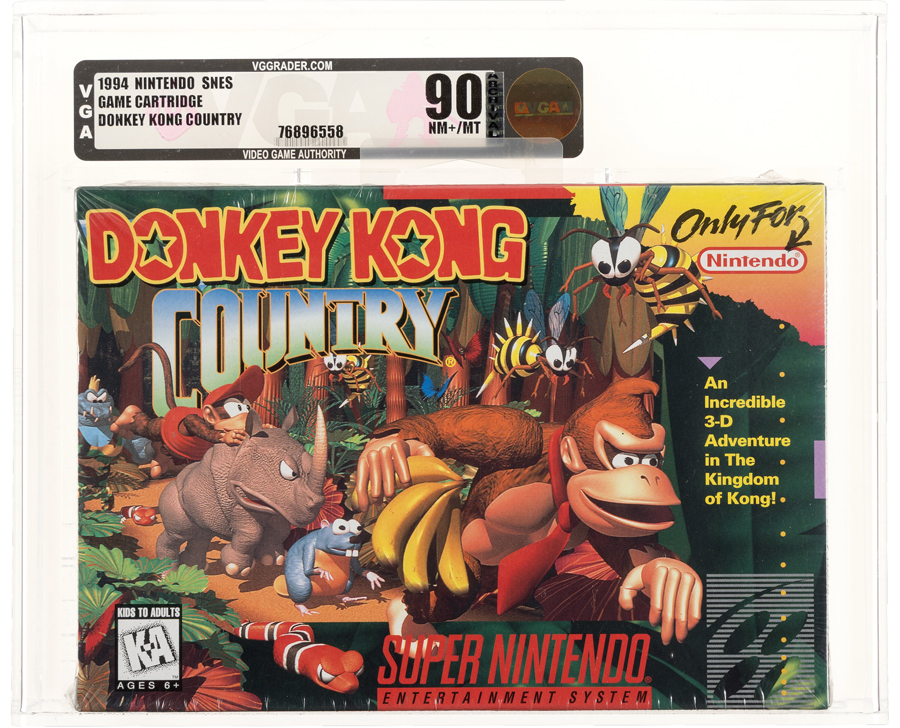
In part due to its near-mint condition, this copy of ‘Donkey Kong Country’ realized $15,000 at Heritage in 2025.
6. The Power of Rarity, Grading, and Population Reports
Rarity plays a central role in determining a game’s desirability, but in today’s collector’s market, it is increasingly measured and validated through third-party grading data. VGA, CGC, and PSA not only authenticate and grade games, but also track how many copies of a given title have been evaluated at each grade level. However, unlike VGA and PSA — both of which provide public population reports — CGC does not currently offer a publicly accessible census. These population reports give collectors a clearer understanding of true scarcity, particularly at the high end of the condition spectrum. As a result, a title that may not appear especially rare in the wild can command a substantial premium if only a small number of high-grade examples have been certified, making population data an essential tool for informed collecting.
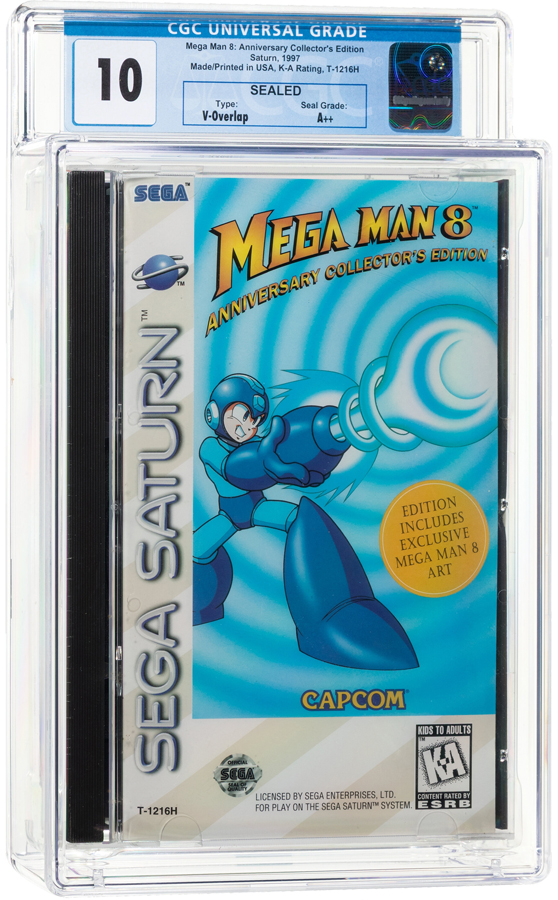
This dazzling copy of ‘Mega Man 8: Anniversary Collector’s Edition’ for the Sega Saturn, featuring a perfect grade from CGC, commanded nearly $10,000 at Heritage in 2025.
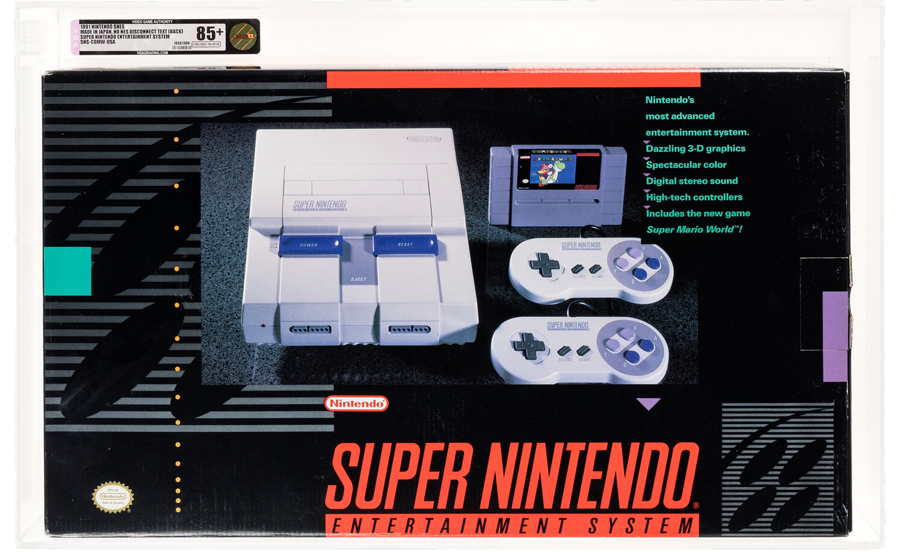
In addition to certifying games, VGA grades boxed consoles. This launch edition of the Super Nintendo, bundled with ‘Super Mario World,’ is available in Heritage’s June 12-13 Video Games Signature® Auction.
7. Collecting What You Enjoy Is the Heart of the Hobby
We’re often asked what someone should collect when it comes to vintage video games, and the answer remains simple: Collect what you enjoy. The hobby spans a wide spectrum, from players revisiting childhood favorites to collectors building comprehensive libraries across multiple systems, and even those pursuing highly specialized goals such as a full run of high-grade NES Black Box titles, an ambitious and increasingly exclusive pursuit. At Heritage Auctions, the focus is on premium material, particularly high-grade, sealed, and professionally graded games that represent the top tier of the market. That said, the auction house also offers a range of opportunities, from singular headline rarities to uncertified group lots, allowing collectors to enter the hobby at different levels. Many collectors evolve over time — starting with playable or complete-in-box examples before ultimately seeking out sealed, high-grade pieces for long-term preservation and display — underscoring that even at the highest end, collecting is driven by personal passion as much as prestige.
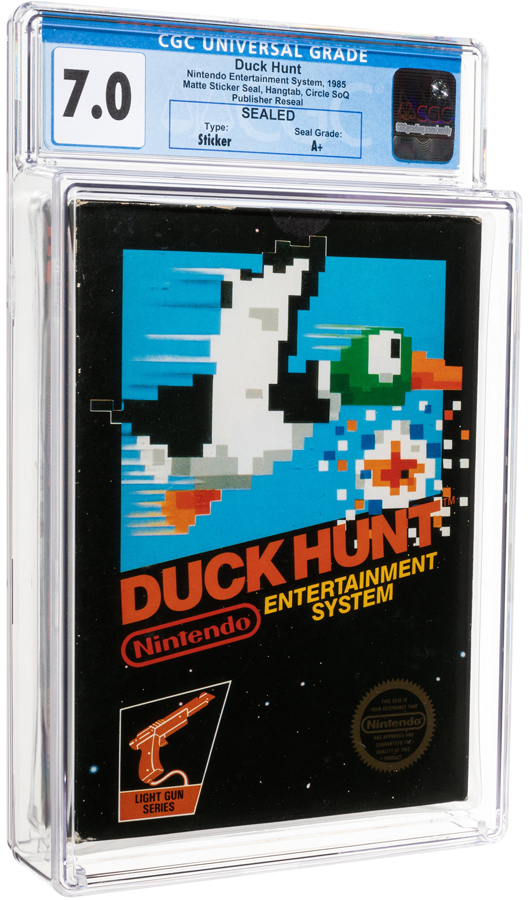
First-production copies of ‘Duck Hunt’ command a premium not only because of the variant’s scarcity in sealed condition, but also because it’s a nostalgic favorite for many longtime gamers.
If you’ve got a video game collection you’ve been thinking about selling, especially one that includes sealed and/or rare titles, consigning through Heritage Auctions could be a great option. The company works with serious collectors worldwide and specializes in maximizing results for high-end games and related items, such as consoles, peripherals, prototypes, and original art. Collections considered for consignment should be valued at $5,000 or more, making this an ideal fit for standout libraries that deserve a global spotlight. If you’re interested in consigning or just have questions about the process, contact Evan Masingill at EvanM@HA.com for more information.