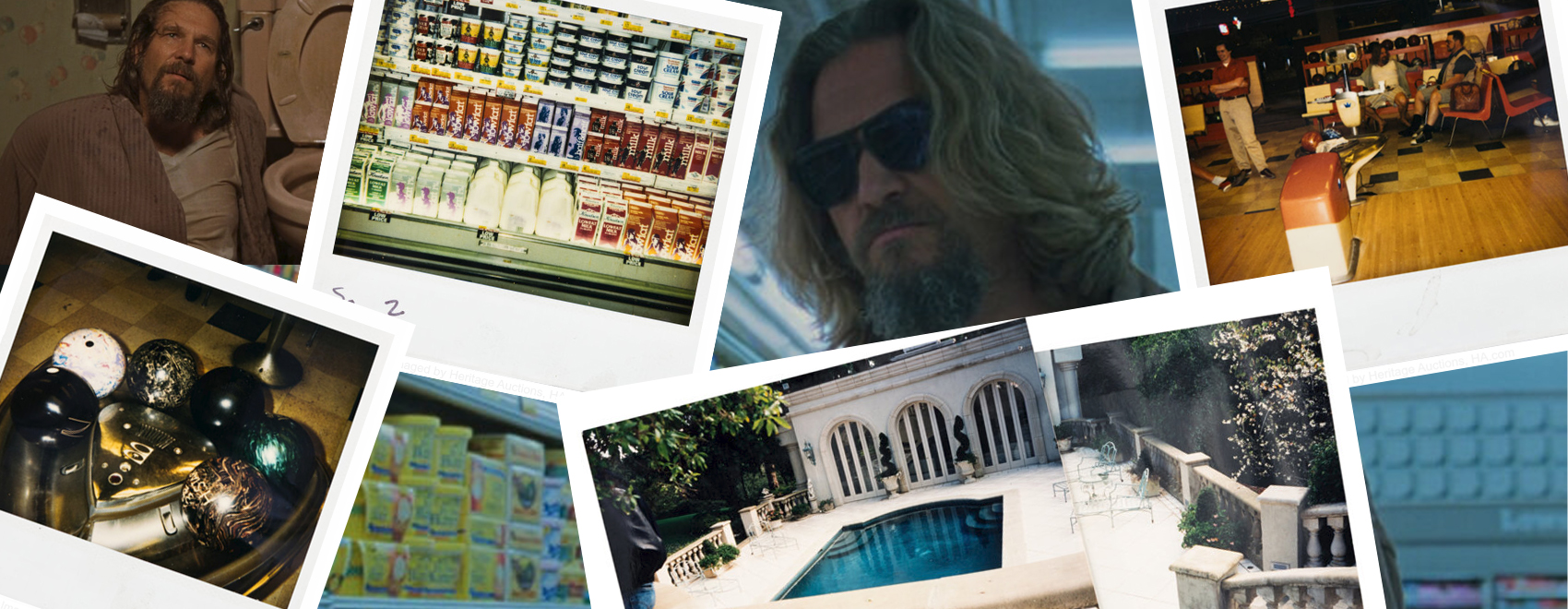
ORIGINAL PROPS FROM THE 1998 COEN BROTHERS CLASSIC, INCLUDING THE RUG THAT ‘REALLY TIED THE ROOM TOGETHER,’ UNCOVER THE HIDDEN ARTISTRY OF HOLLYWOOD’S SET DECORATORS
By Colin Tait | July 7, 2026
Iunrolled the first rug carefully across the floor of my workspace, smoothing the edges almost instinctively before returning for the second. The first was instantly recognizable, its faded yellows, browns, and creams softened even further by nearly three decades of age. The pile was flattened from years of use, the fringe uneven and frayed, and faint stains still lingered across its surface. Beside it, the second rug unfolded into an altogether different world. Rich reds, deep blues, and a central medallion announced a more formal elegance, the sort of Persian rug one might expect to find beneath polished furniture and carefully framed awards rather than in the bungalow of an unemployed slacker.
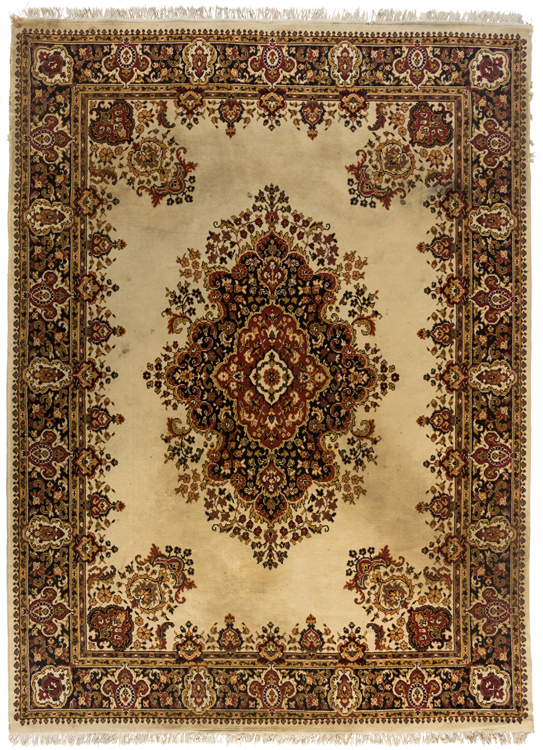
Some film props transcend their practical purpose to become essential engines of the story, objects that linger in the cultural imagination long after the credits roll. The Dude’s screen-used Persian-style rug from ‘The Big Lebowski,’ now available in Heritage’s July 13-17 Hollywood & Entertainment Signature® Auction, is one such example.
There was nothing unusual about the task itself. As the Senior Cataloger for Entertainment/Hollywood at Heritage Auctions, I have unpacked countless collections, carefully examining each object before photographing, measuring, researching, and ultimately writing about it. Most days, that work settles into a quiet rhythm. Every object has its own story, but uncovering those stories is usually methodical, built through observation rather than revelation.
This time, however, something unexpected happened. As the two rugs lay side by side, it struck me that The Big Lebowski never allows us to see that image. One rug disappears before the other enters the story, each quietly carrying the narrative from one Jeffrey Lebowski to the next before vanishing altogether. By the film’s conclusion, the Dude has lost them both. Yet here they were, lying together across the floor of my office nearly three decades after the film first reached audiences.
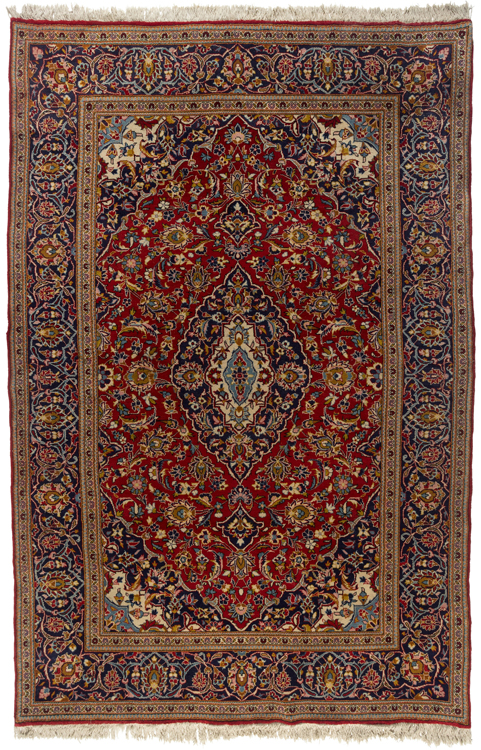
Like the Dude’s original rug, this screen-used rug from ‘The Big Lebowski’ hails from the collection of Chris Spellman, the movie’s set decorator.
For readers unfamiliar with The Big Lebowski, these are not simply two old rugs. They are among the most important surviving objects from one of the most beloved cult films ever made. Released in 1998, Joel and Ethan Coen’s shaggy Los Angeles detective story follows Jeffrey “The Dude” Lebowski (Jeff Bridges), a jobless slacker whose life is thrown into chaos after two hired thugs mistake him for a millionaire with the same name and one of them urinates on his rug. Seeking compensation, the Dude visits the wealthy Jeffrey Lebowski and tricks his assistant into letting him leave the mansion with a replacement rug. “The old man told me to take any rug in the house,” the Dude tells Brandt, played by Philip Seymour Hoffman. Those two rugs set in motion one of cinema’s most delightfully unconventional detective stories.
Twenty-eight years before the rugs crossed my desk, I had walked into a darkened theater expecting to see the latest film by my favorite filmmakers. I had no idea I was about to join one of the most enduring film cults of the modern era.
In my 20s, like many aspiring cinephiles, I had already fallen under the spell of Joel and Ethan Coen. Their films seemed unlike anything else being made at the time. I loved their wonderfully idiosyncratic dialogue, inventive camerawork, and remarkable ability to move effortlessly between comedy and tragedy. Blood Simple had helped revive American neo-noir. Raising Arizona introduced audiences to one of Nicolas Cage’s most unforgettable performances. Then came Fargo, a film that earned the Coens Academy Awards, the Palme d’Or at Cannes, and the sort of critical and commercial success that gave filmmakers an almost unimaginable freedom.
After Fargo, it felt as though they could make anything they wanted. What they made was The Big Lebowski.
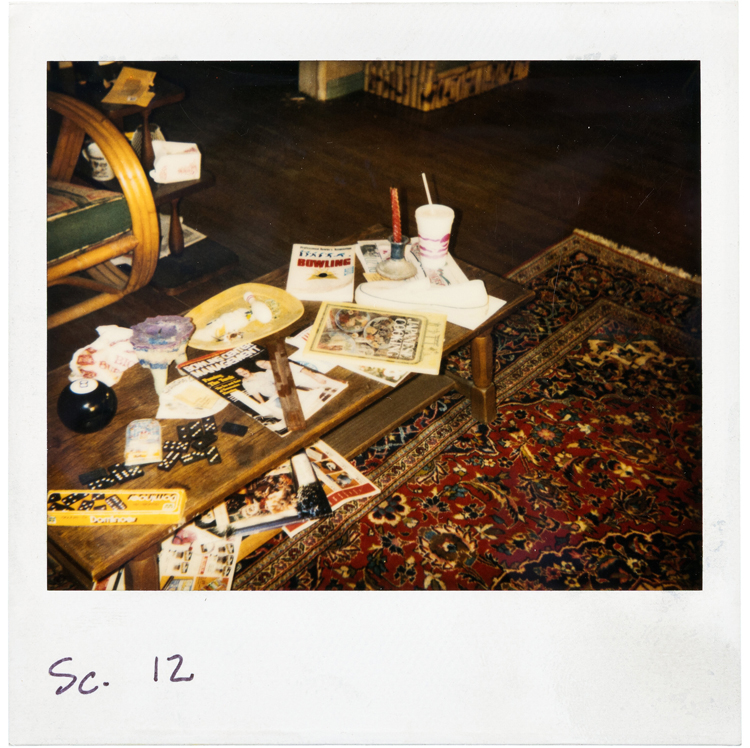
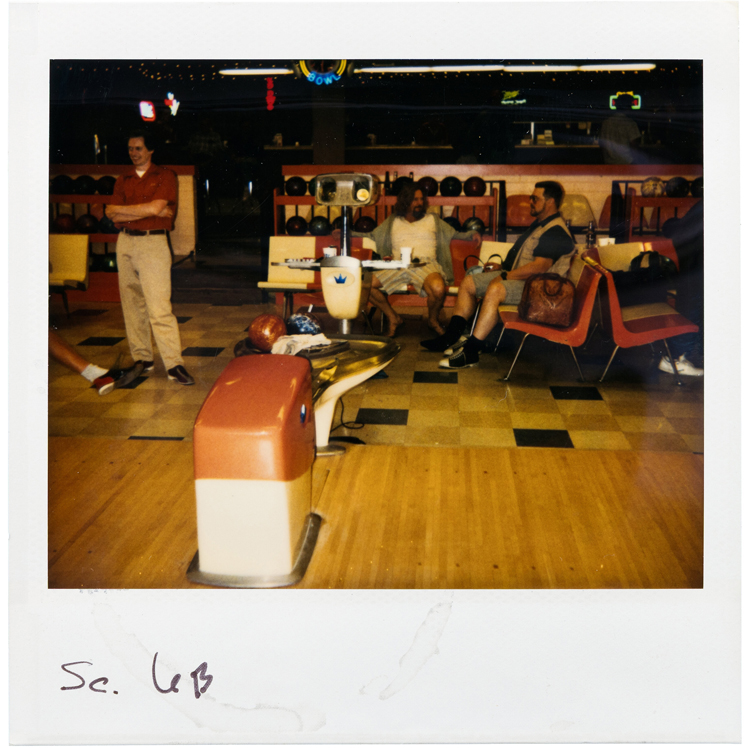
Fans of ‘The Big Lebowski’ will instantly recognize the Dude’s Los Angeles bungalow and his favorite bowling alley in these Polaroid continuity photos from Spellman’s personal collection.
I knew surprisingly little before taking my seat. Jeff Bridges. John Goodman. Los Angeles. A detective story of some sort. That was enough.
From the moment Sam Elliott’s Stranger began narrating over the image of a tumbleweed drifting across Los Angeles, I was captivated. The camera swept into a Ralphs supermarket, where a man in sunglasses, a bathrobe, and translucent jelly sandals, the Dude, wrote a check for 69 cents to buy half-and-half. Within minutes, he had been mistaken for another Jeffrey Lebowski, assaulted in his own home, and left staring at a ruined rug that, as he repeatedly insisted, had “really tied the room together.”
Everything that followed somehow became stranger and funnier than the scene before it. German nihilists. Vietnam veterans. Avant-garde performance artists. White Russians. A Busby Berkeley-inspired dream sequence featuring Saddam Hussein. Philosophical conversations in bowling alleys. A detective story that revolved around a rug.
I walked out of the theater convinced I had just seen one of my favorite films. It felt as though the Coens had somehow made a movie specifically for my own sense of humor.
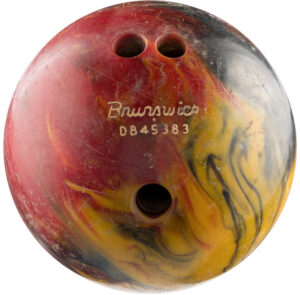
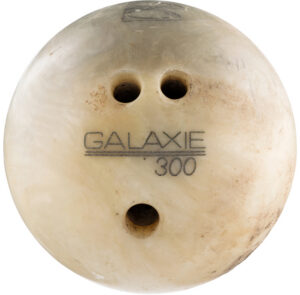
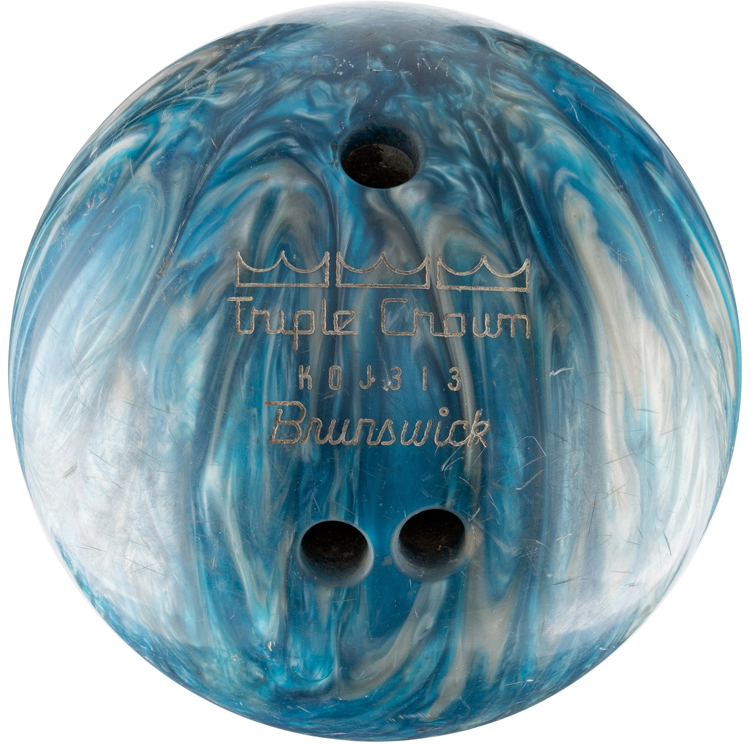
A trio of background bowling balls used in the 1998 film
Judging by the film’s initial reception, however, I appeared to be in the minority.
The Big Lebowski struggled at the box office, and reviews were mixed. For a time, it seemed destined to become an eccentric footnote in the Coens’ career. Then, almost imperceptibly, it began finding its audience. Through repeated viewings, recommendations from friends, late-night screenings, and the DVD revolution that rescued so many overlooked films at the turn of the millennium, it slowly became one of the defining cult films of its generation.
I began meeting fellow travelers everywhere.
Conversations became exchanges of dialogue. Friends greeted one another with “We believe in nossing, Lebowski,” “Is this your homework, Donny?”, “This is not ’Nam. This is bowling. There are rules,” or simply, “The Dude abides.” Long before social media reduced movie dialogue to endlessly repeated memes, The Big Lebowski spread the old-fashioned way, one recommendation at a time. Quoting the film became less about remembering dialogue than recognizing one another.
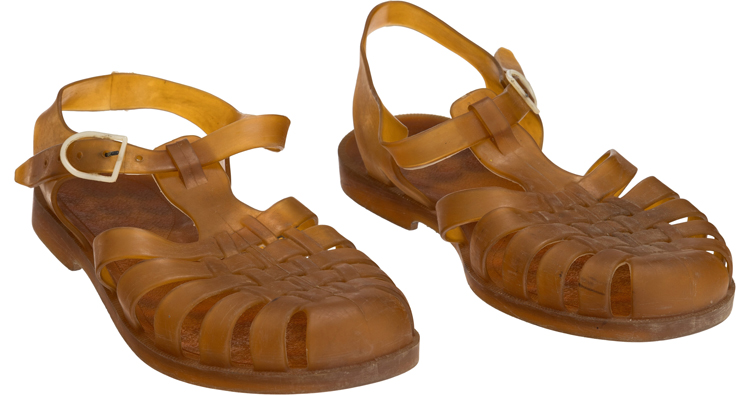
A production-used pair of jelly sandals worn by Jeff Bridges in ‘The Big Lebowski’
Eventually, its admirers even found a name for themselves. Borrowing from the film’s Little Lebowski Urban Achievers, they simply became “Achievers,” gathering at festivals, bowling tournaments, and special screenings dressed in bathrobes, bowling shirts, Viking helmets, and jelly sandals. Looking back now, I suspect I became an Achiever long before I realized there was a name for it.
That is why opening those boxes of rugs felt so different from my usual work. I wasn’t simply cataloging movie props. I was stepping back into a world I had been happily visiting since 1998.
There was only one person I could call.
For nearly three decades, the rugs, the furniture, the artwork, and so many of the objects spread across my office had belonged to Chris Spellman. As the film’s set decorator, Spellman worked alongside Joel and Ethan Coen to transform a screenplay into a world that felt completely lived in. After production wrapped, he became the steward of many of those objects, preserving them long after the cameras stopped rolling.
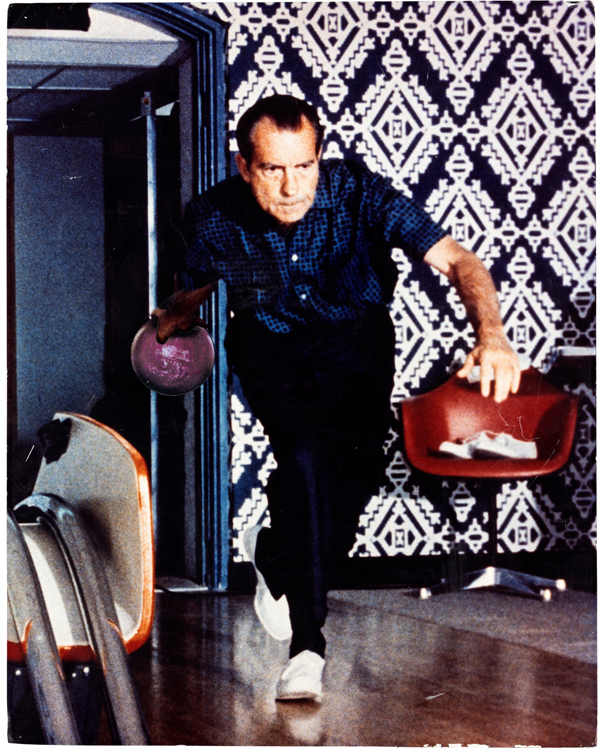
This photo reproduction of Richard Nixon bowling hung over the bar in the Dude’s bungalow. It’s now one of the many props from ‘The Big Lebowski’ available in Heritage’s July 13-17 Hollywood & Entertainment Signature® Auction.
Over the course of his career he reunited with the Coens on later productions, worked repeatedly with John Goodman, and collaborated with many of Hollywood’s most accomplished filmmakers. When word spread that pieces from Spellman’s collection would be featured in Heritage’s July 13-17 Hollywood & Entertainment Signature® Auction, filmmakers Seth Rogen and Judd Apatow shared the news with their own audiences — not because an auction house was selling movie props, but because their friend was letting go of something they knew had meant a great deal to him, and to the rest of the world.
Early in my conversation with Spellman, he mentioned something that reframed the collection for me. His home had been destroyed in the Southern California fires. Many of the objects from The Big Lebowski survived only because they had been sitting in storage for years. “Maybe it’s time to part with this stuff,” he said, “and let it go to people who might enjoy it.”
For Spellman, this wasn’t about selling movie props. It was about passing them on.
During our call, I asked Spellman what seemed, at least to me, the most obvious question: How did you find the Dude’s rug? His answer revealed that I had been asking the wrong question.
“When I first read a script,” he told me, “I jot down notes.” Before he ever began looking for furniture or artwork, he had already started imagining the people who would live in those spaces. As soon as he read “the Dude’s bungalow,” he pictured the neighborhood. “This should be like a couple of blocks off Venice Boulevard.” Then came the rug. “You read the script and the guy’s unemployed… maybe he was walking down an alley… maybe he saw a rug being tossed out… laying on top of the garbage cans… and so that was the inspiration for the first rug.” Eventually, he found it himself at a Salvation Army store in Pasadena. “It had a little wear and tear on it, which was kind of perfect.”
The second rug emerged from an entirely different way of thinking. “That one should be an expensive rug,” he explained. Spellman and his team photographed Persian rugs from dealers across Los Angeles before presenting their choices to the Coens. Jeffrey Lebowski’s rug wasn’t simply more expensive than the Dude’s. It belonged to a different person.
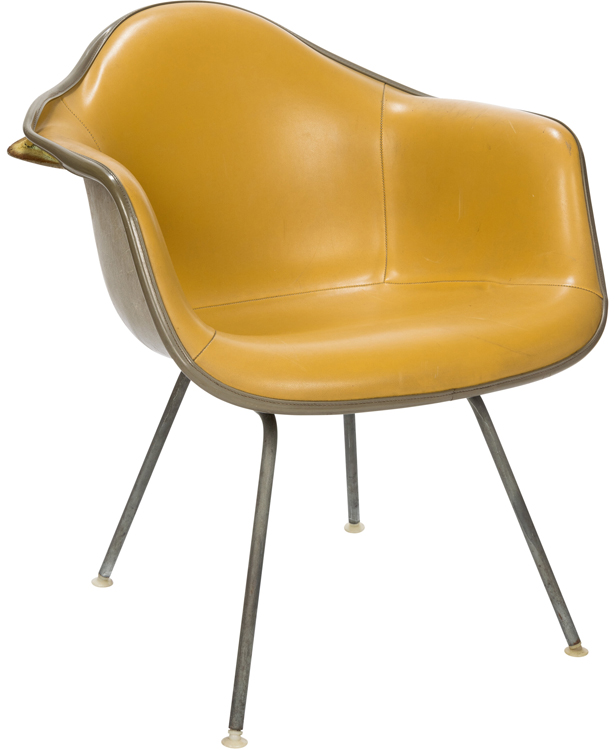
This Eames-style lounge chair appears in the Dude’s Los Angeles home and serves as a resting place for his iconic cardigan sweater.
As we talked, I realized that Spellman wasn’t describing production design so much as research. “One of my favorite parts of the process,” he said, “is what I call doing the homework… the detective work.” Before the internet, that meant wandering thrift stores, talking to people, hunting through bowling alleys that were closing, and following one lead until it uncovered another. “It wasn’t just like… Google colored bowling balls,” he said, laughing.
I smiled because I knew exactly what he meant. One of the great pleasures of my own work is doing the homework. Whether I’m tracing the provenance of a painting, identifying an obscure historical photograph, or trying to understand why a particular rug ended up in a Los Angeles bungalow, the work always begins the same way. You start with an object. You ask a question. Then another. Gradually, a story begins to emerge.
That realization changed the way I thought about every object in the collection.
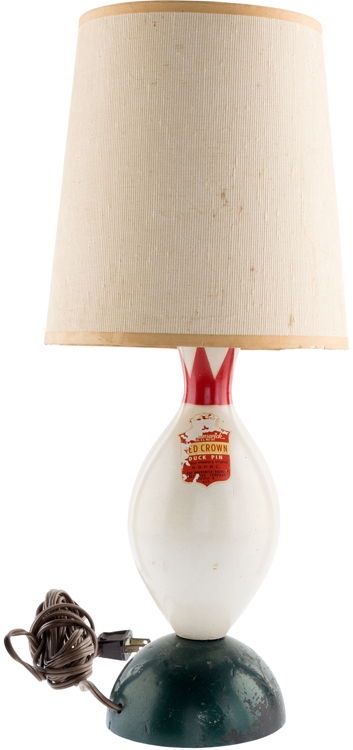
To dress the cluttered background of the Dude’s bungalow, Spellman sourced pieces like this bowling pin lamp from Los Angeles-area antiques stores and thrift shops.
The Richard Nixon bowling photograph hanging in the Dude’s bungalow wasn’t just an amusing sight gag. Spellman explained that it began as a genuine White House photograph. Still, the original bowling ball disappeared into the composition, so the art department replaced it with a bright purple one “just to make it a little more cinematic.” The Bang & Olufsen telephone. The Eames-style chair. The bowling trophies. The lamps. The rugs. None of them were simply decorations.
Each answered the same question: Who lives here?
By the time we finished talking, I realized we had approached the same world from opposite directions. Spellman began with a screenplay and gradually assembled a believable life. I began with the surviving objects and slowly worked my way back toward the screenplay.
Somewhere in the middle, we met.
Walter Benjamin famously wrote that original works of art possess an “aura” that no reproduction can fully capture. It is one of those ideas that is easier to understand in experience than in theory. Before this assignment, I had seen The Big Lebowski dozens of times. I owned the film, could quote long stretches of dialogue, and knew many of its scenes by heart. Yet standing among Spellman’s collection felt fundamentally different. The rugs, the Nixon photograph, the Bang & Olufsen telephone, the furniture, and the artwork collapsed the comfortable distance that normally separates us from the films we love. They were no longer images on a screen. They were the original objects, carrying with them the marks of use and the decisions that shaped them.
As I rolled up the rugs at the end of the day, I thought back to something Spellman had said. After living with these objects for all these years, he hoped they would find people who loved the film and would continue to share them with others. It seemed an appropriate next chapter. The rugs had first helped Joel and Ethan Coen tell a story. Spellman had cared for them for nearly three decades. Heritage had the privilege of sharing them with a wider audience. Soon, they would begin another life with new caretakers.
For one afternoon, though, after nearly 30 years apart, the two rugs had shared the same space once again. And you know what? They really did tie the room together.