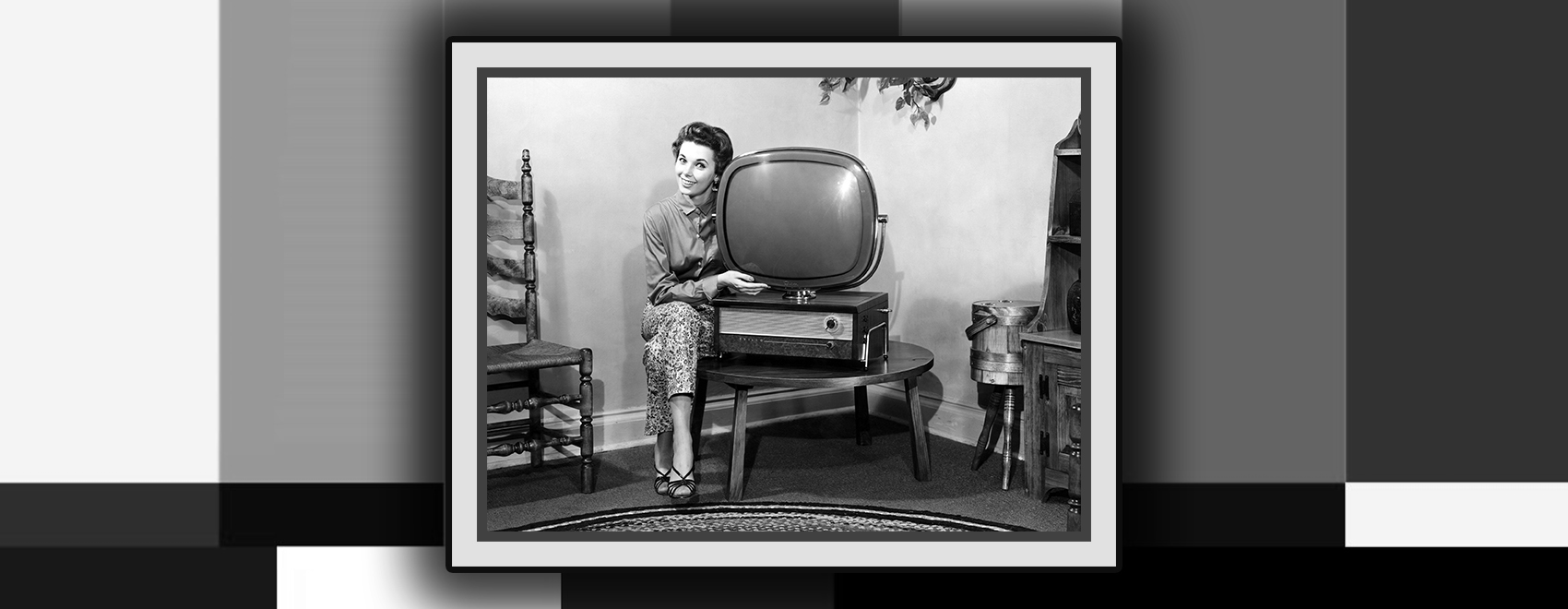
FROM ART DECO CABINETS TO SPACE AGE GLOBES, THESE ICONIC SETS TRANSFORMED TV FROM CUTTING-EDGE TECHNOLOGY INTO A CENTERPIECE OF MODERN DESIGN
By Andrew Nodell | June 2, 2026
While there is disagreement over exactly who invented television, the technology behind it was rapidly coming to fruition a century ago. In January 1926, Scottish electrical engineer John Logie Baird successfully demonstrated the first moving image transmitted by television, and the following year, American inventor Philo T. Farnsworth laid the groundwork for TV as we know it with his broadcast of the first electronic TV image.
Nearly a decade passed before the BBC launched the world’s first regular television service from Alexandra Palace in London on November 2, 1936, but even throughout the 1940s, TV was considered a luxury novelty for the wealthy. This would all change rapidly in the postwar boom era, with more than half of Americans owning a TV set by 1955. Although many of us now try to camouflage our modern flat-panel black box sets, these vintage devices were often designed as decorative household fixtures and are now collectibles in their own right — and can be a fun party trick when operable. Who wouldn’t want to watch an episode of I Love Lucy on an Eisenhower-era set? So don’t touch that dial as we look back on seven iconic designs from the Golden Age of TV.
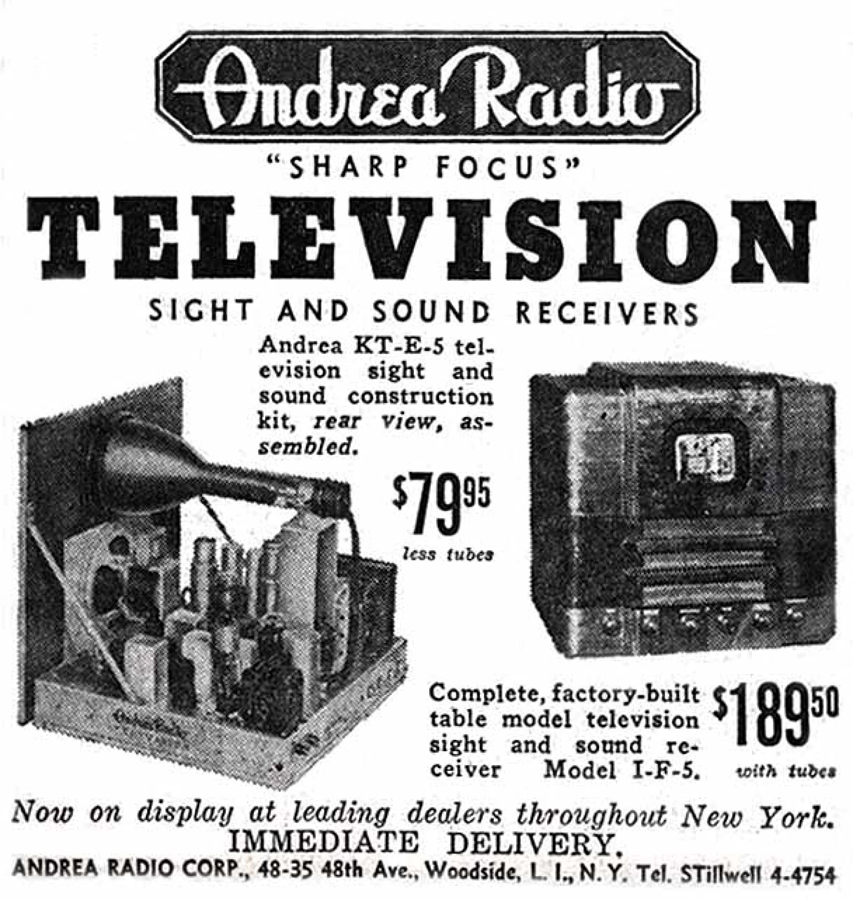
The 1F5’s Art Deco design is on full display in this 1939 advertisement.
Andrea 1F5 (1939)
Boasting a 5-inch black-and-white screen, the Andrea 1F5 was sold before World War II halted television production almost entirely and before most Americans had ever seen a TV set. Notable for its handsome Art Deco styling and an original price tag of $189.50 (more than $4,500 in today’s money), the 1F5 was not a widely popular consumer product and became increasingly rare as many were scrapped during wartime salvage drives. Very few examples have survived and are highly coveted by collectors today.
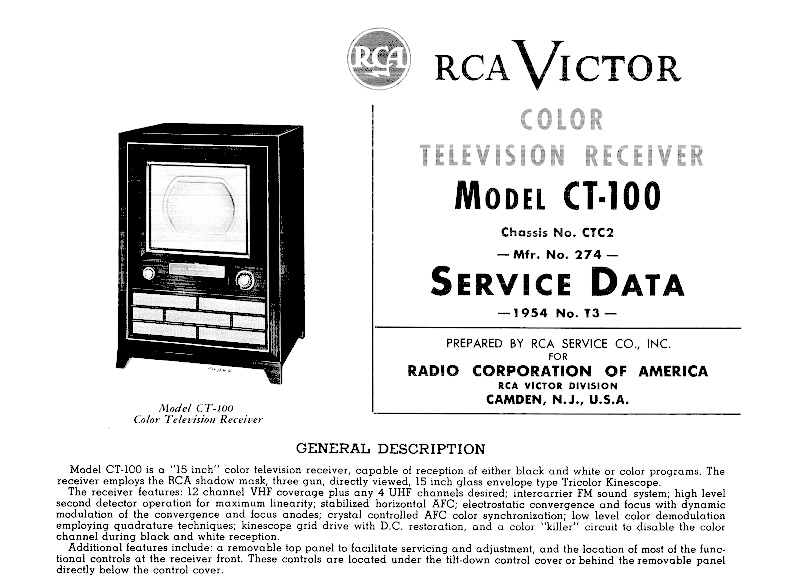
A 1954 fact sheet on RCA Victor’s CT-100 model
RCA Victor CT-100 (1954)
Touted as the first mass-produced color TV sold in the United States, the 15-inch CT-100 debuted at a time when very few color broadcasts were being produced. With a price tag of more than $12,000 in modern currency and tubes that deteriorated significantly over time, very few working CT-100s have survived. After a booming market for black-and-white sets in the early ’50s plateaued, RCA executives reportedly looked to color TV as a way to usher in a new crop of consumers, but it would be years before the technology — and cost — would enable everyday households to watch their favorite shows “in living color.”
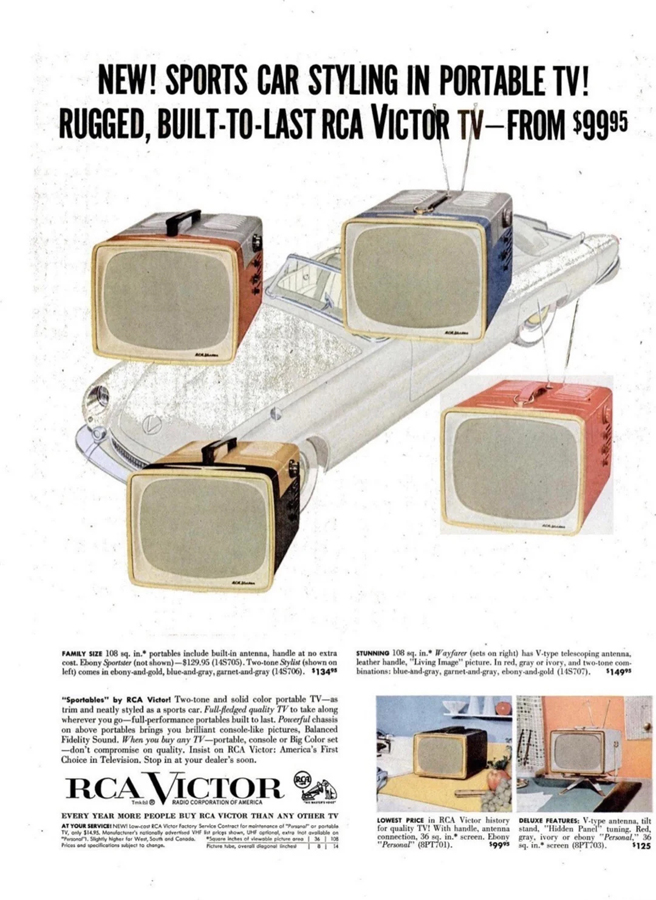
According to this 1950s print ad, RCA Victor’s portable TV sets, including the Wayfarer model, were ‘as trim and neatly styled as a sports car.’
RCA Victor Wayfarer (1957)
While not a color picture, the metal casing options for RCA Victor’s Wayfarer model boasted eye-catching midcentury hues, including cherry apple red and turquoise, representing a major shift away from the heavy wood console constructions of earlier units. Although it weighed around 20 pounds, the Wayfarer was considered a “portable” set that echoed the sleek styling of the automobile age and was marketed to younger consumers, who, with the leather carrying strap, could move freely throughout the home without missing a minute of As the World Turns.
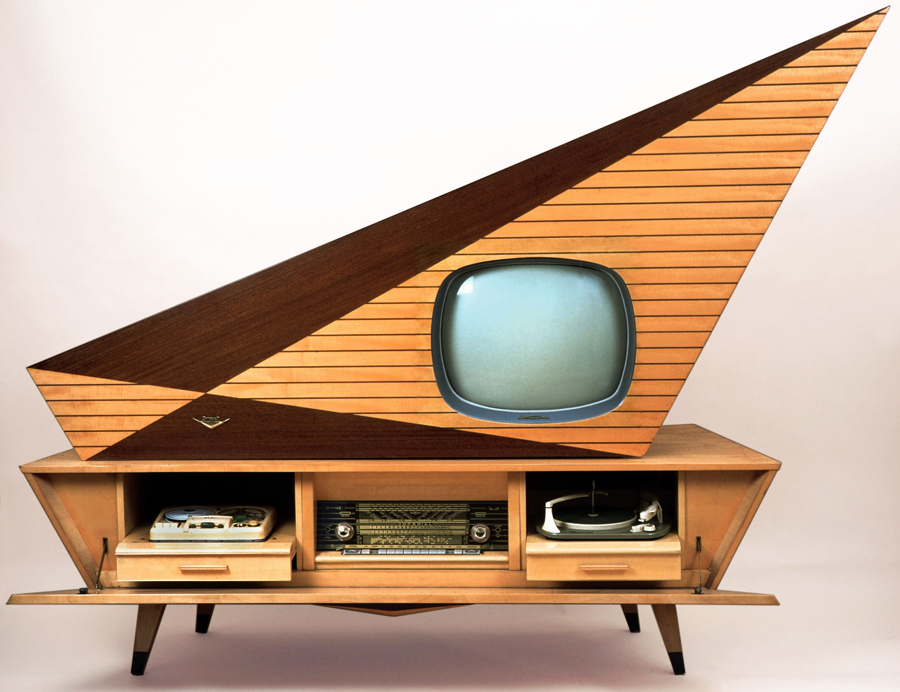
Very few examples of the pioneering Kuba Komet survive today.
Kuba Komet (1957)
With its sweeping, asymmetrical geometric design, the Kuba Komet exemplified the Atomic Age aesthetic. Made in West Germany, this was a full entertainment center that combined a swivel-tilt 23-inch TV screen, radio, record player, and speakers within its solid maple cabinet. For an additional charge, customers could order a magneto-phone wire recorder, the forerunner of reel-to-reel and cassette audio recorders. This futuristic technology came at a price, with sets costing more than the average yearly salary at the time.
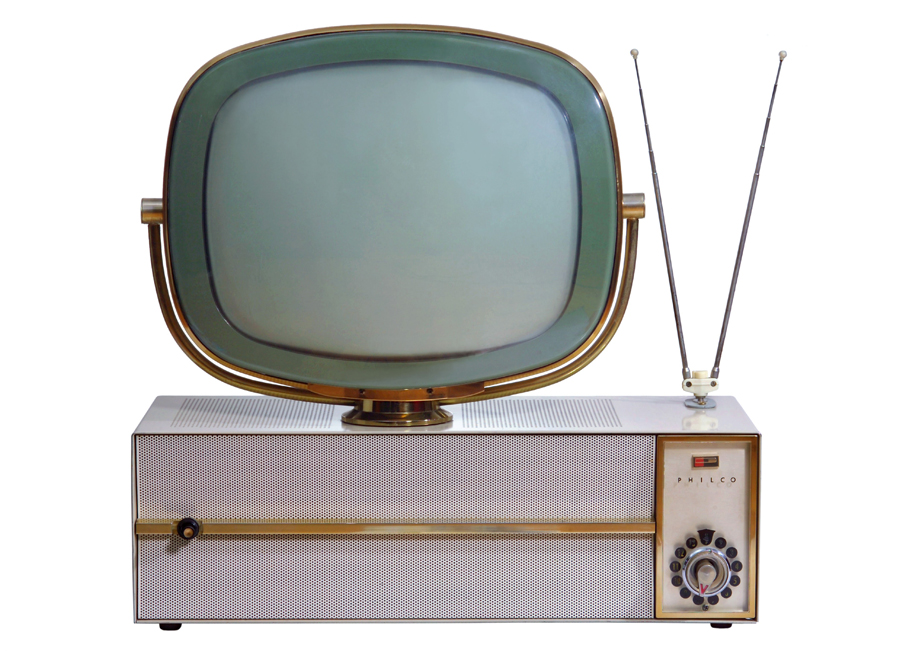
Though its production was short-lived, the Philco Predicta marked a revolution in the design of TV sets.
Philco Predicta (1958)
Arguably the most recognizable vintage set ever made, the Predicta’s floating picture tube looks like something straight out of The Jetsons. Created by industrial designer Herbert Gosweiler, this innovative model is a prime example of “the future according to the ’50s” and has become a pop culture icon, with examples appearing in The Marvelous Mrs. Maisel, Toy Story 2, and on the cover of Elton John’s 1981 studio album, The Fox. Though coveted by collectors today, initial sales of this set slumped due to reliability issues resulting from heat generated by the disconnected cathode ray tube in Predicta’s base.
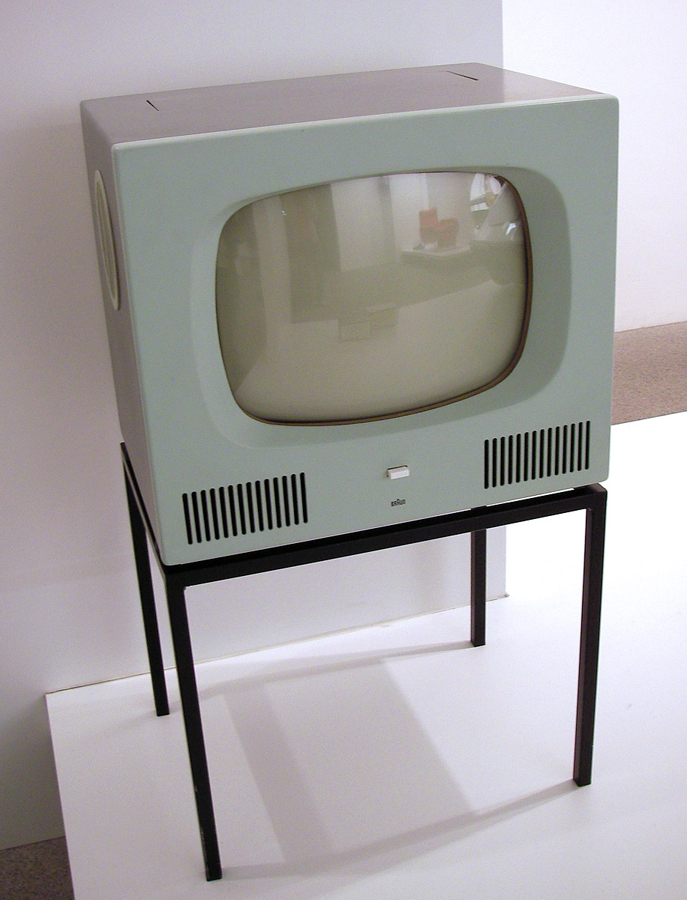
The clean-lined HF1 television introduced by Braun in 1958 (public domain)
Braun HF1 (1958)
The brainchild of legendary industrial designer Dieter Rams (b. 1932), the Braun HF1 helped to establish Germany as a global center for modern design after WWII and embodies Rams’ motto, “weniger, aber besser” — or “less, but better.” Today, many collectors view the clean, geometric styling of the Braun HF1 as a bridge between midcentury modernism and the minimalism of modern tech design, with this example reportedly influencing the looks of Apple products decades later.
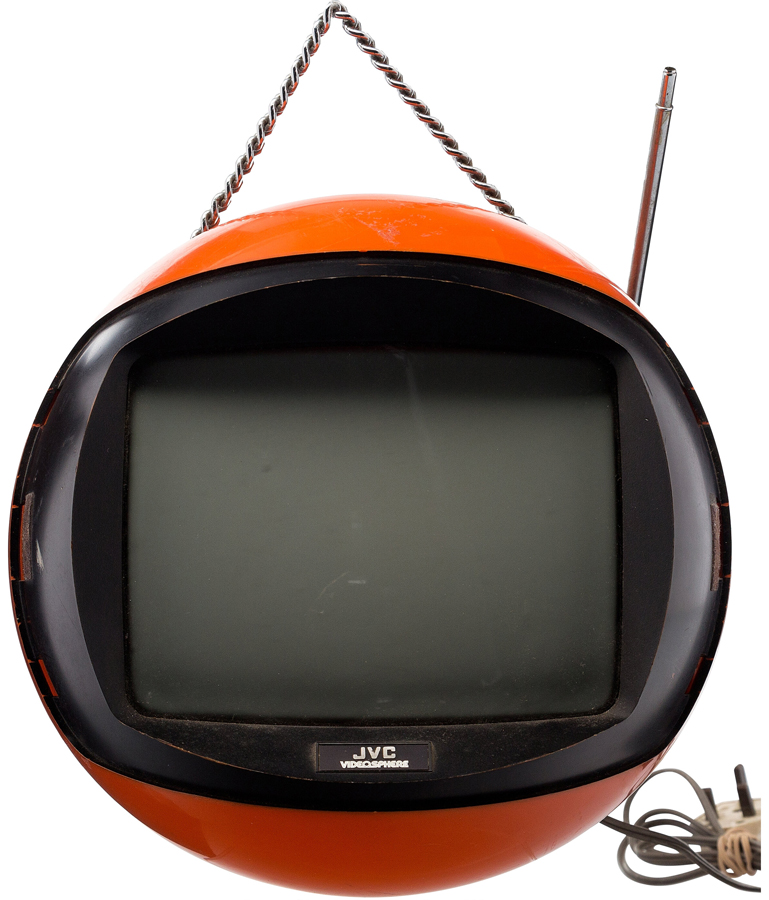
This groovy orange JVC Videosphere belonged to Keith Moon of The Who. It sold for $875 in a November 2019 Heritage auction.
JVC Videosphere (1970)
Launched a year after the moon landing, JVC’s Videosphere resembles an astronaut’s helmet with its circular cabinet and wraparound 5-inch black-and-white screen. Decidedly more portable than the earlier RCA Wayfarer, the Videosphere came with a rechargeable battery pack that enabled viewing outside the home and was available in a groovy array of colors, including red, white, black, and orange. Said to have been inspired by the film 2001: A Space Odyssey, this cult classic ceased production in the early ’80s, and surviving examples are prized by modern collectors.